
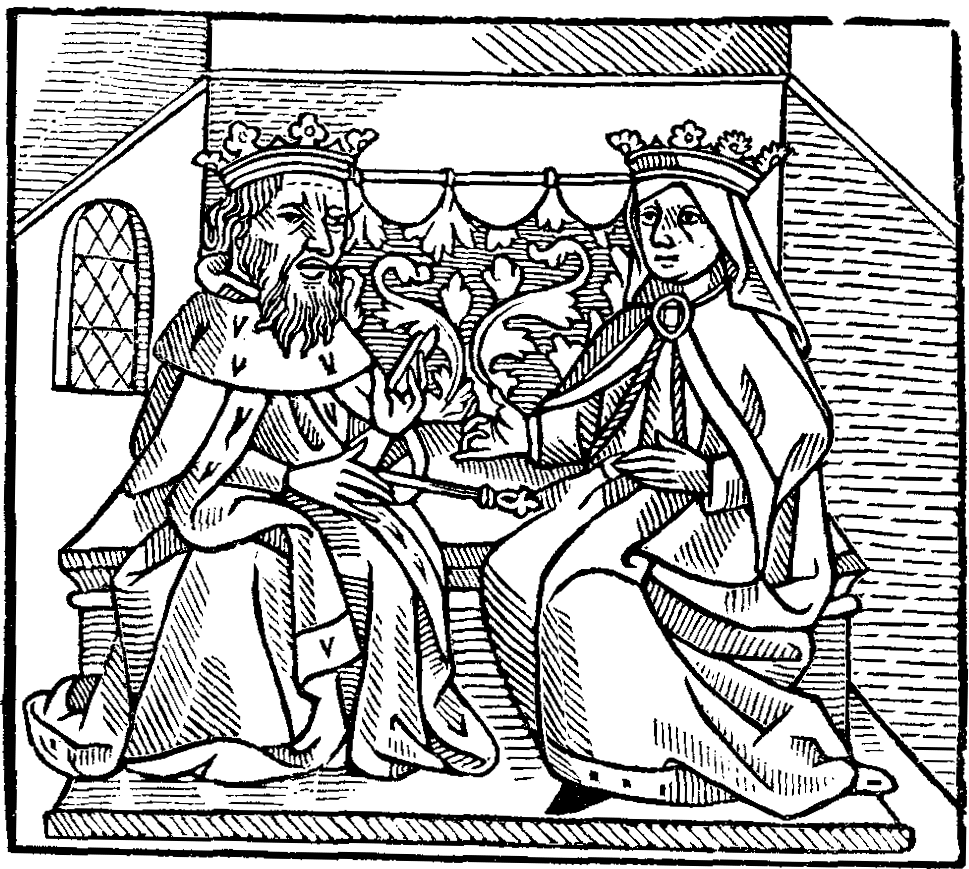
 Thus ought the Quene be maad/ she ought to be a fair lady sittynge in a chayer and crowned wyth a corone on her heed and cladd wyth a cloth of gold & a mantyll aboue furrid wyth ermynes And she shold sytte on the lyfte syde of the kinge for the amplections and enbrasynge of her husbonde/ lyke as it is sayd in scripture in the canticles/ her lyfte arme shall be under my heed And her ryght arme fhall[49] be clyppe and enbrace me/ In that she is sette on his lyfte syde is by grace gyuen to the kynge by nature and of ryght. For better is to haue a kynge by succession than by election/ For oftentymes the electours and chosers can not ne wyll not accorde/ And so is the election left/ And otherwhyle they chese not the beste and most able and conuenyent/ but hym that they best loue/ or is for them most proffytable/ But whan the kynge is by lignage and by trewe succession/ he is taught enseygned and nourrishid in his yongth in alle good & vertuous tacches and maners of hys fader/ And also the prynces of the royame dar not so hardily mene warre agaynst a kynge hauynge a sone for to regne after hym And so a Quene ought to be chaste. wyse. of honest peple/ well manerd and not curyous in nourisshynge of her children/ her wyfedom ought not only tappere in feet and werkes but also in spekynge that is to wete that she be secrete and telle not suche thynges as ought to be holden secrete/ Wherfore it is a comyn prouerbe that women can kepe no counceyle And accordyng therto Macrobe reherceth in the book of the dremes of Scipio. That ther was a child of rome that was named papirus that on a tyme went with his fader whiche was a senatour into the chambre where as they helde their counceyll And that tyme they spak of suche maters as was comanded and agreed shold be kept secrete upon payn of their heedes And so departed And whan he was comen home from the senatoire and fro the counceyll with his fader/ his moder demanded of hym what was the counceyll and wherof they spack and had taryed so longe there And the childe answerd to her and sayd he durst not telle ner saye hit for so moche as hit was defended upon payn of deth Than was the moder more desirous to knowe than she was to fore/ And began to flatere hym one tyme And afterward to menace hym that he shold saye and telle to her what hit was And whan the childe sawe that he might haue no reste of his moder in no wife He made her first promise that she shold kepe hit secrete And to telle hit to none of the world/ And that doon/ he fayned a lesing or a lye and sayd to her/ that the senatours had in counceyll a grete question and difference whiche was this/ whether hit were better and more for the comyn wele of rome/ that a man shold have two wyuys/ or a wyf to haue two husbondes/ And whan she had understonde this/ he defended her that she shold telle hit to none other body And after this she wente to her gossyb and told to her this counceyll secretly/ And she told to an other/ And thus euery wyf tolde hit to other in secrete And thus hit happend anone after that alle the wyues of rome cam to the senatorye where the senatours were assemblid/ And cryed wyth an hye voys/ that they had leuer/ and also hit were better for the comyn wele that a wyf shold haue two husbondes than a man two wyues/ The senatours heerynge this. were gretly abasshid and wist not what to saye/ ner how to answere/ tyll at laste that the child papire reherced to them all the caas and feet how hit was happend And whan the senatours herd & understood the mater they were gretly abasshid/ and comended gretly y'e Ingenye & wytte of the child that so wisely contriued the lye rather than he wolde discouere their co[=u]ceyll/ And forthwith made hym a senatour/ and establisshid & ordeyned fro than forthon that no childe in ony wise sholl entre in to y'e counceyll hous amonge them with their faders exept papirus/ whome they wold y't he shold alwey be among them/ also a quene ought to be chaste/ for as she is aboue all other in astate & reuer[=e]ce so shold she be ensample to all other in her liuyng honestly/ wherof Ierome reherceth agaynst Ionynyan/ that ther was a gentilman of rome named duele/ and this man was he y't first fond y'e maner to fight on y'e water/ and had first victorie/ this duele had to his wif one of the best women & so chaste/ that euery woman might take ensample of her/ And at y't tyme the synne of the flesshe was the grettest synne y't ony might doo agaynst nature/ And this sayd good woman was named ylye/ and so it happend that this duele becam so olde that he stowped & quaqued for age And on a tyme one of his aduersaries repreuyd & reprochid hym sayng that he had a stynkynge breth/ And forthwyth he wente home to his wyf alle angry and abasshid and axid her why and wherfore she had not told his defaulte to hym that he myght haue founden remedye to haue ben purgid therof/ And she answerd that as for as moche as she supposid that euery man had that same faute as well as he. For she kyst neuer ony mannes mouth but her husbondes/ O moche was this woman to be preysed & haue a singuler lawde wenynge that this defaulte had not ben only in her husbonde/ wherfore she suffrid hit paciently in suche wyse that her husbonde knewe his defaute sonner by other than by her/ Also we rede that ther was a wedowe named anna/ whiche had a frende that counceyllid her to marye/ For she was yong fayr and riche/ to whom she answerd that she wold not so doo in no wise For yf I shold haue an husbond as I haue had and that he were as good as he was/ I shold euer ben a ferd to lose hym/ lyke as I lost that other/ And than shold I lyue all wey in fere & drede/ whiche I wyll not And yf hit happend me to haue awors/ what shold hyt prouffite me to haue an euyll husbond after a good. And so she concluded that she wold kepe her chastete. Saynt Austyn reherceth in the book de Civitate dei that in rome was a noble lady gentill of maners & of hyghe kynrede named lucrecia/ And had an husbonde named colatyne/ whiche desired on a tyme the Emþours sone named Torquyne thorguyllous or the proude and he was callid sixte for to come dyne and sporte hym in his castell or manoir And whan he was entrid amonge many noble ladyes he sawe lucrecia/ And whan this Emþours sone had seen & aduertised her deportes. her contenance. her manere. and her beaulte/ he was all rauysshid and esprised wyth her loue forthwyth And espyed a tyme whan her husbonde collatyn wente unto the ooste of themþour/ and camm to the place where as lucresse was with her felawship/ whom she receyuyd honorably/ and whan tyme came to goo to bedde and slepe she made redy a bedde ryally for hym as hit apperteyned to the emperours sone And this sixtus espyed where lucresia laye. And whan he supposyd & knewe that euery body was in his first sleep/ he cam to the bedde of lucresse and that oon hand sette on her breste and in that other hand a naked swerd/ and sayd to her/ lucresse holde thy pees and crye not/ For I am sixte tarquynus sone/ for yf y'u speke ony worde thou shalt be dede/ And for fere she held her pees/ Than he began to praye and promise many thinges And after he menaced & thretenyd her that she shold enclyne to hym to do his wyll/ And whan he sawe he coude ner might haue his entent he sayd to her yf thou do not my wyll/ I shall slee the and o[=o]n of thy seruantes and shall leye hym all ded by thy syde And than I shall saye that I haue slayn yow for your rybawdrye/ And lucresse that than doubted more the shame of the world than the deth consentid to hym/ And anone after as the Emþours sone was departid/ the ladye sente l*res to her husbond her fader her brethern & to her frendes/ and to a man callid brute conceyllour & neuewe to tarquyn/ And sayd to them/ that yesterday sixte the emp*ours sone cam in to myn hous as an enemye in likenes of a frende/ & hath oppressid me And knowe y'u colatyn that he hath dishonorid thy bedde And how well y't he hath fowled & dishonored my body/ yet myn herte is not/ wherfore I beseche the of pardon foryfnes & absolucion of the trespas but not of the payne/ and he y't hath doon this synne to me hit shall ben to his meschance yf y'e doo your deuoir/ And be cause no woman take ensample of lucresse and lyue after the trespaas/ but that she in lyke wyse take ensample also of the payne And forthwyth wyth a swerd that she helde under her gowen or robe/ she roof her self unto the herte And deyde forthwyth to fore them/ And than brute the counseillr And her husbond collatyn and alle her other frendes swore by the blood of lucresse that they wold neuer reste vnto the tyme that they had put out of rome tarquyn and and alle his lignee/ And that neuer after none of them shold come to dignite/ And alle this was doon. For they bare the dede corps thurgh the cyte and meuyd the peple in suche wyse/ that tarquyn was put in exyle And fixte his sone was slayn/ A Quene ought to be well manerd & amonge alle she ought to be tumerous and shamefast/ For whan a woman hath loste shamefastnes/ she may ner can not well be chaast/ Wherfore saith symachus that they that ben not shamefast haue no conscience of luxurye/ And saynt Ambrose saith that oon of the best parements and maketh a woman most fayr in her persone/ is to be shamefast/ Senecque reherceth that ther was oon named Archezille whiche was so shamefast That she put in a pelow of fethers a certain some of money/ and put hit vnder y'e heed of a pour frende of heeris/ whiche dissimyled his pouerte and wold not ner durst not be a knowen of his pouerte For for shame she durst not gyue hit openly/ but had leuer that he shold fynde hit/ than that she had gyuen hit hym/ Wherfore otherwhile men shold gyue & helpe her frendes so secretly That they knowe not whens hit come/ For whan we kepe hit secret and make no boost therof/ our deedes and werkes shall plese god and them also/ A Quene ought to be chosen whan she shall be wedded of the most honest kynrede and peple/ For oftentymes the doughters folowen the tacches and maners of them that they ben discended from/ Wherof Valerius maximus sayth that ther was one that wold marye/ whiche cam to a philosopher and axid counceyll what wif he might best take He answerd that he shold take her that thou knowe certaynly that her moder and her grauntdame haue ben chaast and well condicioned/ For suche moder/ suche doughter comunely/ Alfo a quene ought to teche her childern to ben contynent and kepe chastite entyerly/ as hit is wreton in ecclesiastes/ yf thou haue sones enseigne and teche them/ And yf thou haue doughters kepe well them in chastite/ For helemonde reherceth that euery kynge & prynce ought to be a clerke for to comande to other to studye and rede the lawe of our lord god/ And therfore wrote themperour to the kynge of france that he shold doo lerne hys children sones the seuen sciences lyberall/ And saide amonge other thynges that a kynge not lettryd resembleth an asse coroned/ Themperour Octauian maad his sones to be taught and lerne to swyme. to sprynge and lepe. to Iufte. to playe wyth the axe and swerde/ And alle maner thynge that apperteyneth to a knyght/ And his doughters he made hem to lerne. to sewe. to spynne. to laboure as well in wolle as in lynnen cloth/ And alle other werkis longynge to women And whan his frendes demanded wherfore he dyde so/ he answerd how well that he was lord & syre of alle the world/ yet wyste he not what shold befalle of his children and whether they shold falle or come to pouerte or noo/ and therfore yf they conne a good crafte they maye alleway lyue honestly/ The Quene ought to kepe her doughters in alle chastyte/ For we rede of many maydens that for theyr virginite haue ben made quenes/ For poule the historiagraph of the lombardes reherceth y't ther was a duchesse named remonde whiche had .iii. sones & two doughters And hit happend that the kynge of hongrye cantanus assaylled a castell where she behelde her enemyes And amonge all other she sawe the kynge that he was a well faryng and goodly man/ Anone she was esprised and taken wyth his loue/ And that so sore/ that forthwith she sent to hym that she wold deliuere ouer the castell to hym yf he wold take her to his wyf and wedde her And he agreed therto/ and sware that he wold haue her to his wyf on that condicion/ whan than the kynge was in the castell/ his peple toke men and women and alle that they fonde/ her sones fledde from her/ of whom one was named Ermoaldus and was yongest/ and after was duc of boneuentan/ And syn kynge of the lumbardis. And the two susters toke chikens And put hem vnder her armes next the flessh and bytwene her pappes/ that of the heete & chaffyng the flessh of the chikens stanke. And whan so was that they of hongrye wold haue enforcid & defowled hem anone they felte the stenche and fledde away and so lefte hem sayng/ fy how these lombardes stynke/ and so they kept their virginite/ wherfore that one of them afterward was Quene of france And that other Quene of Aleman/ And hit happend than that the kynge Catanus toke acordynge to his promyse the duchesse/ and laye with her one night for to saue his oth And on the morn he made her comune unto alle the hongres/ And the thirde day after he dyde doo put a staf of tre fro the nether part of her/ thurgh her body vnto her throte or mouthe/ for be cause of the lust of her flessh she betrayed her cyte and sayd suche husbond/ suche wyf &c And this sufficeth of the Quene.

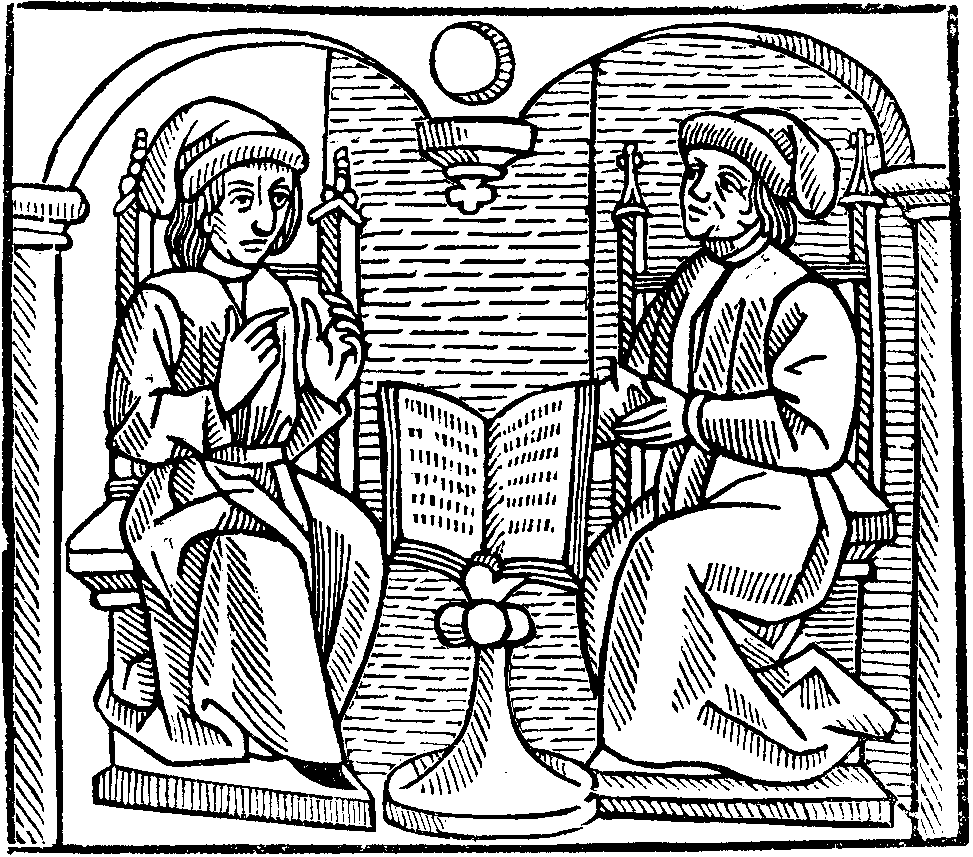
 The Alphyns ought to be made and formed in manere of Iuges syttynge in a chayer wyth a book open to fore their eyen/ And that is be cause that some causes ben crymynell/ And some ben cyuyle as aboute possessyons and other temporell thynges and trespaces/ And therfore ought to be two Iuges in the royame/ one in the black for the first cause/ And that other in whyte as for the seconde/ Theyr office is for to counceyll the kynge/ And to make by his comandements good lawes And to enforme alle the royame in good and vertuous maners/ And to Iuge and gyue sentence well and truly after the caas is had/ And to counceyll well and Iustely alle them that are counceyll of hem/ wyth oute hauynge of ony eye opene to ony persone/ And to estudye diligently in suche wyse and to ordeygne alle that/ that ought to be kept be obseruyd be faste and stable/ So that they be not founde corrupt for yeft for favour ne for lignage ne for enuye variable And as touchynge the first poynt Seneque sayth in the book of benefetes that the poure Dyogenes was more stronge than Alixandre/ For Alixandre coude not gyue fo moche as Diogenes wold reffuse.
Marcus cursus a romayn of grete renome sayth thus. That whan he had besiegid & assayllyd them of amente And boneuentans whiche herde that he was poure/ they toke a grete masse and wegghe of gold and ended hit to hym prayng hym that he wold resseyue hyt and leue his assault and siege/ And whan they cam with the present to hym they fonde hym sittynge on the erthe and ete his mete oute of platers and disshes of tree and of wode and dyde than her message/ to whom he answerd and sayde that they shold goo hoome and saye to them that sente hem that marcus cursus loueth better to be lord and wynne richesses than richesses shold wynne hym/ For by bataylle he shall not be ouercome and vaynquysshid Nor be gold ne siluer he shal not be corrupt ne corompid Often tymes that thynge taketh an euyll ende that is vntrewe for gold and siluer/ And that a man is subgett vnto money may not be lord therof/ helimond reherceth that [50] demoncene demanded of aristodone how moche he had wonne for pletynge of a cause for his clyent/ And he answerd a marck of gold. [51] Demoscenes answerd to hym agayn that he had wonne as moche for to hold his pees and speke not Thus the tonges of aduocates and men of lawe ben þyllous and domegeable/yet they must be had yf thou wylt wynne thy cause for wyth money and yeft thou shall wynne And oftetymes they selle as welle theyr scilence/ as theyr vtterance/ Valerius reherceth that the senatours of rome toke counceyll to geder of two persones that one was poure/ And that other riche and couetous/ whiche of hem bothe were moft apte for to sende to gouerne and Iuge the contre of spayne/ and scipion of affricque sayd that none of them bothe were good ner prouffitable to be sente theder/ For that one hath no thynge And to that other may nothynge suffise And despised in his saynge alle pouerte and auerice in a Iuge/ For a couetous man hath nede of an halfpeny For he is seruant & bonde vnto money/ and not lord therof. But pouerte of herte & of wylle ought to be gretly alowed in a Iuge Therfore we rede that as longe as the romayns louyd pouerte they were lordes of all the world For many ther were that exposed alle their goodes for the comyn wele and for that was most prouffitable for the comynaulte that they were so poure that whan they were dede they were buryed & brought to erthe with the comyn good/ And theyr doughters were maryed by the comandement of the senatours/ But syn that they despised pouerte/ And begonne to gadre rychesses/ And haue maad grete bataylles/ they haue vsed many synnes And so the comyn wele perysshid/ For there is no synne but that it regneth there/ Ther is none that is so [52] synfull as he that hath alle the world in despyte/ For he is in pees that dredeth no man/ And he is ryche that coueyteth no thynge/ Valere reherceth that he is not ryche that moche hath/ But he is ryche that hath lytyll and coueyteth no thynge/ Than thus late the Iuges take hede that they enclyne not for loue or for hate in ony Iugement/ For theophrast saith that alle loue is blynde ther loue is/ ther can not ryght Iugement by guyen/ For alle loue is blynde And therfore loue is none euyn Iuge For ofte tymes loue Iugeth a fowll & lothly woman to be fayr And so reherceth quynte curse in his first book that the grete Godaches sayth the same to Alixandre men may saye in this caas that nature is euyll For euery man is lasse auysed and worse in is owne feet and cause than in an other mans/ And therfore the Iuges ought to kepe hem well from yre in Iugement/ Tullius sayth that an angry & yrous þsone weneth that for to doo euyll/ is good counceyll/ and socrates saith y't .ii. thinges ben contraryous to co[=u]ceyll/ and they ben haftynes & wrath/ and Galeren sayth in Alexandrye/ yf yre or wrath ouercome the whan thou sholdest gyue Iugement/ weye all thinge in y'e balance so that thy Iugement be not enclyned by loue ne by yeste/ ne fauour of persone torne not thy corage. Helemond reherceth that Cambyses kynge of perse whiche was a rightwys kynge had an vnrightwys Iuge/ whiche for enuye and euyll will had dampned a man wrongfully and agaynst right/ wherfore he dide hym to be flain all quyk/ and made the chayer or fiege of Iugement to be couerid wyth his skyn/ And made his sone Iuge and to sitte in the chayer on the skyn of his fader/ to thende that the sone shold Iuge rightwysly/ And abhorre the Iugement & payne of his fader/ Iuges ought to punysshe the defaultes egally And fullfille the lawe that they ordeyne/ Caton sayth accomplisshe and do the lawe in suche wyse as thou hast ordeyned and gyuen. Valerius reherceth that calengius a consull had a sone whiche was taken in adwultrye. And therfore after the lawe at that tyme he was dampned to lose bothe his eyen The fader wold y't the lawe shold be acc[=o]plisshid in his sone with out fauour/ but all the cyte was meuyd herewyth And wold not suffre hit/ but in the ende his fader was vaynquysshid by theyr prayers/ And ordeyned that his sone shold lese oon eye whiche was put oute And he hymself lost an other eye/ And thus was the lawe obserued and kept/ And the prayer of the peple was accomplisshid We rede y't ther was a counceyllour of rome that had gyen counceill to make a statute/ that who some euer that entrid in to the senatoire/ & a swerd gyrt aboute hym shold be ded/ Than hit happend on a tyme that he cam from with out and entrid in to the senatoyre & his swerd gyrt aboute hym/ wherof he took n[=o]n heede/ and [=o]n of the senatours told hym of hit/ and whan he knewe hit & remembrid the statute/ he drewe oute his swerd & slewe hymself to fore them/ rather to dye than to breke the lawe/ for whos deth all the senatours made grete sorowe/ but alas we fynde not many in thise dayes that soo doo/ but they doo lyke as anastasius saith that the lawes of some ben lyke vnto the nettis of spyncoppis that take no grete bestes & fowles but lete goo & flee thurgh. But they take flyes & gnattes & suche smale thynges/ In lyke wise the lawes now a dayes ben not executed but vpon the poure peple/ the grete and riche breke hit & goo thurgh with all And for this cause sourden bataylles & discordes/ and make y'e grete & riche men to take by force and strengthe lordshippis & seignouries vpon the smale & poure peple/ And this doon they specially that ben gentill of lignage & poure of goodes And causeth them to robbe and reue And yet constrayned them by force to serue them And this is no meruayll/ for they that drede not to angre god/ ner to breke the lawe and to false hit/ Falle often tymes by force in moche cursednes and wikkidnes/ but whan the grete peple doo acordinge to the lawe/ and punysh the tr[=a]nsgressours sharply The comyn peple abstayne and withdrawe hem fro dooyng of euyll/ and chastiseth hem self by theyr example/ And the Iuges ought to entende for to studie/ for y't yf smythes the carp[=e]ntiers y'e vignours and other craftymen saye that it is most necessarye to studye for the comyn prouffit And gloryfye them in their connyng and saye that they ben prouffitable Than shold the Iuges studie and contemplaire moche more than they in that/ that shold be for the comyn wele/ wherfore sayth seneke beleue me that they seme that they do no thynge they doo more than they that laboure For they doo spirytuell and also corporall werkis/ and therfore amonge Artificers ther is no plesant reste/ But that reson of the Iuges hath maad and ordeyned hit/ And therfore angelius in libro actiui atticatorum de socrate sayth That socrates was on a tyme so pensyf that in an hole naturell daye/ He helde one estate that he ne meuyd mouth ne eye ne foote ne hand but was as he had ben ded rauyshyd. And whan one demanded hym wherfore he was fo pensyf/ he answerd in alle worldly thynges and labours of the fame And helde hym bourgoys and cytezeyn of the world And valerius reherceth that carnardes a knyght was so age wye and laborous in pensifnes of the comyn wele/ that whan he was sette at table for to ete/ he forgate to put his hande vnto the mete to fede hymself. And therfore his wys y't was named mellye whom he had taken more to haue her companye & felawship than for ony other thynge/ Fedde hym to thende that he shold not dye for honger in his pensifnes/ Dydymus sayd to Alix-andrie we ben not deynseyns in the world but stra[=u]gers/ ner we ben not born in the world for to dwell and abyde allway therein/ but for to goo and passe thurgh hit/ we haue doon noon euy dede/ but that it is worthy to be punysshid and we to suffre payne therfore And than we may goon with opon face and good conscience And so may we goo lightly and appertly the way that we hope and purpose to goo This suffiseth as for the Alphyns.
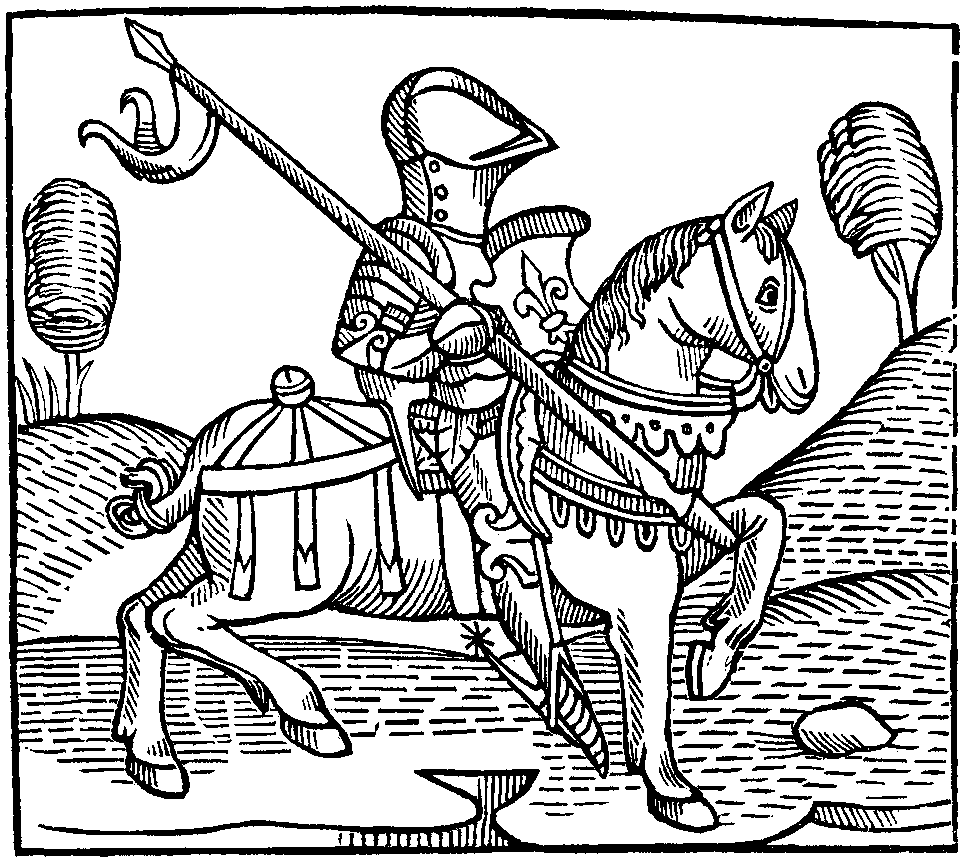
The knyght ought to be made alle armed upon an hors in suche wyse that he haue an helme on his heed and a spere in his ryght hande/ and coueryd wyth his sheld/ a swerde and a mace on his lyft syde/ Cladd wyth an hawberk and plates to fore his breste/ legge harnoys on his legges/ Spores on his heelis on his handes his gauntelettes/ his hors well broken and taught and apte to bataylle and couerid with his armes/ whan the knyghtes ben maad they ben bayned or bathed/ that is the signe that they shold lede a newe lyf and newe maners/ also they wake alle the nyght in prayers and orysons vnto god that he wylle gyue hem grace that they may gete that thynge that they may not gete by nature/ The kynge or prynce gyrdeth a boute them a swerde in signe/ that they shold abyde and kepe hym of whom they take theyr dispenses and dignyte. Also a knyght ought to be wise, liberall, trewe, stronge and full of mercy and pite and kepar of the peple and of the lawe/ And ryght as cheualrye passeth other in vertu in dignite in honour and in reu[=e]rece/ right so ought he to surmounte alle other in vertu/ For honour is no thing ellis but to do reuer[=e]ce to an other þsone for y'e good & vertuo'9 disposicion y't is in hym/ A noble knyght ought to be wyse and preuyd to fore he be made knyght/ hit behoued hym that he had longe tyme vsid the warre and armes/ that he may be expert and wyse for to gouerne the other For syn that a knyght is capitayn of a batayll The lyf of them that shall be vnder hym lyeth in his hand And therfore behoueth hym to be wyse and well aduysed/ for some tyme arte craft and engyue is more worth than strengthe or hardynes of a man that is not proued in Armes/ For otherwhyle hit happeth that whan the prynce of the batayll affieth and trusteth in his hardynes and strength And wole not vse wysedom and engyne for to renne vpon his enemyes/ he is vaynquysshid and his peple slayn/ Therfore saith the philosopher that no man shold chese yong peple to be captayns & gouernours For as moche as ther is no certainte in her wysedom. Alexandra of macedone vaynquysshid and conquerid Egypte Iude Caldee Affricque/ and Affirye vnto the marches of bragmans more by the counceyll of olde men than by the strength of the yong men/ we rede in the historye of rome y't ther was a knyght whiche had to name malechete that was so wyse and trewe that whan the Emþour Theodosius was dede/ he made mortall warre ayenst his broder germain whiche was named Gildo or Guye For as moche as this said guye wold be lorde of affricque with oute leue and wyll of the senatours. And this sayd guye had slayn the two sones of his broder malechete/ And dide moche torment vnto the cristen peple And afore that he shold come in to the felde ayenst his broder Emyon/ he wente in to an yle of capayre And ladde with hym alle the cristen men that had ben sente theder in Exyle And made hem alle to praye wyth hym by the space of thre dayes & thre nyghtis/ For he had grete truste in the prayers of good folk/ & specially that noman myght counceyll ne helpe but god/ and .iii. dayes to fore he shold fight saynt Ambrofe whiche was ded a lityl to fore apperid to hym/ and shewde hym by reuelacion the tyme & our that he shold haue victorie/ and for as moche as he had ben .iii. dayes and .iii nyghtes in his prayers & that he was assewrid for to haue victorie/ He faught with .v. thousand men ayenst his broder y't had in his companye .xxiiii. thousand men And by goddes helpe he had victorie And whan the barbaryns y't were comen to helpe guion fawe y'e disconfiture they fledde away/ and guion fledd also in to affricque by shiipp/ and whan he was ther arryued he was sone after stranglid/ These .ii. knyghtes of whom I speke were two bredern germayns/ whiche were sent to affricque for to defende the comyn weele/ In likewise Iudas machabe'9 Ionathas & symon his bredern put hem self in the mercy and garde of our lord god And agayn the enemyes of the lawe of god with lityll peple in regard of the multitude that were agayn them/ and had also victorye/ The knights ought to ben trewe to theyr princes/ for he that is not trewe leseth y'e name of a knight Vnto a prince trouth is the grettest precious stone whan it is medlid with Iuftice/ Paule the historiagraph of the lombardes reherceth that ther was a knight named enulphus and was of the cyte of papye that was so trewe to his kynge named patharich/ that he put hym in parill of deth for hym/ For hit happend that Grymald Due of [53] buuentayns of whom we haue touched to fore in the chapitre of the Quene/ Dyde do flee Godebert whiche was kynge of the lombardes by the hande of Goribert duc of Tauryn/ whiche was discended of the crowne of lombardis And this grimald was maad kynge of lombardis in his place/ and after this put & bannysshid out of the contrey this patharych whiche was broder vnto the kynge Godebert/ that for fere and drede fledd in to hongrye/ And than this knyght Enulphus dide so moche that he gate the peas agayn of his lord patharich agaynft the kynge grymalde/ and that he had licence to come out of hongrye where he was all wey in paryll. and so he cam and cryed hym mercy And the kynge grymalde gaf hym leue to dwelle and to lyue honestly in his contree/ allway forseen that he toke not vpon hym and named hymself kynge/ how well he was kynge by right This doon a litill while after/ the kynge that beleuyd euyll tonges/ thought in hymself how he myght brynge this patharich vnto the deth And alle this knewe well the knyght enulphus/ whiche cam the same nyght with his squyer for to visite his lord And made his squyer to vnclothe hym & to lye in the bedde of his lord And made his lord to ryse and clothe hym wyth the clothis of his squyer/ And in this wyse brought hym oute/ brawlynge and betynge hym as his seruant by them that were assigned to kepe the hows of patharik y't he shold not escape Whiche supposid that hit had ben his squyer that he entretid so outragiously/ & so he brought hym to his hous whiche Ioyned with the walles of the toun/ And at mydnyght whan alle men were asleepe/ he lete a doun his maistre by a corde/ whiche toke an hors oute of the pasture And fled vnto the cyte of Aast and ther cam to the kynge of fraunce/ And whan hit cam vnto the morn. Hit was founden that Arnolphus and his squyer had deceyvyd the kynge and the wacchemen/ whom the kyng comanded shold be brought to fore hym And demanded of them the maner how he was escaped And they told hym the trouthe/ Than the kynge demanded his counceyll of what deth they had deseruyd to dye that had so doon and wrought agayn the wylle of hym/ Some sayde that they shold ben honged/ and some sayd they shold ben slayn And other sayd that they shold be beheedid. Than sayd the kynge by that lord that made me/ they ben not worthy to dye/ but for to haue moche worship and honour/ For they haue ben trewe to theyr lord/ wherfore the kynge gaf hem a grete lawde and honour for their feet And after hit happend that the propre squyer and seruant of godeberd slewe the traytre Goribalde that by trayson had slayn his lord at a feste of seynt Iohn in his Cyte of Tauryn wherof he was lord and duc/ Thus ought the knyghtes to love to gyder/ And eche to put his lyf in aventure for other/ For so ben they the strenger And the more doubted/ Lyke as were the noble knyghtes Ioab and Abysay that fought agaynst the syryens and Amonytes/ And were so trewe that oon to that other that they vaynquysshid theyr enemies And were so Ioyned to gyder that yf the siryens were strenger than that one of them/ that other helpe hym/ we rede that damon and phisias were so ryght parfyt frendes to gyder that whan Dionisius whiche was kynge of cecylle had Iuged one to deth for his trespaas in the cyte of syracusane whom he wold haue executed/ he desired grace and leue to goo in to hys contre for to dispose and ordonne his testament/ And his felawe pleggid hym and was sewrte for hym vpon his heed that he shold come agayn. Wherof they that sawe & herd this/ helde hym for a fool and blamed hym/ And he said all way that he repentid hym nothynge at all/ For he knewe well the trouth of his felawe And whan the day cam and the oure that execusion shold be doon/ his felawe cam and presented hymself to fore the Iuge/ And dischargid his felawe that was plegge for hym/ wherof the kynge was gretly abasshid And for the grete trouthe that was founden in hym He pardonyd hym and prayd hem bothe that they wold resseyue hym as their grete frende and felawe/ Lo here the vertues of loue that a man ought nought to doubte the deth for his frende/ Lo what it is to doo for a frende/ And to lede a lyf debonayr And to be wyth out cruelte/ to loue and not to hate/ whiche causeth to doo good ayenst euyll And to torne payne into benefete and to quenche cruelte Anthonyus sayth that Julius Cesar/ lefte not lightly frenshippe and Amytye/ But whan he had hit he reteyned hit faste and maynteyned hit alleway/ Scipion of Affricque sayth that ther is no thynge so stronge/ as for to mayntene loue vnto the deth The loue of concupiscence and of lecherye is sone dissoluyd and broken/ But the verray true loue of the comyn wele and prouffit now a dayes is selde founden/ where shall thou fynde a man in thyse dayes that wyll expose hymself for the worshippe and honour of his frende/ or for the comyn wele/ selde or neuer shall he be founden/ Also the knyghtes shold be large & liberall For whan a knyght hath regarde vnto his singuler prouffit by his couetyse/ he dispoylleth his peple For whan the souldyours see that they putte hem in paryll. And theyr mayster wyll not paye hem theyr wages liberally/ but entendeth to his owne propre gayn and proussryt/ than whan the Enemyes come they torne sone her backes and flee oftentymes/ And thus hit happeth by hym that entendeth more to gete money than victorye that his auaryce is ofte tymes cause of his confusion Than late euery knyght take heede to be liberall in suche wyse that he wene not ne suppose that his scarcete be to hym a grete wynnynge or gayn/ And for thys cause he be the lasse louyd of his peple/ And that his aduersarye wythdrawe to hym them by large gyuynge/ For oftetyme bataylle is auaunced more for getynge of siluer. Than by the force and strengthe of men/ For men see alle daye that suche thynges as may not be achieuyd by force of nature/ ben goten and achieuyd by force of money/ And for so moche hit behoueth to see well to that whan the tyme of the bataylle cometh/ that he borowe not ne make no tayllage/ For noman may be ryche that leuyth his owne/ hopyng to gete and take of other/ Than all waye all her gayn and wynnynge ought to be comyn amonge them exept theyr Armes. For in lyke wyse as the victorie is comune/ so shold the dispoyll and botye be comune vnto them And therfore Dauid that gentyll knyght in the fyrst book of kynges in the last chapitre made a lawe/ that he that abode behynde by maladye or sekenes in the tentes shold haue as moche parte of the butyn as he that had be in the bataylle/ And for the loue of thys lawe he was made afterward kynge of Isræll/ Alexander of Macedone cam on a tyme lyke a symple knyght vnto the court of Porus kynge of Inde for to espye thestate of the kynge and of the knyghtes of the court/ And the kynge resseyuyd hym ryght worshipfully/ And demanded of hym many thynges of Alexander and of his constance and strengthe/ nothynge wenynge that he had ben Alexander But antygone one of his knyghtis and after he had hym to dyner And whan they had feruyd Alexander in vayssell of gold and siluer with dyuerce metes &c. After that he had eten suche as plesid hym he voyded the mete and toke the vayssell and helde hit to hymself and put hit in his bosom or sleuys/ wherof he was accusid vnto the kynge After dyner than the kynge callid hym and demanded hym wherfore he had taken his vayssell And he answerd/ Syre kynge my lord I pray the to vnderstande and take heede thy self and also thy knyghtes/ I haue herd moche of thy grete hyenes And y't thou art more myghty and puyssant in cheualrye & in dispensis than is Alexander/ and therfore I am come to the a pour knyght whiche am named Antygone for to serue the/ Than hit is the custome in the Courte of Alexandre/ that what thynge a knyght is seruyd wyth all is alle his/ mete and vayssell and cuppe And therfore I had supposid that this custome had ben kept in thy court for thou art richer than he/ whan the knyghtes herd this/ an[=o]n they lefte porus/ and wente for to serue alixandre/ and thus he drewe to hym y'e hertes of them by yeftes/ whiche afterward slewe Porus that was kynge of Inde/ And they made Alexandra kynge therof Therfore remembre knyght alleway that wyth a closid and shette purse shalt thou neuer haue victorye. Ouyde sayth that he that taketh yeftes/ he is glad therwyth/ For they wynne wyth yeftes the hertes of the goddes and of men For yf Iupiter were angrid/ wyth yestes he wold be plesid/ The knyghtes ought to be stronge not only of body but also in corage. Ther ben many stronge and grete of body/ that ben faynt and feble in the herte/ he is stronge that may not be vaynquysshid and ouercomen/ how well that he suffryth moche otherwhile/ And so we beleue that they that be not ouer grete ne ouer lityll ben most corageous & beste in batayll. We rede that cadrus duc of athenes shold haue a batayll agayn them of polipe/ And he was warned and had a reuelacion of the goddes/ that they shold haue the victorie of whom the prynce shold be slayn in the batayll/ And the prince whiche was of a grete corage and trewe herte Toke other armes of a poure man/ And put hymself in the fronte of the batayll to thende that he might be slain And so he was/ for the right trewe prince had leuer dye Than his peple shold be ouercomen/ And so they had the victorye/ Certes hyt was a noble and fayr thynge to expose hym self to the deth for to deffende his contrey. But no man wold doo so/ but yf he hopyd to haue a better thynge therfore/ Therfore the lawe sayth that they lyue in her sowles gloriously that ben slain in the warre for the comyn wele A knyght ought also to be mercifull and pyetous For ther is nothynge y't maketh a knyght so renomed as is whan he sauyth the lyf of them that he may slee/ For to shede and spylle blood is the condicion of a wylde beste and not the condicion of a good knyght Therfore we rede that scylla that was Duc of the Romayns wyth oute had many fayr victoyres agaynst the Romayns wyth Inne that were contrayre to hym/ In so moche that in the batayll of puylle he slewe .xviii. thousand men/ And in champanye .lxx. thousand. And after in the cyte he slewe thre thousand men vnarmed And whan one of his knyghtes that was named Quyntus catulus sawe this cruelte sayd to hym/ Sesse now and suffre them to lyue and be mercyfull to them wyth whom we haue ben victorious And wyth whom we ought to lyue/ For hit is the most hyest and fayr vengeance that a man may doo/ as to spare them & gyue hem her lyf whome he may slee Therfore Joab ordeyned whan absalom was slayn/ he sowned a trompette/ that his peple shold no more renne & slee theyr aduersaryes. For ther were slayn aboute .xx. thousand of them/ and in lyke wyse dide he whan he faught ayenst Abner And Abner was vaynquysshid and fledde. For where that he wente in the chaas he comanded to spare the peple The knyghtes ought to kepe the peple/ For whan the peple ben in theyr tentes or castellis/ the knyghtes ought to kepe the wacche/ For this cause the romayns callyd them legyons And they were made of dyuerce prouynces and of dyuerce nacyons to thentente to kepe the peple/ And the peple shold entende to theyre werke/ For no crafty man may bothe entende to his craft & to fighte/ how may a crafty man entende to hys werke sewrely in tyme of warre but yf he be kept And right in suche wyse as the knyghtes shold kepe y'e peple in tyme of peas in lyke wise the peple ought to pourveye for theyr dispensis/ how shold a plowman be sewre in the felde/ but yf the knyghtes made dayly wacche to kepe hem/ For lyke as the glorye of a kynge is vpon his knyghtis/ so hit is necessarye to the knyghtes that the marchantis craftymen and comyn peple be defended and kepte/ therfore late the knyghtes kepe the peple in suche wyse that they maye enioye pees and gete and gadre the costis and expensis of them bothe/ we rede that Athis sayd to dauid whiche was a knyght/ I make the my kepar and defendar alleway. Thus shold the knightes haue grete zele that the lawe be kept/ For the mageste ryall ought not only to be garnysshid wyth armes but also wyth good lawes/ And therfore shold they laboure that they shold be well kept Turgeus pompeyus reherceth of a noble knyght named Ligurgyus that had made auncyent lawes the whiche the peple wold not kepe ne obserue/ For they semed hard for them to kepe And wold constrayne hym to rapele & sette hem a part whan the noble knight sawe that He dyde the peple to vnderstande that he had not made them/ but a god that was named Apollo delphynus. had made them/ And had comanded hym that he shold do the peple kepe them/ Thise wordes auayled not/ they wold in no wyse kepe them/ And than he sayd to them that hit were good that er the said lawes shold be broken that he had gyuen to them that he shold goo and speke wyth the god Appollo/ For to gete of hym a dispensacion to breke hem/ And that the peple shold kepe & obserue them tyll that he retorned agayn/ The peple acorded therto & swore that they shold kepe them to the tyme he retorned Than the knighte wente in to grece in exyle & dwellid ther alle his lyf/ And whan he shold dye he comanded that his body shold be cast in the see/ For as moche as yf his body shold be born theder/ the people shold wene to be quyt of theyr oth/ And shold kepe no lenger his lawes that were so good & resonable/ & so the knight had leuer to forsake his owne centre & to dye so than to repele his lawes And his lawes were suche/ The first lawe was that y'e peple shold obeye & serue the princes/ And the princes shold kepe the peple & do Iustice on the malefactours The second lawe that they shold be all sobre/ For he wiste well that the labour of cheualrye is most stronge whan they lyue sobrely/ The thirde was y't noman shold bye ony thynge for money but they shold change ware for ware & one marchandyse for an other/ The fourthe was that men shold sette no more by money ner kepe hit more than they wold donge or fylthe/ The fyfthe he ordeyned for the comyn wele alle thynge by ordre/ that the prynces myght meue and make bataylle by her power, to the maistres counceillours he comysid the Iugementis. And the Annuell rentes/ to the senatours the kepynge of the lawe/ And to the comyn peple he gaf power to chese suche Iuges as they wold haue/ The sixte he ordeyned that all thinge shold be departid egally & all thinge shold be comyn And none richer than other in patry-monye/ The seuenth that euery man shold ete lyke well in comen openly/ that riches shold not be cause of luxurye whan they ete secretly/ The eygthe that the yonge peple shold not haue but o[=n] gowne or garment in the yere/ The nynth that men shold sette poure children to laboure in the felde/ to thende that they shold not enploye theyr yongthe in playes and in folye/ but in labour/ The tenthe that the maydens shold be maryed wythoute dowayre/ In suche wyfe that no man shold take a wyf for moneye/ The xi. that men shold rather take a wyf for her good maners and vertues than for her richesses/ The twelfthe that men shold worshippe the olde and auncyent men for theyr age and more for theyr wysedom than for her riches this knyght made none of thyse lawes/ but he first kepte hem.

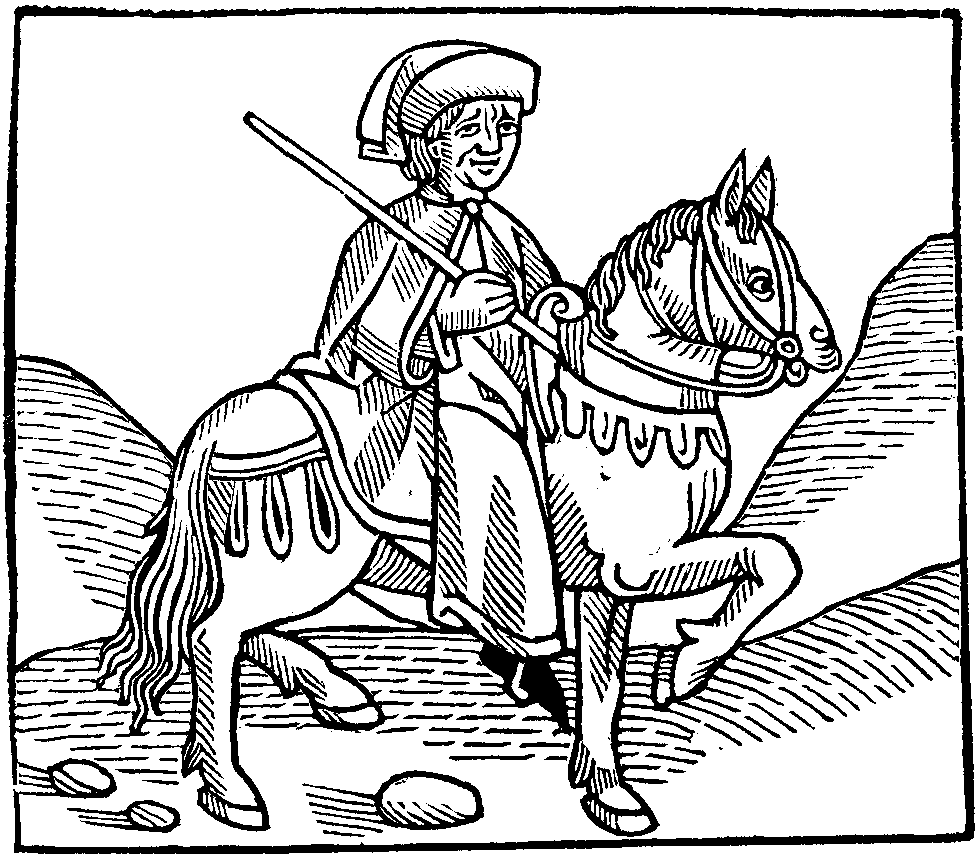
 The rooks whiche ben vicaires and legats of the kynge ought to be made lyke a knyght vpon an hors and a mantell and hood furryd with meneuyer holdynge a staf in his hande/ & for as moche as a kyng may not be in alle places of his royame/ Therfore the auctorite of hym is gyuen to the rooks/ whiche represent the kynge/ And for as moche as a royame is grete and large/ and that rebellion or nouelletes might sourdre and aryse in oon partye or other/ therfore ther ben two rooks one on the right side and that other on the lifte side They ought to haue in hem. pyte. Iuftice. humylite. wilfull pouerte. and liberalite/ Fyrst Iustice for hit is most fayr of the vertues/ For it happeth oftetyme that the ministris by theyr pryde and orgueyll subuerte Iuftice and do no ryght/ Wherfore the kynges otherwhyle lose theyr royames with out theyr culpe or gylte/ For an vntrewe Iuge or officyer maketh hys lord to be named vnIufte and euyll And contrarye wyse a trewe mynestre of the lawe and ryghtwys/ causeth the kynge to be reputed Iuste and trewe/ The Romayns therfore made good lawes/ And wolde that/ that they sholde be Iufte and trewe/ And they that establisshid them for to gouerne the peple/ wold in no wyse breke them/ but kepe them for to dye for them/ For the auncyent and wyse men sayd comynly that it was not good to make and ordeygne that lawe that is not Iuste Wherof Valerius reherceth that ther was a man that was named Themistides whiche cam to the counceyllours of athenes and sayd that he knewe a counceyll whiche was ryght prouffytable for them/ But he wolde telle hyt but to But to one of them whom that they wold/ And they asligned to hym a wyse man named Aristides/ And whan he had vnderstand hym he cam agayn to the other of the counceyll And sayd that the counceyll of Themystides was well prouffitable/ but hit was not Iuste/ how be hit y'e may reuolue hit in your mynde/ And the counceyll that he sayd was this/ that ther were comen two grete shippis fro lacedome and were arryued in theyr londe. And that hit were good to take them/ And whan the counceyll herde hym that sayde/ that hit was not Iuste ner right/ they lefte hem alle in pees And wold not haue adoo with alle/ The vicarye or Iuge of the kynge ought to be so Iuste/ that he shold employe alle his entente to saue the comyn wele And yf hit were nede to put his lyf and/ lose hit therfore/ we haue an ensample of marcus regulus wherof Tullius reherceth in the book of offices And saynt Augustyn also de ciuitate dei/ how he faught agayn them of cartage by see in shippis and was vaynquysshid and taken/ Than hit happend that they of cartage sente hymm in her message to rome for to haue theyr prisoners there/ for them y'e were taken/ and so to cha[=u]ge one for an other And made hym swere and promyse to come agayn/ And so he cam to rome And made proposicion tofore the senate And demanded them of cartage of the senatours to be cha[=u]ged as afore is sayd And than the senatours demanded hym what counceyll he gaf Certayn sayd he I co[=u]ceyll yow that y'e do hit not in no wise For as moche as the peple of rome that they of cartage holde in prison of youris ben olde men and brusid in the warre as I am my self/ But they that y'e holde in prison of their peple is alle the flour of alle their folke/ whiche counceyll they toke/ And than his frendes wolde haue holde hym and counceyllyd hym to abide there and not retorne agayn prysoner in to cartage/ but he wold neuer doo so ner abide/ but wold goo agayn and kepe his oth How well that he knewe that he went toward his deth For he had leuyr dye than to breke his oth Valeri9 reherceth in the sixth book of one Emelye duc of the romayns/ that in the tyme whan he had assieged the phalistes/ The scole maystre of the children deceyuyd the children of the gentilmen that he drewe hym a lityll and a lytyll vnto the tentys of the romayns by fayr speche. And sayd to the duc Emelie/ that by the moyan of the children that he had brought to hym/ he shold haue the cyte/ For theyr faders were lordes and gouernours. Whan Emelie had herde hym he sayd thus to hym Thou that art euyll and cruell And thou that woldest gyue a gyfte of grete felonnye and of mauuastye/ thou shalt ner hast not founden here Duc ne peple that resembleth the/ we haue also well lawes to kepe in batayll & warre As in our contres & other places/ and we wole obserue and kepe them vnto euery man as they ought to be kept And we ben armed agaynst our enemyes y't wole defende them And not ayenst them y't can not saue their lyf whan their contre is taken/ as thise lityll children/ Thou hast vaynquysshid them as moche as is in the by thy newe deceyuable falsenes and by subtilnes and not by armes/ but I that am a romayn shall vainquysshe them by craft and strengthe of armes/ And anon he comanded to take the said scole maister/ And to bynde his handes behynde hym as a traytour and lede hem to the parentis of the children And whan the faders & parentis sawe the grete courtosie that he had don to them They opend the yates and yelded them vnto hym/ we rede that hanyball had taken a prince of rome whiche vpon his oth and promyse suffrid hym to gon home/ and to sende hym his raunson/ or he shold come agayn within a certain tyme And whan he was at home in his place/ he sayde that he had deceyuyd hym by a false oth And whan the senatours knewe therof/ they constrayned hym to retorne agayn vnto hanyball/ Amos florus tellyth that the phisicien of kynge pirrus cam on a nyght to fabrice his aduersarye And promyfid hym yf he wold gyue hym for his laboure that he wold enpoysone pirrus his maister/ whan fabricius vnderstode this He dyde to take hym and bynde hym hande & foote/ and sente hym to his maistre and dyde do saye to hym word for worde lyke as the physicien had sayd and promysid hym to doo/ And whan pirrus vnderstode this he was gretly ameruaylled of the loyalte and trouth of fabrice his enemye/ and sayd certaynly that the sonne myghte lighther and sonner be enpesshid of his cours/ than fabrice shold be letted to holde loyalte and trouthe/ yf they than that were not cristen were so Iuste and trewe and louyd their contrey and their good renomee/ what shold we now doon than that ben cristen and that cure lawe is sette alle vpon loue and charyte/ But now a dayes ther is nothynge ellys in the world but barate Treson deceyte falsenes and trecherye Men kepe not theyr couenantes promyses. othes. writynges. ne trouthe/ The subgettis rebelle agayn theyr lorde/ ther is now no lawe kepte. nor fidelite/ ne oth holden/ the peple murmure and ryse agayn theyr lord and wole not be subget/ they ought to be pietous in herte/ whiche is auaillable to all thinge ther is pite in effecte by compassion/ and in worde by remission and pardon/ by almesse/ for to enclyne hymself to the poure For pite is nothynge ellis but a right grete will of a debonaire herte for to helpe alle men/ Valerius reherceth that ther was a Iuge named sangis whiche dampned a woman that had deseruyd the deth for to haue her heed smyten of or ellis that she shold dye in prison/ The Geayler that had pite on the woman put not her anone to deth but put her in the pryson/ And this woman had a doughter whiche cam for to se and conforte her moder But allway er she entryd into the pryson the Iayler serchid her that se shold bere no mete ne drynke to her moder/ but that she shold dye for honger/ Than hit happend after this that he meruaylled moche why this woman deyd not/ And began to espye the cause why she lyuyd so longe/ And fonde at laste how her doughter gaf souke to her moder/ And fedde her with her melke. whan the Iayler aawe this meruaill/ he wente & told the Iuge/ And whan the Iuge sawe this grete pite of the doughter to the moder he pardoned her and made her to be delyuerid oute of her pryson what is that/ that pite ne amolisshith/ moche peple wene that it is agaynst nature and wondre that the doughter shold gyue the moder to souke/ hit were agayn nature but the children shold be kynde to fader and moder/ Seneca sayth that the kynge of bees hath no prykke to stynge with as other bees haue. And that nature hath take hit away from hym be cause he shold haue none armes to assaylle them And this is an example vnto prynces that they shold be of the fame condicion/ Valerius reherceth in his .v. book of marchus martellus that whan he had taken the cyte of siracusane. And was sette in the hyest place of the cyte/ he behelde the grete destruction of the peple and of the cyte/ he wepte and sayde/ thou oughtest to be sorofull/ for so moche as thou woldest haue no pite of thy self/ But enioye the for thou art fallen in the hande of a right debonaire prynce. Also he recounteth whan pompeye had conqueryd the kynge of Germanye that often tymes had foughten ayenst the romayns And that he was brought to fore hym bounden/ he was so pietous that he wold not suffre hym to be longe on his knees to fore hym/ but he receyuyd hym cortoysly And sette the crowne agayn on his heed and put hym in thestate that he was to fore/ For he had oppynyon that hit was as worshipfull and fittynge to a kynge to pardone/ as to punysshe. Also he reherceth of a co[=u]ceyllour that was named poule that dide do brynge to fore hym a man that was prisonner And as he knelid to fore hym he toke hym vp fro the ground & made hym to sytte beside hym for to gyue hym good esperance and hoope And sayd to the other stondynge by/ in this wyse. yf hit be grete noblesse that we shewe our self contrarye to our enemyes/ than this fete ought to be alowed that we shew our self debonair to our caytyfs & prisonners Cesar whan he herde the deth of cathon whiche was his aduersarye sayde that he had grete enuye of his glorye. And no thinge of his patrimonye/ and therfore he lefte to his children frely all his patrimonye Thus taught vyrgyle and enseygned the gloryus prynces to rewle and gouerne the peple of rome. And saynt Augustin de ciuitate dei saith thus Thou emperour gouerne the peple pietously And make peas ouerall/ deporte and forbere thy subgets/ repreue & correcte the prowde/ for so enseyne And teche the the lawes/ And hit was wreton vnto Alexander/ that euery prynce ought to be pyetous in punysshynge/ and redy for to rewarde/ Ther is no thynge that causeth a prynce to be so belouyd of hys peple/ As whan he speketh to hem swetly/ and co[=u]ersith with hem symply/ And all this cometh of the roote of pyte/ we rede of the Emperour Traian that his frendes repreuyd hym of that he was to moche pryue and familier wyth the comyn peple more than an emperour ought to be/ And he answerd that he wold be suche an emperour as euery man desired to haue hym/ Also we rede of Alixander that on a tyme he ladde his oost forth hastely/ and in that haste he beheld where satte an olde knight that was sore acolde Whom he dide do arise and sette hym in his owne sete or siege/ what wondre was hit though y'e knightes desired to serue suche a lord that louyd better theyr helth than his dignite/ The rookes ought also to be humble & meke After the holy scripture whiche saith/ the gretter or in the hier astate that thou arte/ so moche more oughtest thou be meker & more humble Valerius reherceth in his .vii. book that ther was an emperour named publius cesar/ That dide do bete doun his hows whiche was in the middis of y'e market place for as moche as hit was heier than other houses/ for as moche as he was more glorious in astate than other/ Therfore wold he haue a lasse hous than other And scipion of affrique that was so poure of vol[=u]tarie pouerte y't whan he was dede/ he was buried at y'e dispencis of y'e comyn good/ They shold be so humble y't they shold leue theyr offices/ and suffre other to take hem whan her tyme comyth/ & doo honour to other/ for he gouerneth wel y'e royame y't may gouerne hit whan he will Valeri'9 saith In his thirde book that fabyan the grete had ben maistre counceyllour of his fader his grauntsire/ And of his grauntsirs fader & of alle his antecessours And yet dide he alle his payne and labour/ that his sone shold neuer haue that office after hym/ but for nothynge that he mystrusted his sone/ For he was noble and wise and more attemprid than other/ but he wold that the office shold not all way reste in the familye and hows of the fabyans Also he reherceth in his seuenth book that they wold make the sayd fabyan emþour/ but he excused hym and sayd that he was blynde and myght not see for age/ but that excusacion myght not helpe hym/ Than sayd he to hem/ seke y'e and gete yow another/ For yf y'e make me your emþour I may not suffre your maners/ nor y'e may not suffre myn/ Ther was a kynge of so subtyll engyne That whan men brought hym the crowne/ to fore that he toke hit/ he remembrid hym a lityll and saide/ O thou crowne that art more noble than happy For yf a kynge knewe well and parfaytly how that thou art full of paryls of thoughte and of charge/ yf thou were on the grounde/ he wolde neuer lyfte ner take the vp/ Remembre the that whan thou art most gloryous/ than haue some men moste enuye on the/ and whan thou haste moste seignourye and lordships than shalt thou haue moste care. thought and anguysshes/ Vaspasian was so humble that whan Nero was slayn alle the peple cryed for to haue hym emþour/ and many of his frendes cam & prayde hym that he wold take hit vpon hym/ so at the last he was constrayned to take hit vpon hym. And sayd to his frendes Hit is better and more to preyse and alowe for a man to take thempire agaynst his wil/ than for to laboure to haue hit and to put hym self therin/ Thus ought they to be humble and meke for to resseyue worship/ Therfore sayth the bible that Ioab the sone of Saryre that was captayn of the warre of the kynge Dauid/ whan he cam to take and wynne a Cyte/ He sente to Dauid and desired hym to come to the warre/ that the victorye shold be gyuen to Dauid/ And not to hym self/ Also they ought to be ware that they chaunge not ofte tymes her officers/ Josephus reherceth that the frendes of tyberyus meruaylled moche why he helde hys offycyers so longe in theyr offices wyth oute changynge/ And they demanded of hym the cause/ to whom he answerd/ I wold chaunge them gladly/ yf I wyste that hit shold be good for the peple/ But I sawe on a tyme a man that was roynyous & full of soores/ And many flyes satte vpon the soores and souked his blood that hit was meruaylle to see/ wherfore I smote and chaced them away. And he than said to me why chacest and smytest away thyse flyes that ben full of my blood/ And now shallt thou late come other that ben hongrye whiche shall doon to me double payne more than the other dide/ for the prikke of the hongrye is more poyngnant the half/ than of y'e fulle And therfore sayde he I leue the officiers in their offices. for they ben all riche/ and doo not so moch euyl & harme As the newe shold doo & were poure yf I shold sette hem in her places/ They ought also to be pacyent in herynge of wordes & in suffrynge payne on her bodyes/ as to the first One said to alisander that he was not worthy to regne. specially whan he suffrid that lecherie and delyte to haue seignoire in hym/ he suffrid hit paciently/ And answerd none otherwyse but that he wolde corrette hym self. And take better maners and more honeste Also hit is reherced that Iulius cezar was ballyd wherof he had desplaysir so grete that he kempt his heeris that laye on the after parte of his heed forward for to hyde the bare to fore. Than sayd a knyght to him Cezar hit is lighther And sonner to be made that thou be not ballid/ than that I haue vsid ony cowardyse in the warre of rome/ or hereafter shall doo ony cowardyse/ he suffrid hit paciently and sayd not aword/ Another reproched hym by his lignage And callyd hym fornier/ he answerd that hit is better that noblesse begynne in me/ than hit shold faylle in me/ Another callid hym tyraunt/ he answerd yf I were one. thou woldest not saie soo A knight callid on a tyme scipion of affricque fowle & olde knyght in armes And that he knewe lityll good And he answerd I was born of my moder a lityll child and feble and not a man of armes. And yet he was at alle tymes one of the best and moste worthy in armes that liuyd. Another sayd to vaspasian/ And a wolf shold sonner change his skyn and heer/ than thou sholdest cha[=u]ge thy lyf For the lenger thou lyvest the more thou coueytest And he answerd of thyse wordes we ought to laughe. But we ought to amende our selfe And punysshe the trespaces. Seneque reherceth that the kynge Antygonus herde certayn peple speke and saye euyll of hym/ And therwas betwene hem nomore but a courtyne/ And than he sayde make an ende of your euyll langage leste the kynge here yow/ for the courtyne heereth yow well[54] I nowhe. Than as towchynge to the paynes that they ought to suffre paciently Valerius reherceth that a tyrant dide do tormente Anamaximenes & thretenyd hym for to cutte of his tonge. To whom he sayd hit is not in thy power to doo soo/ and forthwyth he bote of his owne tonge/ And shewed hit wyth his teth and casted hit in the visage of the Tyrant Hit is a grete vertu in a man that he forgete not to be pacyent in corrections of wronges/ Hit is better to leue a gylty man vnpunysshyd/ than to punysshe hym in a wrath or yre Valerius reherceth that archita of tarente that was mayster to plato sawe that his feldes & lande was destroyed and lost by the necligence of his seruant To whom he sayd yf I were not angry with the I wold take vengeance and turmente the/ Lo there y'e may see that he had leuer to leue to punysshe/ than to pugnysshe more by yre & wrath than by right And therfore sayth seneque/ doo no thynge that thou oughtest to doo whan y'u art angry/ For whan thou art angry thou woldest doo alle thynges after thy playsir/ And yf thou canst not vaynquysshe thyn yre/ than muste thyn yre ouercome the/ After thys ought they to haue wylfull pouerte/ lyke as hit was in the auncyent prynces/ For they coueyted more to be riche in wytte and good maners than in moneye/ And that reherceth Valerius in his .viii. booke that scipion of Affryque was accused vnto the Senate that he shold haue grete tresour/ And he answerd certes whan I submysed affryque in to your poeste/ I helde no thynge to myself that I myght faye this is myn save only the surname of affryque/ Ner the affryquans haue not founden in me ner in my broder ony auarice/ ner y't we were so couetouse that we had ne had gretter enuye to be riche of name than of rychesses/ And therfore sayth seneque that the kynge Altagone vsid gladly in his hows vessels of erthe/ And some sayde he dyde hit for couetyse/ But he sayde that hit was better and more noble thynge to myne in good maners than in vayssell And whan some men demanded hym why and for what cause he dyde so/ he answerd I am now kynge of secylle/ and was sone of a potter/ and for as moche as I doubte fortune. For whan I yssued out of the hous of my fader and moder/ I was sodaynly made riche/ wherfore I beholde the natiuyte of me and of my lignage/ whiche is humble & meke/ And alle these thynges cometh of wilfull pouerte/ for he entended more to the comyn prouffyt than to his owen/ And of thys pouerte speketh saynt Augustyn in the booke of the cyte of god That they that entende to the comyn prouffyt. sorowe more that wilfull pouerte is lost in rome/ than the richesses of rome/ For by the wilfull pouerte was the renomee of good maners kept entierly/ thus by this richesse pouerte is not only corrupt in thyse dayes ner the cyte ner the maners/ but also the thoughtes of the men ben corrupt by thys couetyse and by felonnye that is worse. than ony other enemye And of the cruelte of the peple of rome speketh the good man of noble memorye Iohn the monke late cardynall of rome in the decretall the syxte in the chapitre gens sancta where he sayth/ that they ben felo[=u]s ayenst god. contrarye to holy thynges. traytres one to that other. enuyous to her neyghbours. proude vnto straungers. rebelle and vntrewe vnto theyr souerayns Not suffringe to them that ben of lower degree than they and nothinge shamfast to demande thinges discouenable and not to leue tyll they haue that they demande/ and not plesid but disagreable whan they haue resseyuyd the yeft They haue their tonges redy for to make grete boost/ and doo lityll/ They ben large in promysynges/ And smale gyuers/ they ben ryght fals deceyuours/ And ryght mordent and bitynge detractours/ For whiche thynge hit is a grete sorowe to see the humylite the pacyence And the good wisedom that was woute to be in this cyte of rome whiche is chief of alle the world is peruertid & torned in to maleheurte and thise euylles/ And me thynketh that in other partyes of crestiante they haue taken ensample of them to doo euyll/ They may saye that this is after the decretale of seygnourye and disobeysance/ that sayth That suche thynges that the souerayns doo/ Is lightly and sone taken in ensample of theyr subgets/ Also thise vicayres shold be large and liberall/ In so moche that suche peple as serue them ben duly payd and guerdoned of her labour/ For euery man doth his labour the better and lightlyer whan he seeth that he shall be well payd and rewarded/ And we rede that Titus the sone of vaspasian was so large and so liberall/ That he gaf and promysyd somewhat to euery man/ And whan hys moste pryuy frendes demanded of hym why he promysid more that he myght gyue/ he answerd for as moche as hyt apperteyneth not to a prynce that ony man shold departe sorowfull or tryste fro hym/ Than hit happend on a day that he gaf ner promysid no thynge to ony man And whan hit was euen auysed hymself/ he sayd to hys frendes/ O y'e my frendes thys day haue I lost for this day haue I don no good,' And also we rede of Iulius Cefar that he neuer saide in alle his lyue to his knyghtes goo oon but all way be sayde come come/ For I loue allway to be in youre companye/ And he knewe well that hit was lasse payne & trauayll to the knyghtes whan the prynce is in her companye that loueth hem & c[=o]forted hem And also we rede of the same Iulius cesar in the booke of truphes of phylosophers/ that ther was an Auncyent knyght of his that was in paryll of a caas hangynge to fore the Iuges of rome so he callyd cefar on a tyme and said to hym to fore all men that he shold be his aduocate And cesar deliueryd and assigned to hym a right good aduocate And the knyght sayd to hym O cesar I put no vicaire in my place whan thou were in parill in y'e batayll of assise/ But I faught for the. And than he shewed to hym the places of his woundes that he had receyuyd in the batayll And than cam cesar in his propre persone for to be his aduocate & to plete his cause for hym/ he wold not haue the name of vnkyndenes/ but doubted that men shold saye that he were proude And that he wold not do for them that had seruyd hym They that can not do so moche/ as for to be belouyd of her knyghtes/ can not loue the knyghtes And this sufficeth of the rooks.



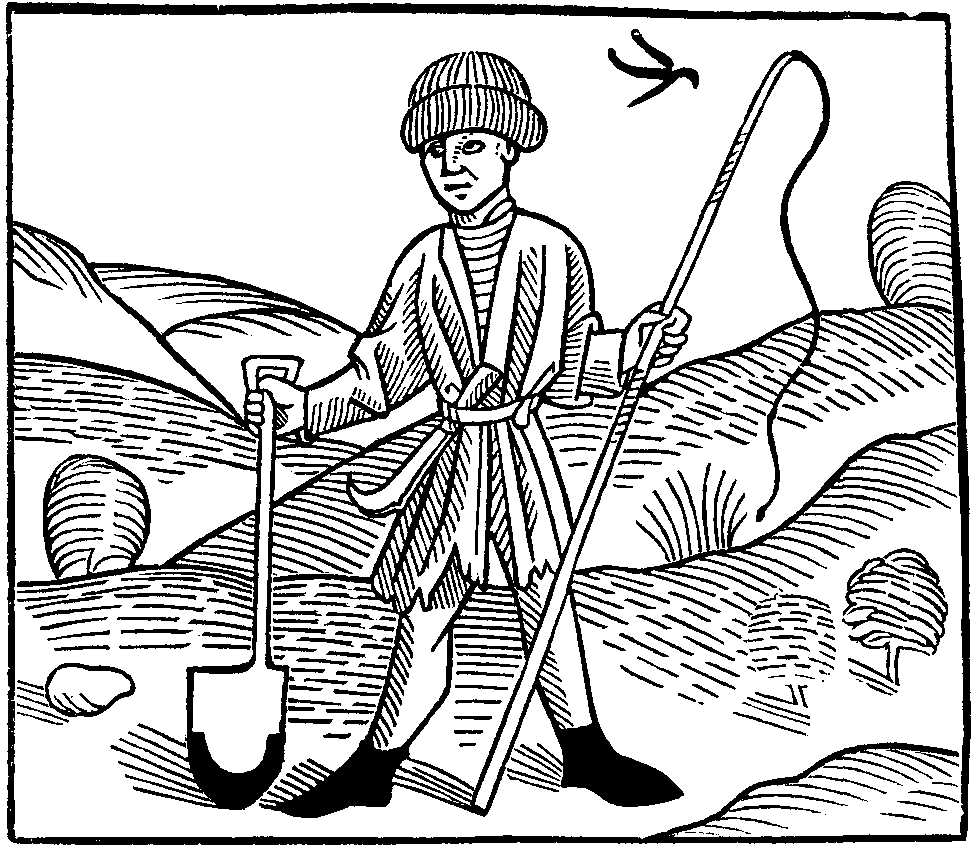
 For as moche as the Noble persone canne not rewle ne gouerne with oute y'e seruyce and werke of the peple/ than hit behoueth to deuyse the oeuurages and the offices of the werkemen/ Than I shall begynne fyrst at the fyrst pawne/ that is in the playe of the chesse/ And signefieth a man of the comyn peple on fote For they be all named pietous that is as moche to saye as footemen And than we wyll begynne at the pawne whiche standeth to fore the rooke on the right side of the kinge for as moche as this pawne apperteyneth to serue the vicaire or lieutenant of the kynge and other officers vnder hym of necessaryes of vitayll/ And this maner a peple is figured and ought to be maad in the forme & shappe of a man holdynge in his ryght hande a spade or shouell And a rodde in the lifte hand/ The spade or shouell is for to delue & labour therwith the erthe/ And the rodde is for to dryue & conduyte wyth all the bestes vnto her pasture also he ought to haue on his gyrdell/ a crokyd hachet for to cutte of the supfluytees of the vignes & trees/ And we rede in the bible that the first labourer that euer was/ was Caym the firste sone of Adam that was so euyll that he slewe his broder Abel/ for as moche as the smoke of his tythes went strayt vnto heuen'/ And the smoke & fumee of the tythes of Caym wente downward vpon the erthe And how well that this cause was trewe/ yet was ther another cause of enuye that he had vnto his broder/ For whan Adam their fader maried them for to multyplie y'e erthe of hys lignye/ he wolde not marye ner Ioyne to gyder the two that were born attones/ but gaf vnto caym her that was born wyth Abel/ And to Abel her that was born with caym/ And thus began thenuye that caym had ayenst abel/ For his wyf was fayrer than cayms wyf And for this cause he slough abel with the chekebone of a beste/ & at that tyme was neuer no maner of yron blody of mannes blood/ And abel was y'e first martier in tholde testament/ And this caym dide many other euyl thinges whiche I leue/ for hit apperteyneth not to my mater/ But hit behoueth for necessite y't some shold labour the erthe after y'e synne of adam/ for to fore er adam synned/ the erthe brought forth fruyt with out labour of handes/ but syn he synned/ hit muste nedes be labourid with y'e handes of men And for as moche as the erthe is moder of alle thynges And that we were first formed and toke oure begynnyng of the erthe/ the same wyse at the laste. she shall be the ende vnto alle vs and to alle thynges/ And god that formed vs of the erthe hath ordeyned that by the laboure of men she shold gyue nourysshyng vnto alle that lyueth/ and first the labourer of y'e erthe ought to knowe his god that formed and made heuen & erthe of nought And ought to haue loyaulte and trouth in hymself/ and despise deth for to entende to his laboure And he ought to gyue thankyngis to hym that made hym And of whom he receyueth all his goodes temporall/ wherof his lyf is susteyned/ And also he is bounden to paye the dismes and tythes of alle his thynges And not as Caym dyde. But as Abell dyde of the beste that he chese allway for to gyue to god & to plese hym/ For they that grucche and be greuyd in that they rendre and gyue to god the tienthes of her goodes/ they ought to be aferd and haue drede that they shall falle in necessite And y't they might be dispoyllyd or robbed by warre or by tempeste that myght falle or happen in the contrey And hit is meruayll though hit so happen For that man that is disagreable vnto god And weneth y't the multiplynge of his goodes temporell cometh by the vertu of his owne co[=u]ceyll and his wytte/ the whiche is made by the only ordenance of hym that made alle. And by the same ordenance is soone taken away fro hym that is disagreable/ and hit is reson that whan a man haboundeth by fortune in goodes/ And knoweth not god/ by whom hit cometh/ that to hym come some other fortune by the whiche he may requyre grace and pardon And to knowe his god/ And we rede of the kynge Dauid that was first symple & one of the comyn peple/ that whan fortune had enhaunsed and sette hym in grete astate/ he lefte and forgate his god/ And fyll to aduoultrye and homicyde and other synnes/ Than anon his owne sone Absalom assaylled & began to persecute hym And than whan he sawe that fortune was contrarye to hym/ he began to take agayn his vertuous werkis and requyred pardoun and so retorned to god agayn. We rede also of the children of ysræl that were nyghe enfamyned in desert and sore hongry & thrusty that they prayd & requyred of god for remedy/ Anon he changed his wyll & sente to hem manna/ & flessh &c./ And whan they were replenesshid & fatte of the flessh of bestes & of the manna/ they made a calf of gold and worshippid hit. Whiche was a grete synne & Inyquyte/ For whan they were hongry they knewe god/ And whan theyre belyes were fylde & fatted/ they forgid ydoles & were ydolatrers. After this euery labourer ought to be faythfull & trewe That whan his maystre delyuereth to hym his lande to be laboured/ that he take no thinge to hymself but that hym ought to haue & is his/ but laboure truly & take cure and charge in the name of his maistre/ and do more diligently his maisters labours than his owen/ for the lyf of y'e most grete & noble men next god lieth in y'e handes of the labourers/ and thus all craftes & occupacions ben ordeyned not only to suffise to them only/ but to the comyn/ And so hit happeth ofte tyme that y'e labourer of the erthe vseth grete and boystous metes/ and bringeth to his maister more subtile & more deyntous metes/ And valerius reherceth in his. vi. book that ther was a wife & noble maistre y't was named Anthoni9 that was accused of a caas of aduoultrye/ & as the cause henge to fore the Iuges/ his accusers or denonciatours brought I labourer that closid his land for so moche as they sayde whan his maistre wente to doo the aduoultrye/ this same seruant bare the lanterne. wherof Anthonyus was sore abasshyd and doubted that he shold depose agaynst hym But the labourer that was named papirion sayd to his maister that he shold denye his cause hardyly vnto the Iuges For for to be tormentid/ his cause shold neuer be enpeyrid by hym/ ner no thynge shold yssue out of his mouth wherof he shold be noyed or greuyd And than was the labourer beten and tormentid and brent in many places of his body But he sayd neuer thynge wherof his mayster was hurte or noyed/ But the other that accused his maister were punysshid And papiryon was deliuerid of his paynes free and franc/ And also telleth valerius that ther was another labourer that was named penapion/ that seruyd a maister whos name was Themes which was of meruayllous faith to his maystre For hit befell that certain knyghtes cam to his maisters hows for to slee hym And anone as papiryon knewe hit/ he wente in to his maisters chambre And wold not be knowen For he dide on his maisters gowne and his rynge on his fynger/ And laye on his bedde And thus put hym self in parill of deth for to respite his maisters lyf/ But we see now a dayes many fooles that daigne not to vse groos metes of labourers. And flee the cours clothynge And maners of a seruant Euery wise man a seruant that truly serueth his maister is free and not bonde/ But a foole that is ouer proude is bonde/ For the debilite and feblenes of corage that is broken in conscience by pryde Enuye. or by couetyse is ryght seruytude/ yet they ought not to doubte to laboure for feere and drede of deth/ no man ought to loue to moche his lyf/ For hit is a fowll thynge for a man to renne to the deth for the enemye of his lyf/ And a wyse man and a stronge man ought not to flee for his lyf/ but to yssue For ther is no man that lyueth/ but he must nedes dye. And of this speketh claudyan and sayth that alle thoo thynges that the Ayer goth aboute and enuyronned. And alle thynge that the erthe laboureth/ Alle thyngys that ben conteyned wyth in the see Alle thynges that the floodes brynge forth/ Alle thynges that ben nourysshid and alle the bestes that ben vnder the heuen shall departe alle from the world/ And alle shall goo at his comandement/ As well Kynges Prynces and alle that the world enuyronned and gooth aboute/ Alle shall goo this waye/ Than he ought not to doubte for fere of deth. For as well shail dye the ryche as the poure/ deth maketh alle thynge lyke and putteth alle to an ende/ And therof made a noble versifier two versis whiche folowe Forma. genus. mores. sapi[=e]cia. res. et honores/ Morte ruant subita sola manent merita/ Wherof the english is Beaulte. lignage. maners. wysedom. thynges & honoures/ shal ben deffetid by sodeyn deth/ no thynge shal abide but the merites/ And herof fynde we in Vitas patrum. that ther was an erle a riche & noble man that had a sone onely/ and whan this sone was of age to haue knowlech of the lawe/ he herde in a sermone that was prechid that deth spareth none/ ne riche ne poure/ and as well dyeth y'e yonge as the olde/ and that the deth ought specially to be doubted for .iii. causes/ one was/ y't noman knoweth whan he cometh/ and the seconde/ ner in what state he taketh a man/ And the thirde he wote neuer whither he shall goo. Therfore eche man shold dispise and flee the world and lyue well and hold hym toward god And when this yong man herde this thynge/ he wente oute of his contrey and fledde vnto a wyldernesse vnto an hermytage/ and whan his fader had loste hym he made grete sorowe/ and dyde do enquere & seke hym so moche at last he was founden in the hermitage/ and than his fader cam theder to hym and sayde/ dere sone come from thens/ thou shalt be after my deth erle and chyef of my lignage/ I shall be lost yf thou come not out from thens/ And he than that wyste non otherwise to eschewe the yre of his fader bethought hym and sayde/ dere fader ther is in your centre and lande a right euyll custome yf hit plese yow to put that away I shall gladly come out of this place and goo with yow The fader was glad and had grete Ioy And dema[=u]ded of hym what hit was And yf he wold telle hym he promysid him to take hit away and hit shold be left and sette aparte. Than he sayde dere fader ther dyen as well the yong folk in your contrey as the olde/ do that away I pray yow/ Whan his fader herde that he sayde Dere sone that may not be ner noman may put that away but god only/ Than answerd the sone to the fader/ than wylle I serue hym and dwelle here wyth hym that may do that. And so abode the childe in the hermytgage & lyuyd there in good werkes After this hit apperteyneth to a labourer to entende to his laboure and flee ydlenes/ And thou oughtest to knowe that Dauid preyseth moche in the sawlter the treve labourers and sayth/ Thou shalt ete the labour of thyn handes and thou art blessid/ and he shall do to the good And hit behoueth that the labourer entende to his labour on the werkedayes for to recuyell and gadre to gyder the fruyt of his labour/ And also he ought to reste on the holy day/ bothe he and his bestes. And a good labourer ought to norysshe and kepe his bestes/ And this is signefied by the rodde that he hath. Whiche is for to lede and dryue them to the pasture/ The fiste pastour that euer was/ was Abel whiche was Iuste and trewe/ and offryd to god the bestes vnto his sacrefice/ And hym ought he to folowe in craft & maners But no man that vseth the malice of Caym may ensue and folowe Abel/ And thus hit apperteyneth to the labourer to sette and graffe trees and vygnes/ and also to plante and cutte them And so dyde noe whiche was the first that planted the vygne after y'e deluge and flood For as Iosephus reherceth in y'e book of naturell thinges Noe was he that fonde fyrst the vygne/ And he fonde hym bitter and wylde/ And therfore he toke .iiii. maners of blood/ that is to wete the blood of a lyon. the blood of a lamb, the blood of a swyne. and the blood of an ape and medlid them alto geder with the erthe/ And than he cutte the vygne/ And put this aboute the rootes therof. To thende that the bitternes shold be put away/ and that hyt shold be swete/ And whan he had dronken of the fruyt of this vygne/ hit was so good and mighty that he becam so dronke/ that he dispoylled hym in suche wise y't his pryuy membres might be seen/ And his yongest sone cham mocqued and skorned hym And whan Noe was awakid & was sobre & fastinge/ he assemblid his sones and shewid to them the nature of the vygne and of the wyn/ And told to them the caufe why y't he had put the blood of the bestes aboute the roote of the vygne and that they shold knowe well y't otherwhile by y'e strength of the wyn men be made as hardy as the lyon and yrous And otherwhile they be made symple & shamefast as a lambe And lecherous as a fwyn/ And curyous and full of playe as an Ape/ For the Ape is of suche nature that whan he seeth one do a thynge he enforceth hym to doo the same/ and so doo many whan they ben dronke/ they will medle them wyth alle officers & matiers that apperteyne no thynge to them/ And whan they ben fastynge & sobre they can scarfely accomplisshe theyr owne thynges And therfore valerian reherceth that of auncyente and in olde tyme women dranke no wyn for as moche as by dronkenship they myght falle in ony filthe or vilonye And as Ouide sayth/ that the wyns otherwhyle apparaylle the corages in suche manere that they ben couenable to alle synnes whiche take away the hertes to doo well/ They make the poure riche/ as longe as the wyn is in his heed And shortly dronkenshyp is the begynnynge of alle euyllys/ And corrompith the body/ and destroyed the fowle and mynusshith the goodes temporels/ And this suffyseth for the labourer.

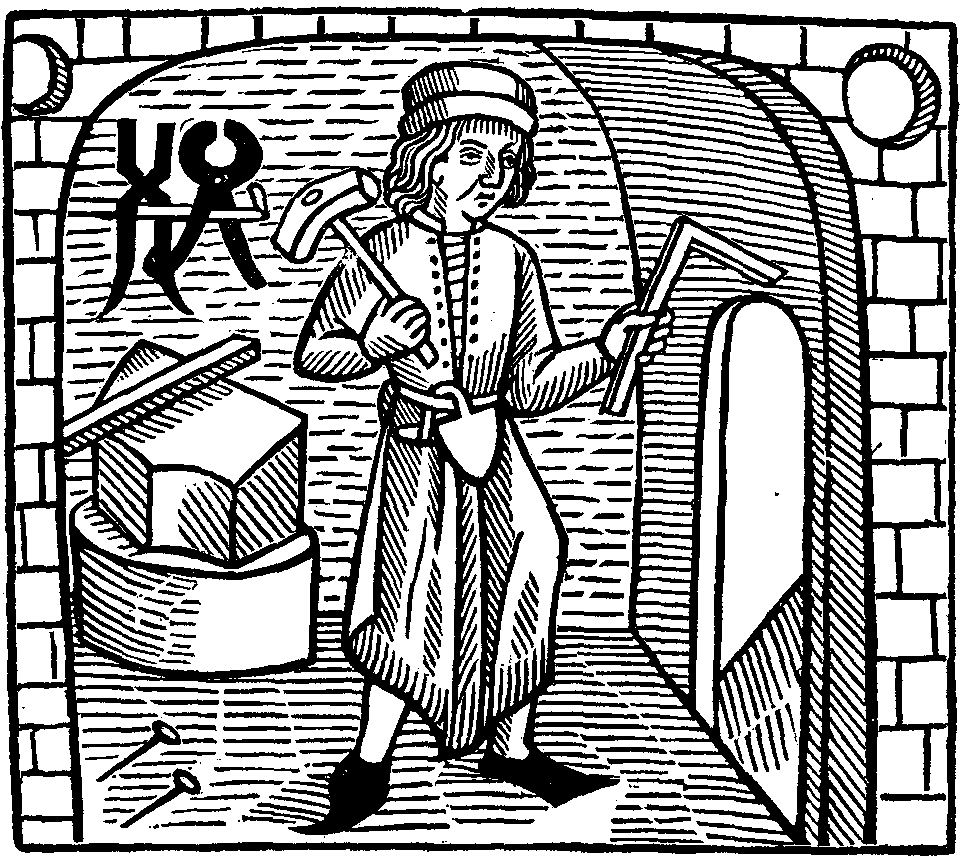
 The seconde pawne y't standeth to fore the knyght on the right side of the kynge hath the forme and figure of a man as a smyth and that is reson For hit apperteyneth to y'e knyghtes to haue bridellys sadellys spores and many other thynges made by the handes of smythes and ought to holde an hamer in his right hande. And in his lyfte hand a dolabre and he ought to haue on his gyrdell a trowell For by this is signefied all maner of werkemen/ as goldsmithes. marchallis, smithes of all forges/ forgers and makers of monoye & all maner of smythes ben signefyed by[55] the hamer/ The carpenters ben signefyed by the dolabre or squyer/ And by the trowell we vnderstande all masons & keruars of stones/ tylers/ and alle them that make howses castels & tours/ And to alle these crafty men hit apperteyneth that they be trewe. wise and stronge/ and hit is nede y't they haue in hemself faith and loyaulte/ For vnto the goldsmythes behoueth gold & siluer And alle other metallys. yren & steel to other/ And vnto the carpenters and masons/ ben put to theyr edifices the bodyes and goodes of the peple/ And also men put in the handes of the maronners body and goodes of the peple/ And in the garde and sewerte of them men put body & sowle in the paryls of the see/ and therfore ought they to be trewe/ vnto whom men commytte suche grete charge and so grete thynges vpon her fayth and truste. And therfore sayth the philosopher/ he that leseth his fayth and beleue/ may lose no gretter ne more thynge. And fayth is a fouerayn good and cometh of the good wyll of the herte and of his mynde And for no necessite wyll deceyue no man/ And is not corrupt for no mede. Valerius reherceth that Fabius had receyuyd of hanybal certayn prysoners that he helde of the romayns for a certayn some of money whiche he promysid to paye to the sayd hanyball/ And whan he cam vnto the senatours of rome and desired to haue y'e money lente for hem They answerd that they wold not paye ner lene And than fabius sente his sone to rome & made hym to selle his heritage & patrimonye/ and fente the money that he resseyuyd therof vnto hanibal/ And had leuer & louyd better to be poure in his contrey of herytage/ than of byleue and fayth/ But in thyfe dayes hit were grete folye to haue fuche affiance in moche peple but yf they had ben preuyd afore For oftentymes men truste in them by whom they ben deceyuyd at theyr nede/ And it is to wete that these crafty men and werkemen ben souerainly prouffitable vnto the world And wyth oute artificers and werkmen the world myght not be gouerned/ And knowe thou verily that alle tho thynges that ben engendrid on the erthe and on the see/ ben made and formed for to do prouffit vnto the lignage of man/ for man was formed for to haue generacion/ that the men myght helpe and prouffit eche other And here in ought we to folowe nature/ For she shewed to vs that we shold do comyn prouffit one to an other/ And y'e first fondement of Iustice is that no man shold noye or greue other But that they ought doo the comyn prouffit/ For men saye in reproche That I see of thyn/ I hope hit shall be myn But who is he in thyse dayes that entendeth more to the comyn prouffit than to his owne/ Certaynly none/ But all way a man ought to haue drede and feere of his owne hows/ whan he seeth his neyghbours hous a fyre And therfore ought men gladly helpe the comyn prouffit/ for men otherwhile sette not be a lityll fyre And might quenche hit in the begynnyng/ that afterward makyth a grete blasyng fyre. And fortune hath of no thinge so grete playsir/ as for to torne & werke all way/ And nature is so noble a thynge that were as she is she wyll susteyne and kepe/ but this rewle of nature hath fayllid longe tyme/ how well that the decree sayth that alle the thynges that ben ayenst the lawe of nature/ ought to be taken away and put a part And he sayth to fore in the .viii. distinction that the ryght lawe of nature differenceth ofte tymes for custome & statutes establisshid/ for by lawe of nature all thinge ought to be comyn to euery man/ and this lawe was of old tyme And men wene yet specially y't the troians kept this lawe And we rede that the multitude of the Troians was one herte and one sowle/ And verayly we fynde that in tyme passid the philosophres dyde the same/ And also hit is to be supposyd that suche as haue theyr goodes comune & not propre is most acceptable to god/ For ellys wold not thise religious men as monkes freris chanons obseruantes & all other auowe hem & kepe the wilfull pouerte that they ben professid too/ For in trouth I haue my self ben conuersant in a religio'9 hous of white freris at gaunt Which haue all thynge in comyn amonge them/ and not one richer than an other/ in so moche that yf a man gaf to a frere .iii. d or .iiii. d to praye for hym in his masse/ as sone as the masse is doon he deliuerith hit to his ouerest or procuratour in whyche hows ben many vertuous and deuoute freris And yf that lyf were not the beste and the most holiest/ holy church wold neuer suffre hit in religion And acordynge thereto we rede in plato whiche sayth y't the cyte is well and Iustely gouernid and ordeyned in the whiche no man maye saye by right, by cuftome. ne by ordenance/ this is myn/ but I say to the certaynly that syn this custome cam forth to say this is myn/ And this is thyn/ no man thought to preferre the comyn prouffit so moche as his owen/ And alle werkemen ought to be wise & well aduysyd so that they haue none enuye ne none euyll suspecion one to an other/ for god wylle that our humayne nature be couetous of two thynges/ that is of Religion. And of wysedom/ but in this caas ben some often tymes deceyued For they take ofte tymes religion and leue wisedom And they take wysedom and reffuse religion And none may be vraye and trewe with oute other For hit apperteyneth not to a wyse man to do ony thynge that he may repente hym of hit/ And he ought to do no thynge ayenst his wyll/ but to do alle thynge nobly, meurely. fermely. and honestly And yf he haue enuye vpon ony. hit is folye For he on whom he hath enuye is more honest and of more hauoir than he whiche is so enuyous/ For a man may haue none enuye on an other/ but be cause he is more fortunat and hath more grace than hym self/ For enuye is a sorowe of corage y't cometh of dysordynance of the prouffit of another man And knowe thou verily that he that is full of bounte shall neuer haue enuye of an other/ But thenuyous man seeth and thynketh alleway that euery man is more noble/ And more fortunat that hymself And sayth alleway to hymself/ that man wynneth more than I/ and myn neyghebours haue more plente of bestes/ and her thynges multiplye more than myn/ and therfore thou oughtest knowe that enuye is the most grettest dedely synne that is/ for she tormenteth hym that hath her wythin hym/ wyth oute tormentynge or doyng ony harme to hym/ on whome he hath enuye. And an enuyous man hath no vertue in hymself/ for he corrumpeth hymself for as moche as he hateth allway the welthe and vertues of other/ and thus ought they to kepe them that they take none euyll suspec[=o]n For a man naturally whan his affection hath suspecion in ony man that he weneth that he doth/ hit semeth to hym verily that it is doon. And hit is an euyll thynge for a man to haue suspecion on hymfelf/ For we rede that dionyse of zecyll a tyrant Was so suspecionous that he had so grete fere and drede For as moche as he was hated of all men/ that he putte his frendes oute of theyr offices that they had/ And put other strangers in theyr places for to kepe his body/ and chese suche as were ryght Cruell and felons/ And for fere and doubte of the barbours/ he made hys doughters to lerne shaue and kembe/ And whan they were grete. He wold not they shold vse ony yron to be occupied by them/ but to brenne and senge his heeris/ and manaced them and durst not truste in them/ And in lyke wyse they had none affiance in hym And also he dyde do enuyronne the place where he laye wyth grete diches and brode lyke a castell/ And he entryd by a drawbrygge whiche closyd after hym/ And hys knyghtes laye wyth oute wyth his gardes whiche wacchid and kept straytly thys forteresse/ And whan plato sawe thys Dionyse kynge of cezille thus enuyronned and set aboute wyth gardes & wacche-men for the cause of his suspecion sayd to hym openly to fore all men kinge why hast thou don so moche euyll & harme/ that the behoueth to be kept wyth so moche peple/ And therfore I saye that hit apperteyneth not to ony man that wylle truly behaue hym self in his werkis to be suspecyous/ And also they ought to be stronge and seure in theyr werkes/ And specyally they that ben maysters and maronners on the see/ for yf they be tumerous and ferdfull they shold make a ferde them that ben in theyr shippis/ that knowe not the paryls/ And so hit might happene that by that drede and fere alle men shold leue theyr labour/ And so they myght be perisshid and despeyred in theyr corages/ For a shippe is soone perisshid and lost by a lityll tempest/ whan the gouernour faylleth to gouerne his shippe for drede/ And can gyue no counceyll to other than it is no meruayll/ thangh they be a ferd that ben in his gouernance/ And therfore ought be in them strengthe force and corage/ and ought to considere the peryls that might falle/ And the gouernour specially ought not to doubte/ And if hit happen that ony paryll falle/ he ought to promyse to the other good hoope/ And hit apperteyneth well/ that a man of good and hardy corage be sette in that office/ In suche wyse that he haue ferme and seure mynde ayenst the paryls that oftetymes happen in the see/ and with this ought the maroners haue good and ferme creance and beleue in god/ and to be of good reconforte & of fayr langage vnto them that he gouerneth in suche paryls/ And this sufficeth to yow as touchynge the labourers.
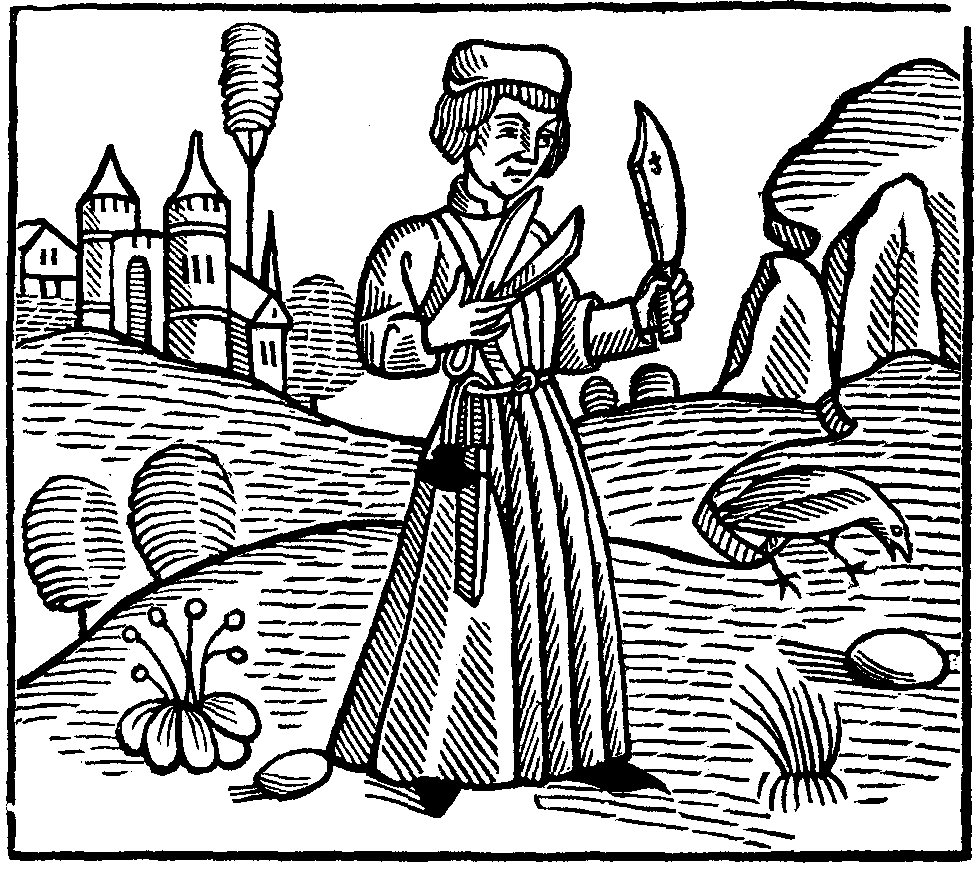
 The thirde pawne whiche is sette to fore the Alphyn on the right side ought to be figured as a clerk And hit is reson that he shold so be/ For as moche as amonge y'e comon peple of whom we speke in thys book they plete the differencis contencions and causes otherwhile the whiche behoueth the Alphins to gyue sentence and Iuge as Iuges And hit is reson that the Alphin or Iuge haue his notarye/ by whom y'e processe may be wreton/ And this pawne ought to be made and figured in this mamere/ he muste be made like a man that holdeth in his right hand a pair of sheres or forcetis/ and in the lifte hand a grete knyf and on his gurdell a penuer and an ynkhorn/ and on his eere a penne to wryte wyth And that ben the Instrumentis & the offices that ben made and put in writynge autentyque/ and ought to haue passed to fore the Iuges as libelles writtes condempnacions and sentences/ And that is signefied by the scriptoire and the penne and on that other part hit appertayneth to them to cutte cloth. shere. dighte. and dye/ and that is signefied by the forcettis or sheres/ and the other ought to shaue berdes and kembe the heeris/ And the other ben coupers. coryers. tawiers. skynners. bouchers and cordwanners/ and these ben signefyed by the knyf that he holdeth in his hand and some of thise forsayd crafty men ben named drapers or clothmakers for so moche as they werke wyth wolle. and the Notayres. skynners. coryours. and cardewaners werke by skynnes and hydes/ As parchemyn velume. peltrye and cordewan/ And the Tayllours. cutters of cloth, weuars. fullars. dyers/ And many other craftes ocupye and vse wulle/ And alle thyse crafty men & many other that I haue not named/ ought to doo theyr craft and mestyer/ where as they ben duly ordeyned Curyously and truly/ Also ther ought to be amonge thyse crafty men amyable companye and trewe/ honest contenance/ And trouthe in their wordes/ And hit is to wete that the notaries ben right prouffitable and ought to be good & trewe for the comyn And they ought to kepe them fro appropriynge to themself that thynge y't apperteyneth to the comyn And yf they be good to them self/ they ben good to other. And yf they be euyll for themself/ they ben euyll for other And the processes that ben made to fore the Iuges ought to ben wreton & passid by them/ and hit is to wete that by their writynge in the processis may come moche prouffit And also yf they wryte otherwyse than they ought to doo/ may ensewe moche harme and domage to the comyn Therfore ought they to take good heede that they change not ne corrumpe in no wyse the content of the sentence. For than ben they first forsworn And ben bounden to make amendes to them that by theyr tricherye they haue endomaged/ And also ought they to rede visite and to knowe the statutes. ordenances and the lawes of the cytees of the contre/ where they dwelle and enhabite/ And they ought to considere yf ther be ony thynge therein conteyned ayenst right and reson/ and yf they fynde ony thinge contraire/ they ought to admoneste and warne them that gouerne/ that suche thynges may be chauged into better astate/ For custome establisshid ayenst good maners and agaynst the fayth/ ought not to be holden by right. For as hit is sayd in the decree in the chapitre to fore/ alle ordenance made ayenst ryght ought to be holden for nought Alas who is now that aduocate or notaire that hath charge to wryte and kepe sentence that putteth his entente to kepe more the comyn prouffit or as moche as his owen/ But alle drede of god is put a back/ and they deceyue the symple men And drawen them to the courtes disordinatly and constrayned them to swere and make othes not couenable/ And in assemblyng the peple thus to gyder they make moo traysons in the cytees than they make good alyances And otherwhile they deceyue their souerayns/ whan they may doo hit couertly For ther is no thynge at this day that so moche greueth rome and Italye as doth the college of notaries and aduocates publicque For they ben not of oon a corde/ Alas and in Engeland what hurte doon the aduocats. men of lawe. And attorneyes of court to the comyn peple of y'e royame as well in the spirituell lawe as in the temporall/ how torne they the lawe and statutes at their pleasir/ how ete they the peple/ how enpouere they the comynte/ I suppose that in alle Cristendom ar not so many pletars attorneys and men of the lawe as ben in englond onely/ for yf they were nombrid all that lange to the courtes of the channcery kinges benche. comyn place. cheker. ressayt and helle And the bagge berars of the same/ hit shold amounte to a grete multitude And how alle thyse lyue & of whome. yf hit shold be vttrid & told/ hit shold not be beleuyd. For they entende to theyr synguler wele and prouffyt and not to the comyn/ how well they ought to be of good wyll to gyder/ and admoneste and warne the cytes eche in his right in suche wise that they myght haue pees and loue one with an other And tullius saith that frendshippe and good wyll that one ought to haue ayenst an other for the wele of hym that he loueth/ wyth the semblable wylle of hym/ ought to be put forth to fore alle other thynges/ And ther is no thynge so resemblynge and lyke to the bees that maken honye ne so couenable in prosperite and in aduersite as is loue/ For by loue gladly the bees holden them to gyder/ And yf ony trespace to that other anone they renne vpon the malefactour for to punysshe hym/ And verray trewe loue faylleth neuer for wele ne for euyll/ and the most swete and the most confortynge thynge is for to haue a frende to whom a man may saye his secrete/ as well as to hym self/ But verayly amytye and frendship is somtyme founded vpon som thinge delectable And this amytye cometh of yongthe/ in the whiche dwelleth a disordinate heete.
And otherwhile amytie is founded vpon honeste/ And this amytie is vertuouse/ Of the whiche tullius faith y't ther is an amytie vertuous by the whiche a man ought to do to his frende alle that he requyreth by rayson For for to do to hym a thynge dishonneste it is ayenst the nature of verray frendshipe & amytie/ And thus for frendshipe ne for fauour a man ought not to doo ony thinge vnresonable ayenst the comyn prouffit ner agaynst his fayth ne ayenst his oth/ for yf alle tho thynges that the frendes desire and requyre were accomplisshid & doon/ hit shold seme that they shold be dishoneste coniuracions/ And they myght otherwhile more greue & hurte than prouffit and ayde/ And herof sayth seneque that amytie is of suche wylle as the frende wylle/ And to reffuse that ought to be reffusid by rayson/ And yet he sayth more, that a man ought to alowe and preyse his frende to fore the peple/ and to correcte and to chastyse hym pryuyly. For the lawe of amytie is suche For a man ought not to demande ner doo to be doon to his frende no vyllayns thynge that ought to be kept secrete And valerian sayth that it is a fowll thynge and an euyll excufacion/ yf a man conffesse that he hath done ony euyll for his frende ayenst right and rayson/ And sayth that ther was a good man named Taffile whiche herde one his frende requyre of hym a thynge dishonnefte whiche he denyed and wold not doo And than his frende sayth to hym in grete dispyte/ what nede haue I of thy frendship & amytie whan thou wylt not doo that thynge that I requyre of the And Taffile answerd to hym/ what nede haue I of the frendship and of the amytie of the/ yf I shold doo for the thynge dishonefte And thus loue is founded otherwhile vpon good prouffitable/ and this loue endureth as longe as he seeth his prouffit And herof men faye a comyn prouerbe in england/ that loue lasteth as longe as the money endureth/ and whan the money faylleth than there is no loue/ and varro reherceth in his smmes/ that y' riche men ben alle louyd by this loue/ for their frendes ben lyke as y'e huse whiche is aboute the grayn/ and no man may proue his frende so well as in aduersite/ or whan he is poure/ for the veray trewe frende faylleth at no nede/ And seneque saith y't some folowe the empour for riches/ and so doon y'e flies the hony for the swetenes/ and the wolf the karayn And thise companye folowe the proye/ and not the man And tullius saith that Tarquyn y'e proude had a neuewe of his suster which was named brutus/ and this neuewe had banysshid tarquyn out of rome and had sente hym in exyle/ And than sayd he first that he parceyuyd & knewe his frendes whiche were trewe & untrewe/ and y't he neuer perceyuyd a fore tyme whan he was puyssant for to doo their wyll/ and sayd well that the loue that they had to hym/ endured not but as longe as it was to them prouffitable/ and therfore ought till the ryche men of the world take hede/ be they Kynges Prynces or ducs to what peple they doo prouffit & how they may and ought be louyd of theyr peple/ For cathon sayth in his book/ see to whom thougyuyst/ and this loue whiche is founded vpon theyr prouffit/ whiche faylleth and endureth not/ may better be callyd and said marchandyse than loue/ For yf we repute this loue to our prouffit only/ and nothynge to the prouffyt of hym that we loue/ It is more marchandyse than loue/ For he byeth our loue for the prouffit that he doth to vs/ and therfor saith the versifier thise two versis Tempore felici multi murmerantur amici Cum fortuna perit nullus amicus erit/ whiche is to saye in English that as longe as a man is ewrous and fortunat he hath many frendes but whan fortune torneth and perisshith, ther abideth not to hym one frende/ And of this loue ben louyd the medowes, feldes, Trees and the bestes for the prouffit that men take of them/ But the loue of the men ought to be charyte, veray gracious and pure by good fayth/ And the veray trewe frendes ben knowen in pure aduersite/ and pers alphons saith in his book of moralite that ther was a philosophre in arabye that had an onely sone/ of whom he demanded what frendes he had goten hym in his lyf. And he answerd that he had many And his fader sayd to hym/ I am an olde man/ And yet coude I neuer fynde but one frende in alle my lyf/ And I trowe verily that it is no lytyll thynge for to haue a frende/ and hit is well gretter and more a man to haue many/ And hit appertayneth and behoueth a man to assaye and preue his frende er he haue nede And than comanded the philosopher his sone/ that he shold goo and slee a swyne/ and putte hit in a sack/ and fayne that hit were a man dede that he had slayn and bere hit to his frendes for to burye hit secretly/ And whan the sone had don as his fader comanded to hym and had requyred his frendes one after an other as a fore is sayd/ They denyed hym/ And answerd to hym that he was a vylayne to requyre & desire of them thynge that was so peryllous And than he cam agayn to his fader and sayd to hym how he had requyred alle his frendes/ And that he had not founden one that wolde helpe hym in his nede And than his fader said to hym that he shold goo and requyre his frende whiche had but one/ and requyre hym that he shold helpe hym in his nede And whan he had requyred hym/ Anone he put oute alle his mayne oute of his hows/ And whan they were oute of the waye or a slepe he dide do make secretly a pytte in the grounde/ And whan hyt was redy and wold haue buryed the body/ he fonde hit an hogge or a swyne and not a man/ And thus thys sone preuyd thys man to be a veray trewe frende of his fader/ And preuyd that his frendes were fals frendes of fortune/ And yet reherceth the sayd piers Alphons/ That ther were two marchantes one of Bandach and that other of Egipte whiche were so Joyned to gyder by so grete frendshippe that he of Bandach cam on a tyme for to see hys frende in Egipte/ of whom he was receyuyd ryght honourably And thys marchant of Egipte had in his hows a fayr yonge mayden whom he shold haue had in maryage to hymslf/ Of the whiche mayde thys marchant of Bandach was esrysd wyth her loue so ardantly that he was ryght seeke/ And that men supposid hym to dye. And than the other dyde doo come the phisicyens whiche sayd that in hym was none other sekenes sauf passyon of loue/ Than he axid of the seeke man yf ther wer ony woman in hys hows that he louyd and made alle the women of his hows to come to fore hym/ And than he chees her that shold haue ben that others wyf and sayd that he was seek for the loue of her/ Than hys frende sayd to hym Frende conforte your self/ For trewly I gyue her to yow to wyf wyth alle the dowayre that is gyuen to me wyth her/ And had leuer to suffre to be wyth oute wyf than to lese the body of his frende And than he of Bandach wedded the mayde. And wente wyth his wyf and wyth his richesse ayen in to his contrey And after this anone after hit happend that the marcha[=n]t of Egipte be cam so poure by euyll fortune/ that he was constrayned to feche and begge his brede by the contrey in so moche that he cam to bandach. And whan he entrid in to the toun hit was derke nyght that he coude not fynde the hows of his frende/ but wente and laye this nyght in an olde temple/ And on the morn whan he shold yssue oute of the temple/ the officers of the toun arestid hym and sayd that he was an homycide and had slayn a man whiche laye there dede And an[=o]n he confessid hit wyth a good wylle/ And had leuyr to ben hangid/ than to dye in that myserable and poure lyf that he suffrid And thus whan he was brought to Iugement And sentence shold haue ben gyuen ayenst hym as an homicide/ his frende of bandach cam and sawe hym and anone knewe y't this was his good frende of Egipte And forthwyth stept in and sayde that he hymself was culpable of the deth of this man/ and not that other/ and enforced hym in alle maners for to delyuer and excuse that other/ And than whan that he that had don the feet and had slayn the man sawe this thynge/ he considerid in hym sels that these two men were Innocente. of this feet/ And doubtynge the dyuyn Iugement he cam to fore the Iuge and confessid alle the feet by ordre/ And whan the Iuge sawe and herd alle this mater/ and also the causes he considerid the ferme and trewe loue that was betwene the two frendes And vnderstode the cause why that one wold saue that other/ and the trouth of the fayte of the homicide And than he pardoned alle the feet hoolly and entierly/ and after the marchant of bandach brought hym of egipte wyth hym in to his hous/ and gaf to hym his suster in mariage/ and departid to hym half his goodes/ And so bothe of hem were riche/ And thus were they bothe veray faythfull and trewe frendes/ Furthermore Notaires. men of lawe and crafty men shold and ought to loue eche other And also ought to be contynent chaste & honeste/ For by theyr craftes they ought so to be by necessite/ For they conuerse & accompanye them ofte tyme with women And therfor hit apperteyneth to them to be chaste and honeste And that they meue not the women ner entyse them to lawhe/ and Iape by ony disordinate ensignees or tokens/ Titus liuyus reherceth that the philosopher democreon dyde do put oute his eyen for as moche as he myght not beholde the women wyth oute flesshely desire/ And how well hit is said before that he dide hit for other certayn cause yet was this one of the pryncipall causes/ And Valerian telleth that ther was a yonge man of rome of ryght excellent beaute/ And how well that he was ryght chaste/ For as moche as his beaute meuyd many women to desyre hym/ in so moche that he vnderstode that the parents and frendes of them had suspecion in hym/ he dyde his visage to be cutte wyth a knyf and lancettis endlonge and ouerthwart for to deforme his visage/ And had leuer haue a fowle visage and disformed/ than the beaute of hys visage shold meue other to synne/ And also we rede that ther was a Nonne a virgyne dyde do put oute bothe her eyen For as moche as the beaute of her eyen meuyd a kynge to loue her/ whyche eyen she sente to the kynge in a presente/ And also we rede that plato the ryght ryche and wyse phylosophre lefte hys owne lande and Contre. And cheese his mansion and dwellynge in achadomye a town/ whiche was not only destroyed but also was full of pestelence/ so that by the cure and charge and customance of sorowe that be there suffrid/ myght eschewe the heetes and occasions of lecherye/ And many of his disciples dyde in lyke wyse/ Helemand reherceth that demostenes the philosopher lay ones by a right noble woman for his disporte/ and playnge with her he demanded of her what he shold gyue to haue to doo wyth her/ And she answerd to hym/ a thousand pens/ and he sayd agayn to her I shold repente me to bye hit so dere/ And whan he aduysed hym that he was so sore chauffid to speke to her for tacc[=o]plissh his flesshely defire/ he dispoyled hym alle naked and wente and putte hym in the middes of the snowe And ouide reherceth that this thynge is the leste that maye helpe and moste greue the louers And therfore saynt Augustyn reherceth in his book de Ciuitate dei that ther was a ryght noble romayne named merculian that wan and toke the noble cyte of siracuse And to fore er he dyde do assaylle hit or befyghte hit/ and er he had do be shedde ony blood/ he wepte and shedde many teeris to fore the cyte And that was for the cause that he doubted that his peple shold defoyle and corrumpe to moche dishonestly the chastyte of the toun And ordeyned vpon payne of deth that no man shold be so hardy to take and defoylle ony woman by force what that euer she were/ After this the craftymen ought to vnderstond for to be trewe/ and to haue trouthe in her mouthes And that theyr dedes folowe theyr wordes For he that sayth one thynge and doth another/ he condempneth hymself by his word Also they ought to see well to that they be of one Acorde in good, by entente, by word, and by dede/ so that they ben not discordant in no caas/ But euery man haue pure veryte and trouth in hym self/ For god hym self is pure verite/ And men say comynly that trouthe seketh none hernes ne corners/ And trouthe is a vertu by the whyche alle drede and fraude is put away/ Men saye truly whan they saye that they knowe/ And they that knowe not trouthe/ ought to knowe hit/ And alleway vse trouthe/ For Saynt Austyn sayth that they that wene to knowe trouthe/ And lyuyth euyll & viciously It is folye yf he knoweth hit not/ And also he sayth in an other place that it is better to suffre peyne for trouthe. Than for to haue a benefete by falsenes or by flaterye. And man that is callyd a beste resonable and doth not his werkes after reson and trouthe/ Is more bestyall than ony beste brute/ And knowe y'e that for to come to the trouthe/ Hit cometh of a raysonable forsight in his mynde/ And lyenge cometh of an outrageous and contrarye thought in his mynde/ For he that lyeth wetyngly/ Knoweth well that hit is agaynst the trouthe that he thynketh/ And herof speketh Saynt Bernard and sayth/ That the mouthe that lyeth destroyeth the sowle/ And yet sayth Saynt Austyn in an other place For to saye ony thynge/ And to doo the contrarye. maketh doctryne suspecious/ And knowe y'e veryly that for to lye is a right perillous thynge to body and sowle For the lye that the auncyent enemye made Eue & adam to beleue hym/ made hem for to be dampned wyth alle theyr lignage to the deth pardurable And made hem to be cast oute of Paradyse terrestre/ For he made them to beleue that god had not forboden them the fruyt. But only be cause they shold not knowe that her maister knewe But how well that the deuyll said thise wordes yet had she double entente to hem bothe For they knewe ann as they had tasted of the fruyt that they were dampned to the deth pardurable/ And god knewe it well to fore But they supposid well to haue knowen many other thynges And to belyke vnto his knowleche and science And therfor fayth saynt poule in a pistyll/ hit ne apperteyneth to saure or knowe more than behoueth to saure or knowe/ but to fauoure or knowe by mesure or fobrenes/ And valerian reherceth that ther was a good woman of siracusane that wold not lye vnto the kynge of *ecylle whiche was named dyonyse And this kynge was so full of tyrannye & so cruell that alle the world defired his deth and cursid hym/ Saauf this woman onely whiche was so olde that she had seen thre or .iiii. kynges regnynge in the contre/ And euery mornynge as sone as she was rysen she prayd to god that he wold gyue vnto the tyrant good lyf and longe And that she myght neuer see his deth/ And when the kynge dyonise knewe this he sent for her And meruayllid moche herof For he knewe well that he was fore behated/ And demaunded her/ what cause meuyd her to pray for hym. And she answerd and said to hym Syre whan I was a mayde we had a right euyll tyrant to our kynge of whom we coueyted fore the deth And whan he was ded ther cam after hym a worse/ of whom we coueyted also the deth/ And whan we were deliueryd of hym/ thou camst to be our lord whiche arte worste of alle other. And now I doubte yf we haue one after the he shall be worse than thou art/ And therfore I shall pray for the And whan dionyse vnderstod that she was so hardy in sayynge the truthe/ he durste not doo tormente her for shame be cause she was so olde.

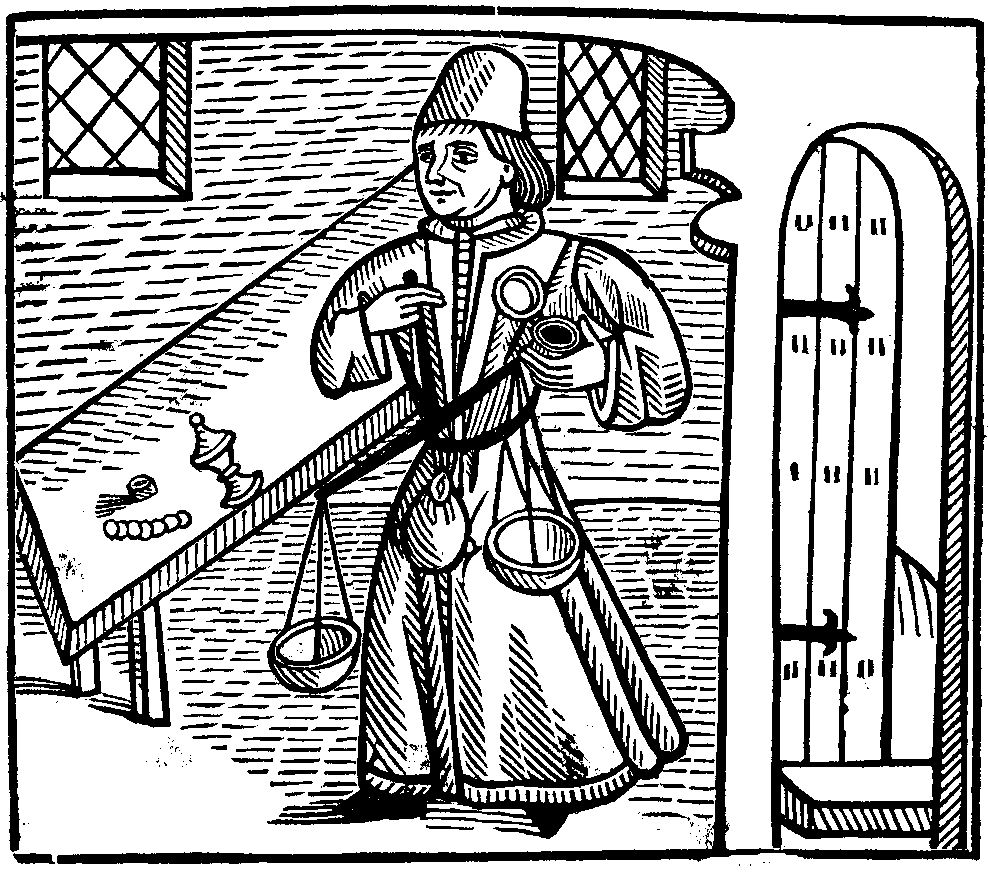
The fourth pawn is sette to for the kynge And is formed in the fourme of a man holding in his ryght hand a balance/ And the weyght in the lifte hand/ And to fore hym a table And at his gurdell a purse fulle of monoye redy for to gyue to them that requyre hit And by this peple ben signefied the marchans of cloth lynnen and wollen & of all other marchandises And by the table that is to for hym is signefied y'e changeurs/ And they that lene money/ And they that bye & selle by the weyght ben signefyed by the balances and weight And the customers. tollers/ and resseyuours of rentes & of money ben signefied by the purse And knowe y'e that alle they that ben signefied by this peple ought to flee auaryce and couetyse/ And eschewe brekynge of the dayes of payement/ And ought to holde and kepe theyr promyssis/ And ought also to rendre & restore y't/ that is gyuen to them to kepe/ And therfor hit is reson that this peple be sette to for y'e kynge/ for as moche as they signefie the resseyuours of the tresours royall that ought all way to be redy to fore y'e kynge/ and to answere for hym to the knightes and other persones for their wages & souldyes And therfore haue I sayd that they ought to flee auarice. For auarice is as moche to say as an adourer or as worshipar of fals ymages/ & herof saith Tullius that auarice is a couetise to gete y't thing that is aboue necessite/ & it is a loue disordinate to haue ony thynge And it is one of the werst thyngis that is And specially to prynces and to them that gouerne the thynges of the comunete And this vice caufeth a man to do euyll/ And this doynge euyll is whan hit regneth in olde men And herof saith Seneque That alle wordly thynges ben mortifyed and appetissid in olde men reserued auaryce only/ whiche alleway abideth wyth hym and dyeth wyth hym But I vnderstande not well the cause wherof this cometh ne wherfore hit may be And hit is a fowle thynge and contrarie to reson That whan a man is at ende of his Iourney for to lengthe his viage and to ordeyne more vitayll than hym behoueth And this may well be lykened to the auarycious wolf For the wolf doth neuer good tyll he be dede And thus it is sayd in the prouerbis of the wisemen/ that thauaricious man doth no good tyll that he be ded/ And he desireth no thynge but to lyue longe in this synne For the couetouse man certaynly is not good for ony thynge For he is euyll to hymself and to the riche and to the poure. And fynde cause to gayn saye theyr desire/ and herof reherceth seneque and sayth that Antigonus was a couetous prynce/ & whan Tinque whiche was his frende requyred of hym a besa[=u]t/ he answerd to hym that he demanded more than hit apperteyned to hym And than tinque constrayned by grete necessite axid and requyred of hym a peny/ And he answerd to hym that hit was no yefte couenable for a kynge and so he was allway redy to fynde a cause nought to gyue For he myght haue gyuen to hym a besa[=u]t as a kynge to his frende/ And the peny as to a poure man And ther is no thynge so lytyll/ but that the humanyte of a kynge may gyue hit Auarice full of couetyse is a maner of alle vices of luxurye And Josephus reherceth in the book of auncyent histories/ that ther was in rome a ryght noble lady named Paulyne/ And was of the most noble of rome/ right honeste for the noblesse of chastete/ whiche was maryed in the tyme that the women gloryfied them in theyr chastete vnto a yonge man fayr. noble. and riche aboue alle other/ and was lyke and semblable to his wyf in alle caasis/ And this paulyne was belouyd of a knight named emmerancian And was so ardautly esprysed in her loue that he sente to her many right riche yeftes/ And made to her many grete promissis/ but he might neuer torne the herte of her whiche was on her side also colde and harde as marbill But had leuer to reffuse his yeftes and his promisses. Than to entende to couetise & to lose her chastete/ and we rede also in the historyes of rome that ther was a noble lady of rome/ whiche lyuyd a solitarye lyf and was chaste & honeste/ And had gadrid to gyder a grete some of gold/ And had hid hit in the erthe in a pytte wyth in her hous/ And whan she was ded/ the bisshop dyde do burye her in the churche well and honestly/ And anone after this gold was founden & born to the bisshop/ And the bisshop had to caste hit in to the pytte wher she was buryed. And .iii. dayes men herd her crye & make grete noyse/ and saye that she brennyd in grete payne/ and they herd her ofte tymes thus tormentid in y'e chirche/ the neighbours wente to the bisshop & told hym therof/ and y'e bisshop gaf hem leue to open the sepulcre/ and whan they had opend hit/ they fonde all the gold molten with fyre full of sulphre/ And was poured and put in her mouth/ and they herd one saye/ thou desiredest this gold by couetyse take hit and drynke hit/ And than they toke the body out of the tombe And hit was cast oute in a preuy place Seneque reherceth in the book of the cryes of women that auarice is foundement of alle vices/ And valerian reherceth that auarice is a ferdfull garde or kepar of rychessis for he that hath on hym or in his kepynge moche money or other rychessis/ is allway a ferd to lose hit or to be robbid or to be slayn therfore/ And he is not ewrous ner happy that by couetyse geteth hit/ And alle the euyllys of this vice of auarice had a man of rome named septemulle For he was a frende of one named tarchus And this septemulle brente so sore and so cruelly in this synne of couetyse/ that he had no shame to smyte of the hede of his frende by trayson/ For as moche as one framosian had promysed to hym as moche weyght of pure gold as the heed weyed And he bare the sayd heed vpon a staf thurgh the cyte of rome/ and he wyded the brayn out therof and fyld hit full of leed for to weye the heuyer This was a right horrible and cruell auarice Ptolome kynge of the Egipciens poursewed auarice in an other manere For whan anthonie emperour of rome sawe that he was right riche of gold and siluer/ he had hym in grete hate and tormentid hym right cruelly And whan he shold perishe be cause of his richessis/ he toke alle his hauoyr and put hit in a shippe And wente wyth alle in to the hye see to thende for to drowne and perishe there the shippe and his rychesses be cause Anthonie his enemye shold not haue hit/ And whan he was there he durst not perisshe hit ner myght not fynde in his herte to departe from hit/ but cam and brought hit agayn in to his hows where he resseyuyd the reward of deth therfore. And wyth oute doubte he was not lord of the richesse but the richesse was lady ouer hym/ And therfore hit is sayd in prouerbe that a man ought to seignorye ouer the riches/ and not for to serue hit/ and yf thou canst dewly vse thy rychesse than she is thy chamberyer/ And yf thou can not departe from hit and vse hit honestly at thy playsir/ knowe verily y't she is thy lady For the richesse neuer satisfieth the couetouse/ but the more he hath/ the more he desireth/ And saluste sayth that auarice distourblith fayth poeste honeste and alle these other good vertues/ And taketh for these vertues pryde. cruelte. And to forgete god/ And saith that alle thynges be vendable And after this they ought to be ware that they leue not to moche/ ner make so grete creances by which they may falle in pouerte/ For saynt Ambrose saith upon tobye. pouerte hath no lawe/ for to owe hit is a shame/ & to owe and not paye is a more shame/ yf y'u be poure beware how thou borowest/ and thinke how thou maist paye & rendre agayn yf y'u be ryche y'u hast none nede to borowe & axe/ & it is said in the prouerbes y't hit is fraude to take/ that y'u wilt not ner maist rendre & paye agayn/ and also hit is said in reproche/ whan I leue I am thy frend/ & whan I axe I am thy enemye/ as wo saith/ god at the lenynge/ & the deuyll at rendrynge/ And seneque sayth in his au[*c]torites/ that they y't gladly borowe/ ought gladly to paye/ and ought to surmonte in corage to loue hem the better be cause they leue hem & ayde hem in her nede/ For for benefetes & good tornes doon to a man ought to gyue hym thankinges therfore/ And moche more ought a man to repaye that Is lente hym in his nede/ But now in these dayes many men by lenynge of their money haue made of their frendes enemyes/ And herof speketh Domas the philosopher and sayth that my frende borowed money of me/ And I haue lost my frende and my money attones/ Ther was a marchant of Gene & also a chaungeour/ whos name was Albert gauor/ And this albert was a man of grete trouth and loyaulte/ for on a tyme ther was a man cam to hym and said & affermed that he had delyueryd in to his banke .v. honderd floryns of gold to kepe whiche was not trouth for he lyed/ whyche fyue honderd floryns the said Albert knewe not of/ ner coude fynde in all hys bookes ony suche money to hym due And this lyar coude not brynge no wytnessis/ but began to braye. crye and deffame the said albert And than this Albert callid to hym this marcha[=u]t and sayd/ Dere frende take here v. honderd florins whyche thou affermest and sayst that thou hast deliuerid to me And forthwyth tolde hem and toke hem to hym And lo this good man had leuer to lose his good than his good name and renome And this other marchant toke these florins that he had wrongfully receyuyd/ and enployed them in diuerce marchandise in so moche that he gate and encresid and wan with them .xv. thousand florins And whan he sawe that he approchid toward his deth/ and that he had no children He establisshid albert his heyr in alle thingis And sayd that with the .v. honderd florins that he had receyuyd of albert falsely/ he had goten all y't he had in the world And thus by dyuyne pourueance he that had be a theef fraudelent/ was made afterward a trewe procurour and attorney of the sayd albert/ But now in this dayes ther ben marcha[=u]s that do marchandise with other mens money whiche is taken to hem to kepe/ And whan they ben requyred to repaye hit they haue no shame to denye hit appertly/ wherof hit happend that ther was a marchant whyche had a good & grete name and renome of kepynge well suche thynges as was delyueryd to hym to kepe/ But whan he sawe place and tyme/ he reteynyd hyt lyke a theef/ So hyt befelle that a marchant of withoute forth herd the good reporte & fame of this man/ cam to hym and deliuerid hym grete tresour to kepe/ And this tresour abode thre yer in his kepynge. And after this thre yer thys marchant cam & requyred to haue hys good deliueryd to hym agaym/ And thys man knewe well that he had no recorde ne wytnes to preue on hym this duete/ Nor he had no obligacion ne wrytynge of hym therof/ In suche wyse that he denyed alle entyerly/ And sayd playnly he knewe hym not. And whan thys good man herde and vnderstode thys. he wente sorowfully and wepynge from hym so ferre and longe that an old woman mette wyth hym/ And demanded of hym the cause of hys wepynge/ And he sayd to her/ woman hit apperteyneth no thynge to the Go thy way/ And she prayd hym that he wold telle her the cause of hys sorowe/ For parauenture she myght gyue hym counceylle good and prouffytable. And than this man told to her by ordre the caas of his fortune/ And the old woman that was wyse & subtyll demanded of hym yf he had in that cyte ony frende whiche wold be faythfull and trewe to hym And he sayd y'e that he had dyuerce frendes/ Than said she goo thou to them and saye to them that they do ordeyne and bye dyuerce cofres & chestis/ And that they do fylle them with som olde thinges of no value/ and that they fayne And saye that they be full of gold, siluer & other Iewels and of moche grete tresour/ And than that they brynge them to this sayd marchant And to saye to hym that he wold kepe them/ For as moche as they had grete trust and affiance in hym And also that they haue herd of his grete trouthe and good renome/ And also they wold goo in to a fer contre And shold be longe er they retorned agayn And whilis they speke to hym of this mater/ thou shalt come vpon them and requyre hym that he do deliuere to the/ that thou tokest to hym/ And I trowe be cause of tho good men that than shall profre to hym the sayd tresour/ And for the couetise to haue hit/ he shall deliuere to the thy good agayn/ But beware late hym not knowe in no wyse that they ben thy frendes ner of thy knowleche This was a grete and good co[=u]ceyll of a woman And verily hit cometh of nature oftentymes to women to gyue counceyll shortly and vnauysedly to thynges that ben in doute or perillous and nedeth hasty remedye/ And as y'e haue herd/ this good man dyde And dyde after her counceyll And cam vpon them whan they spack of the mater to the marchant for to deliuere to hym the sayd cofres to kepe whyche his frendes had fayned and requyred of hym that he had taken to hym to kepe/ and than an[=o]n the sayd marchant sayd to hym I knowe the now well. For I haue auysed me that thou art suche a man/ And camst to me suche a tyme/ And deliuerest to me suche a thynge whiche I haue well kept/ And than callyd his clerck/ and bad hym goo fecche suche a thynge in suche a place/ and deliuere hit to that good man For he deliuerid hit to me/ And than the good man receyuyd his good. And wente his way right Ioyously and gladd/ And this marchant trycheur and deceyuour was defrauded from his euyll malice/ And he ne had neyther that one ne that other ony thynge that was of value/ And therfore hit Is sayd in prouerbe to defraude the beguylar is no fraude/ And he that doth well foloweth oure lord And seneke faith that charyte enseygneth and techeth that men shold paye well For good payement is sometyme good confession/ And this marchant trycheour & deceyuour resembleth & Is lyke to an hound that bereth a chese in his mouth whan he swymmeth ouer a watre For whan he is on the watre He seeth the shadowe of the chese in the watre/ And than he weneth hit be an other chese/ And for couetyse to haue that/ he openth his mouth to cacche that/ And than the chese that he bare fallyth doun in to the watre/ And thus he loseth bothe two/ And in the same wise was seruyd this marchant deceyuour/ For for to haue the coffres/ whiche he had not seen/ He deliueryd agayn that he wold haue holden wrongfully & thus by his couetise and propre malice he was deceyuyd/ And therfore hit apperteyneth to euery good & wyse man to knowe & considere in hym self how moche he had resseyuyd of other men/ And vpon what condicion hit was deliuerid to hym And hit is to wete y't this thinge apperteyneth to resseyuours & to chaungeours And to alle true marchans and other what som euyr they bee/ and ought to kepe their bookes of resaytes & of payements of whom & to whom and what tyme & day. and yf y'e demande what thynge makyth them to forgete suche thynges as ben taken to them to kepe I answere & saye that hyt Is grete couetyse for to haue tho thynges to themself and neuer to departe from them/ And it is all her thought and desire to assemble alle the good that they may gete For they beleue on none other god/ but on her richessis theyr hertes ben so obstynat/ and this sufficeth of the marchantes.

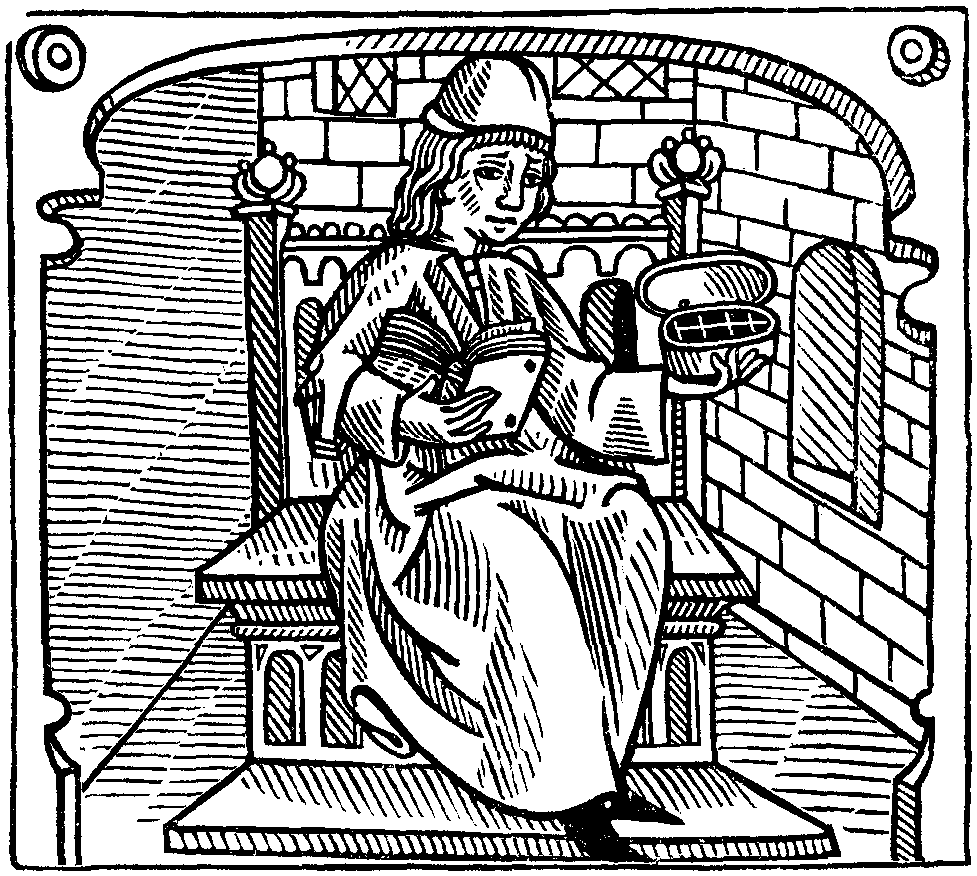
The paw[=o]n that is sette to fore the quene signefyeth the phisicyen/ spicer and Apotyquaire/ and is formed in the figure of a man/ And he is sette in a chayer as a maystre and holdeth in his right hand a book/ And an ample or a boxe wyth oynementis in his lyft hand/ And at his gurdell his Instrumentis of yron and of siluer for to make Incysions and to serche woundes and hurtes/ and to cutte apostumes/ And by thyse thynges ben knowen the cyrurgyens/ By the book ben vnderstanden the phisicyens/ and alle gramaryens. logicyens/ maistres of lawe. of Geometrye. Arismetryque. musique and of astronomye/ And by the ampole/ ben signefyed the makers of pigmentaries spicers and apotiquayres/ and they that make confections and confytes and medecynes made wyth precyous spyces And by the ferremens and Intrumentis that hangen on the gurdell ben signefied the cyrurgyens & the maistres And knowe y'e for certain that a maystre & phisicyen ought to knowe the proporcions of lettres of gramayre/ the monemens the conclusions and the sophyms of logyque. the gracio'9 speche and vtterance of rethorique/ the mesures of the houres and dayes/ and of the cours and astronomye/ the nombre of arsmetryk/ & the Ioyous songes of musyque And of all thyse tofore named/ the maistres of rethorique ben the chyef maistres in speculatyf/ And the two laste that ben practisiens and werkers ben callyd phisicyens and cyrurgyens/ how well they ben sage and curyous in thyse sciences/ And how well that mannes lyf is otherwhile put in thordonance of the phisicyen or cyrurgyen/ yf he haue not sagesse and wysedom in hym self of dyuerce wrytynges and is not expert/ And medlyth hym in the craft of phisique/ He ought better be callyd a slear of peple than a phisicyen or cyrurgyen. For he may not be a maystre but yf he be seure and expert in the craft of phisike that he sle not moo than he cureth and maketh hoole/ And therfore sayth Auycenne in an Enphormye/ yf thou curest the seke man. And knowest not the cause/ wherof the maladye ought to be cured/ Hit ought to be sayd that thou hast cured hym by fortune and happe more than by ony comynge. And in alle thyse maner of peple/ Ther ought to be meurte of good maners/ Curtoysie of wordes/ Chastite of the body promysse of helthe/ And as to them that ben seke contynuell visitacion of them/ And they ought to enquere the cause of theyr sekenessis and the sygnes and tokens of theyr maladyes/ As is rehercid in the bookes of the au[ct]ours by ryght grete diligence/ And specially in the bookes of ypocras galyene and of Auycene And whan many maysters and phisicyens ben assemblid to fore the pacyent or seke man/ They ought not there to argue and dispute one agaynst an other/ But they ought to make good and symple colacion to geder. In suche wyse as they be not seen in theyr desputynge one agaynst an other/ for to encroche and gete more glorye of the world to them self/ than to trete the salute and helthe of the pacyent and seke man/ I meruayll why that whan they fee and knowe that whan the seke man hath grete nede of helthe wherfore than they make gretter obiection of contraryousnes for as moche as the lyf of man is demened and put amonge them but hit is be cause that he is reputed most sage and wise that argueth and bryngeth in moste subtyltes/ And alle this maner is amonge doctours of lawe that treteth no thynge of mannes lyf. But of temporelle thynges/ that he is holden most wyse and best lerned/ that by his counceyll can beste acorde the contencions and discencions of men And therfore ought the phisicyens and cyrurgyens leue whan they be to fore the seke men all discencions and contrariousnes of wordes/ in suche wyse that hit appere that they studye more for to cure the seke men than for to despute And therfore is the phisicien duly sette to fore the quene/ So that it is figured that he ought to haue in hymself chastite and contynence of body For hit apperteyneth somtyme vnto the phisicien to visite and cure Quenes duchesses and countesses and alle other ladyes and see and beholde some secrete sekenessis that falle and come otherwhile in the secretis of nature And therfore hit apperteyneth to them that they be chaste and followe honeste and chastite/ and that they be ensample to other of good contynence/ For valerian reherceth that ypocras was of meruayllous contynence of his body/ For whan he was in the scoles of Athenes/ he had by hym a ryght fayr woman whyche was comyn And the yonge scolers and the Ioly felaws that were students promisyd to the woman a besa[=u]t/ yf she myght or coude torne the corage of ypocras for to haue to doon wyth her/ And she cam to hym by nyght and dyde so moche by her craft that she laye wyth hym in his bedd/ but she coude neuer do so moche y't she myghte corrumpe his chaste liuynge ne defoule the crowne of his conscience/ and whan the yonge men knewe that she had ben with hym all the night And coude not chaunge his contynence/ they began to mocque her/ And to axe and demande of her the besant that they had gyuen to her. And she answerd That hit was holden & gaged vpon an ymage/ For as moche as she might not change his contynence she callyd hym an ymage/ And in semblable wyse reherceth Valerian of Scenocrates philosopher that ther laye with hym a woman all night And tempted hym disordinatly/ but that ryght chafte man/ made neuer femblant to her/ Ner he neuer remeuyd from his ferme purpoos/ In fuche wyfe as fhe departid from hym alle confufid and fhamed/ Cornelius fcipion that was fent by the romayns for to gouerne fpayne/ as fone as he entryd in to the caftellis & in to the townes of that lande He began to take away all the thynges that miht ftyre or meue his men to lecherye wherfore men fayd that he drof & chaced oute of the ofte moo than two thoufand bourdellys/ And he that was wyfe knewe well that delyte of lecherye corrupted and apayred the corages of tho men that ben abandonned to that fame delyte/ And herof hit is fayd in the fables of the poetes in the first book of the Truphes of the Philofophers by figure. That they that entryd in to the fontayne of the firenes or mermaydens/ were corrumpid and they toke them away with hem/ And alfo y'e ought to knowe that they ought to entende diligently to the cures of the enfermytees in cyrugerye/ They ought to make theyr playfters acordynge to the woundes or fores/ yf the wounde be rounde The enplaftre muft be round/ and yf hyt be longe/ hyt mufte be longe/ and otherwhile hit mufte be cured by his contrarye/ lyke as it apperteyneth to phifique/ For the hete is cured by cold/ and the colde by hete/ and Ioye by forowe/ and fbrowe by Ioye/ and hit happeth ofte tymes that moche peple be in grete paryll in takynge to moche Ioye and lefe her membris/ and become half benomen in the fodayn Ioye/ And Ioye is a replection of thynge that is delectable fprad a brode in all the membris with right grete gladnes And all men entende and desire to haue the sayd ryght grete Ioye naturelly/ But they knowe not what may ensue and come therof And this Ioye cometh otherwhile of vertue of conscience/ And the wyse man is not wyth out this Ioye And this Ioye is neuer Interrupt ne in deffaulte at no tyme For hit cometh of nature And fortune may not take a waye that nature geueth. And merciall saith that Ioyes fugitiues abide not longe But flee away an[=o]n And valerian reherceth that he that hath force and strengthe raysonable/ hath hit of verray matier of complection and that cometh of loue And this Ioye hath as moche power to departe the sowle fro the body/ as hath the thondre/ wherof hit happend that ther was a woman named lyna whiche had her husbonde in the warre in the shippis of the romayns/ And she supposid verily that he was ded/ But hit happend that he cam agayn home And as he entryd in to his yate/ his wif met wyth hym sodeynly not warned of his comyng. whiche was so glad and Ioyous/ that in enbrasynge hym she fyll doun ded Also of an other woman to whom was reportid by a fals messanger that her sone was ded/ whiche wente home soroufully to her hows/ And afterward whan her sone cam to her/ As sone as she sawe hym/ she was so esmoued wyth Ioye y't she deyde to fore hym/ But this is not so grete meruaylle of women as is of the men/ For the women ben likened vnto softe waxe or softe ayer and therfor she is callid mulier whyche Is as moche to saye in latyn as mollys ær. And in english soyfte ayer/ And it happeth ofte tymes that the nature of them that ben softe and mole/ taketh sonner Inpression than the nature of men that is rude and stronge/ Valerye reherceth & sayth that a knyght of rome named Instaulosus that had newly conquerid and subiuged the yle of Corsika/ And as he sacrefyed his goddes/ he receyuyd lettres from the senate of rome In whiche were conteyned dyuerse supplicacyons/ The whiche whan he vnderstood he was so glad and so enterprysed wyth Ioye/ that he knewe not what to doo And than a great fumee or smoke yssued out of the fyre In whiche he dispayred and fyll in to the fyre/ where he was anone ded/ And also it is sayd that Philomenus lawhed so sore and distemperatly that he deyde alle lawhynge/ And we rede that ypocras the phisicien fonde remedye for thys Ioye/ For whan he had longe dwellyd oute of his contreye for to lerne connynge and wysedom/ And shold retorne vnto his parentis and frendes/ whan he approchid nyghe them/ He sente a messanger to fore for to telle to them his comynge/ and comanded hym to saye that he cam/ for they had not longe to fore seen hym/ And y't they shold attempre them in that Ioye er they shold see hym/ And also we rede that Titus the sone of vaspasian whan he had conquerd Iherusalem and abode in y'e contrees by/ he herde y't his fader vaspasian was chosen by alle the senate for to gouerne the empire of rome/ wherfore he had so right grete Ioye that sodaynly he loste the strength of all his membres And be cam all Impotent And whan Iosephus that made the historye of the romayns ayenst the Iewis/ whiche was a ryght wyse phisicien sawe and knewe the cause of this sekenes of the sayd Titus/ he enquyred of his folk yf he had in hate ony man gretly so moche that he myght not here speke of hym ner well see hym And one of the seruantes of Titus sayd that he had one persone in hate so moche. That ther was no man in his court so hardy that durste name hym in his presence/ and than Iosephus assigned a day whan this man shold come/ and ordeyned a table to sette in y'e sight of Titus/ and dide hit to be replenysshid plenteuously wyth alle dayntees/ and ordeyned men to be armed to kepe hym in suche wyse that no man shold hurte hym by the comandement of Titus/ and ordeyned boutellers. Coques/ and other officers for to serue hym worshipfully lyke an Emþour/ and whan all this was redy/ Iosephus brought in this man that tytus hated and sette hym at the table to fore his eyen and was seruyd of yonge men wyth grete reuerence ryght cortoisly/ And whan titus behelde his enemye sette to fore hym wyth so grete honour/ He began to chauffe hym self by grete felonnye And comanded his men that this man sholde be slayn/ And whan he sawe/ that none wold obeye hym But that they all way seruyd hym reuerently/ he waxe so ardante/ and enbrasid wyth so grete yre/ that he that had lost alle the force and strengthe of his body and was alle Impotent in alle his membres/ Recoured the helthe agayn and strengthe of his membris/ by the hete that entryd in to the vaynes and sinewis And Iosephus dide so moche that he was recouerid and hole/ And that he helde that man no more for his enemye/ but helde hym for a verray true frende/ And afterward made hym his loyall felawe and compaignon And the espicers and Apotecayres ought to make truly suche thynges as Is comanded to them by the physicyens/ And they ought taccomplisshe theyr billis and charge curyously wyth grete dilygence/ that for none other cause they shold be ocupied but in makynge medicynes or confections truly. And that they ought vpon paryll of theyr sowle not to forgete/ by negligence ne rechelesnes to gyue one medecyne for an other/ In suche wyse that they be not slears of men/ And that they do putte no false thynges In her spyces for to empayre or encrecynge the weyght. For yf they so doo they may better be callyd theuys than espiciers or apotecayris/ And they that ben acustomed to make oynements they ought to make hyt proprely of true stuf and of good odoure after the receptes of the auncyent doctours/ And after the forme that the phisicyens and cyrurgyens deuyse vnto them/ Also they ought to beware that for none auayle ne gyfte that they myght haue/ that they put in theyr medicynes no thynge venemous ner doynge hurte or scathe to ony persone of whom they haue none good ne veray knowlege/ to thende that they to whom the medicynes shold be gyuen/ torne not to them hurte ne domage/ ne in destructions of theyr neyghbours/ and also that they that haue mynystrid tho thyngis to them/ ben not taken for parteners of the blame and of the synne of them The cyrurgyens ought also to be debonayr. amyable. & to haue pytye of their pacyents. And also they ought not be hasty to launse and cutte apostumes and soores/ ne open the heedes/ ner to arrache bones broken/ but yf the cause be apparant/ For they myght ellys lose theyr good renome And myght better be callyd bouchers than helars or guarisshors of woundes and soores And also hit behoueth that alle this maner of peple foresayd that haue the charge for to make hole and guarisshe alle maner of maladyes and Infirmitees that they first haue the cure of themself/ and they ought to purge themself fro alle apostumes and alle vices/ In suche wyse that they be net and honeste and enformed in alle good maners/ And that they shewe hem hole and pure & redy for to hele other And herof sayth Boecius de Consolacione In his first booke that the sterres that ben hid vnder the clowdes maye gyue no light. And therfore yf ony man wole beholde clerly the verite. Late hym wythdrawe hym fro the obscurete and derkenes of the clowdes of ignorance/ for whan the engyne of a man sheweth in Ioye or in sorowe/ The pensee or thought is enuoluped in obscurete & vnder the clowdes.

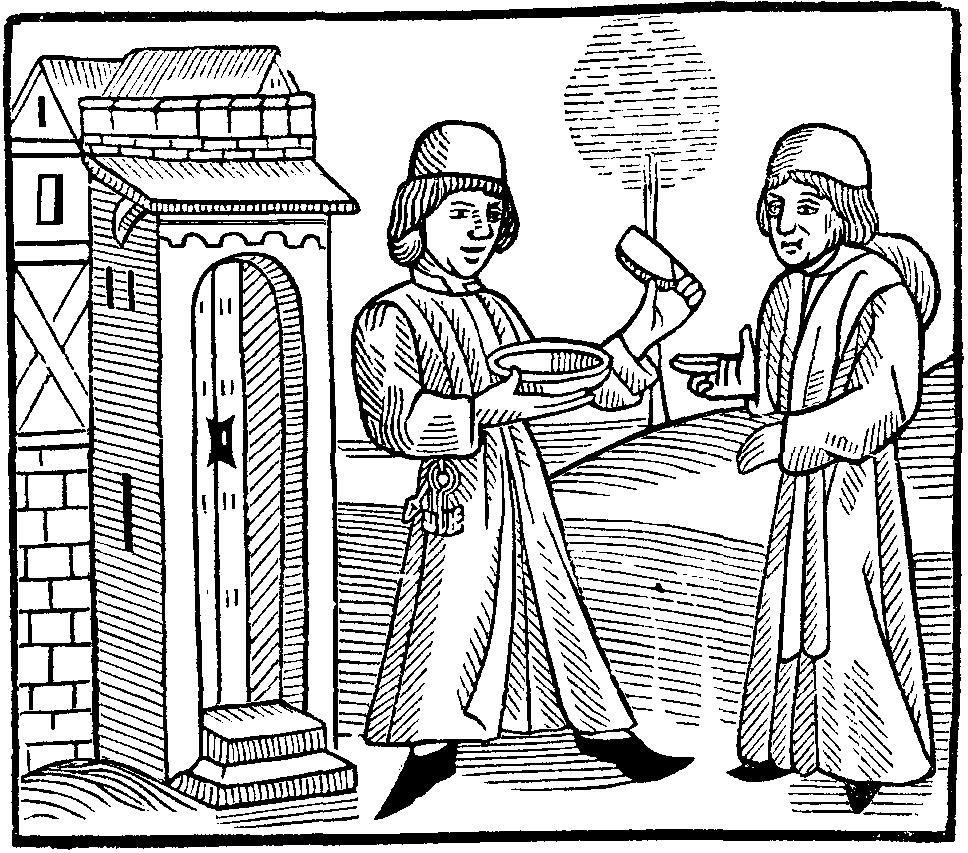
 The sixthe pawn whiche standeth to fore the Alphyn on the lyfte syde is made in thys forme. For hit is a man that hath the right hande stracched oute as for to calle men/ And holdeth in his lyfte hande a loof of breed and a cuppe of wyn/ And on his gurdell hangynge a boudell of keyes/ And this resembleth the Tauerners. hostelers. and sellars of vitaylle. And thise ought proprely to be sette to fore the/ Alphyn as to fore a Iuge For ther sourdeth ofte tymes amonge hem contencion noyse and stryf/ whiche behoueth to be determyned and trayted by the alphyn/ whiche is Iuge of the kynge/ And hit apperteyneth to them for to seke and enquyre for good wyns and good vitayll for to gyue and selle to the byers/ And to them that they herberowe/ And hit apperteyneth to them well to kepe their herberowes and Innes/ and alle tho thyngis that they brynge in to their loggynge and for to putte hyt in seure and sauf warde and kepynge/ And the firste of them Is signefyed by the lyfte hande in whiche he bereth brede and wyn/ and the seconde is signefied by the right hande whiche Is stracched oute to calle men/ And the thirde is representid by the keyes hangynge on y'e gurdell And thyse maner of peple ought teschewethe synne of glotonye/ For moche peple comen in to theyr howses for to drynke and to ete for whyche cause they ought resonably to rewle them self and to refrayne them from to moche mete and drynke/ to thende that they myght the more honestly delyuere thyngis nedefull vnto the peple that come vnto them/ And no thynge by oultrage that myght noye the body/ For hit happeth ofte tymes that ther cometh of glotonye tencyons. stryfs. ryottes. wronges. and molestacyons/ by whiche men lese other while their handes. theyr eyen. and other of their membres/ And somtyme ben slayn or hurt vnto the deth/ As it is wreton In vitas patrum As on a tyme an heremyte wente for to visite his gossibs/ And the deuyll apperyd to hym on the waye in lykenes of an other heremyte for to tempte hym/ and saide thou hast lefte thyn heremitage And goost to visyte thy gossibs/ The behoueth by force to doo one of y'e thre thynges that I shall saye to the/ thou shalt chese whether thou wylt be dronke/ or ellys haue to do flessly wyth thy gossib or ellys thou shalt sle her husbond whiche is thy gossip also/ And the hermyte that thought for to chese the leste euyll chace for to be dronke/ and whan he cam vnto them he dranke so moche that he was veray dronke And whan he was dronke and eschaussed wyth the wyn/ he wold haue a doo wyth hys gossib/ And her husbonde withstode hym. And than the hermyte slewe hym/ And after that laye by his gossib and knewe her flessly/ And thus by this synne of dronkenship he accomplisshid the two other synnes/ By whyche thynge y'e may vnderstande and knowe y't whan the deuyll wyll take one of the castellis of Ihesu cryst/ that is to wete the body of a man or of a woman/ he doth as a prynce that setteth a siege to fore a castell that he wold wynne/ whiche ent[=e]deth to wynne the gate/ For he knoweth well whan he hath wonne the gate/ he may sone doo hys wylle wyth the castell. And in lyke wyse doth the deuyll wyth euery man and woman For whan he hathe wonne the gate/ that is to wete the gate of y'e mouth by glotonye or by other synne He may doo wyth the offices of the body alle his wylle as y'e haue herd to fore/ And therfore ought euery man ete and drynke sobrely in suche wyse as he may lyue. And not lyue to ete glotonsly & for to drynke dronke. y'e see comunly that a grete bole is suffisid wyth right a lityll pasture/ And that a wode suffiseth to many olefauntes And hit behoueth a man to be fedde by the erthe or by the see/ neuertheles it is no grete thynge to fede the bely/ no thynge so grete as is the desire of many metes Wherof Quyntylian sayth/ That hit happeth ofte tymes in grete festes & dyners/ that we be fylde wyth the sight of the noble and lichorous metis and whan we wolde ete we ben saciat and fild/ And therfore hit is sayd in prouerbe/ hit is better to fylle the bely than the eye/ And lucan sayth that glotonye is the moder of alle vices/ and especiall of lecherye/ and also is destroyer of all goodes And may not haue suffisance of lityll thynge/ A couetous honger what sekest thou mete and vitayllis on the lande & in the see/ And thy Ioye is nothynge ellis but to haue playnteuous disshes & well fylde at thy table lerne how men may demene his lyf with lityll thynge/ And Cathon sayth in no wyse obeye to glotonye whiche is frende to lecherye/ And the holy doctour saynt Augustyn sayth/ the wyn eschausseth the bely that falleth anone to lecherye/ The bely and the membrers engendreurs ben neyghebours to lecherye/ And thus the vice of glotonye prouoketh lecherye/ wherof cometh forgetenes of his mynde and destruction of alle quyk and sharp reson And is cause of distemþance of his wittes/ what synne is fowler than this synne and more stynkynge ne more domageous For this synne hath taken away the vertue of the man/ his prowesse languisshed/ his vertue is torned to diffame/ the strengthe of body and of corage is torned by the/ And therfore sayth Basille le grant/ late vs take hede how we serue the bely & the throte by glotonye lyke as we were dombe bestes/ and we studye for to be lyke vnto belucs of the see/ to whom nature hath gyuen to be alleway enclined toward the erthe & ther to loke for to serue theyr belyes/ And herof saith Boecius de consolacione in his fourth book/ that a man that lyuyth and doth not the condicions of a man/ may neuer be in good condicion/ Than muste hit nedes be that he be transported in nature of a beste or of a belue of the see. How well that ryght grete men and women full of meruayllous sciences and noble counceyll in thise dayes in the world ben kept and nourisshid in this glotonye of wyns and metes/ and ofte tymes ben ouerseen/ how suppose y'e/ is hit not right a perillous thinge that a lord or gouernour of the peple and c[=o]mun wele/ how well that he be wyse/ yf he eschauffe hym sone so that y'e wyn or other drynke surpryse hym and ouercome his brayn. his wisedom is loste/ For as Cathon sayth/ Ire enpessheth the corage in suche as he may not kepe verite and trouthe And anon as he is chauffed/ lecherye is meuyd in hym in suche wyse that the lecherye maketh hym to medle in dyuerse villayns dedes/ For than his wyfedom is a slepe and goon/ And therfore fayth Ouide in his booke De remedio amoris/ yf thou take many and dyuerce wyns/ they apparylle and enforce the corages to lecherye And Thobie witnessith in his booke/ that luxurye destroyeth the body/ and mynussheth richesses/ she loseth the sowle/ she febleth y'e strengthe she blyndeth the syght/ and maketh the wys hoos & rawe/ Ha A ryght euyll and fowle synne of dronkenship/ by the perissheth virginite/ whiche is suster of angellis possedynge alle goodnes and seurte of all Ioyes pardurable/ Noe was one tyme so chauffed with wyn/ that he discouerd and shewid to his sones his preuy membres in suche wyse as one of his sones mocqued hym/ And that other couerd hem/ And loth whiche was a man right chaste. was so assoted by moche drynkynge of wyn/ that on a montayne he knew his doughters carnelly/ And had to doo wyth them as they had ben his propre wyues. And crete reherceth that boece whiche was flour of the men/ tresor of rychesses/ singuler house of sapience myrour of the world/ Odour of good renome/ and glorye of his subgettis loste alle thyse thynges by his luxurye We haue seen that dyuerce that were Ioyned by grete amyte to geder whiles they were sobre/ that that one wolde put his body in paryll of deth for that other/ and whan they were eschauffed with wyn & dronke/ they haue ronne eche vpon other for to fle* hem/ And somme haue ben that haue slayn so his frende/ Herodes Antipas had not doon saynt Iohn baptist to ben beheded/ ne had y'e dyner ben full of glotonye and dronkenship/ Balthazar kynge of babilone had not ben chaced out of his kyngdom ne be slayn yf he had ben sobre amonge his peple whom tyrus and dares fonde dronken and slewe hym The hostelers ought to be well bespoken and courtoys of wordes to them that they receyue in to their loggynge For fayr speche & Ioyous chiere & debonayr/ cause men to gyue the hostelyer a good name/ And therfore it is said in a comyn prouerbe/ Courtoyse langage and well saynge is moche worth and coste lityll/ And in an other place it is said that curtoysie passeth beaulte/ Also for as moche as many paryls and aduentures may happen on the wayes and passages to hem that ben herberowed with in their Innes/ therfore they ought to accompanye them whan they departe and enseigne them the wayes and telle to them the paryls/ to thende that they may surely goo theyr viage and Iourney/ And also they ought to kepe their bodies, their goodes. And the good fame and renomee of their Innes/ we rede that loth whan he had receyuyd the angels in to his hous right debonairly whiche he had suppofid had ben mortall men and stra[=u]gers/ to thende that they shold eskape the disordinate and vnnaturell synne of lecherye of the sodamites/ by the vertu of good fayth/ he sette a part the naturell loue of a fader/ and proferd to them his doughters whiche were virgyns/ to thende that they shld kepe them and defende them fro that vyllayne and horrible synne/ And knowe y'e for certayn that alle tho thynges that ben taken and delyueryd to kepe to the hoste or hostesses they ought to be sauf and yelden agayn wyth out a payringe For the ooste ought to knowe/ who that entryth in to his hous for to be herberowhed taketh hit for his habitacion for the tyme/ he hymself and alle suche thynges as he bryngeth wyth hym ben comysed of ryght in the warde and kepynge of the hoost or hosteler And ought to be as sauf as they were put in his owen propre hous And also suche hoostis ought to hold seruantes in their houses whiche shold be trewe and wyth oute auarice In suche wise that they coueyte not to haue the goodes of their ghestes And that they take not away the prouender fro theyr horses whan hyt is gyuen to them/ that by thoccasion therof theyr horsis perisshe not ne faylle theyr maister whan they haue nede/ and myght falle in the handes of theyr enemyes/ For than sholde the seruantes because of that euyll/ wherfore theyr maisters shold see to For wyth oute doubte this thynge is worse than thefte Hit happend on a tyme in the parties of lomberdye in the cyte of Iene y't a noble man was logged in an hostelerye wyth moche compaignye/ And whan they had gyuen prouendour to their horses/ In the first oure of the nyght, the seruant of the hous cam secretly to fore y'e horses for to stele away their prouender/ And whan he cam to the lordes hors/ The hors caught wyth his teth his Arme and helde hit faste that he myght not escape/ And whan the theef sawe that he was so strongly holden/ he began to crye for the grete payne that he suffryd and felte/ In suche wyse that the noble mannes meyne cam with the hooste/ But in no maner/ ner for ought they coude doo They coude not take the theef out of the horses mouth vnto the tyme that the neyghbours whiche were noyed wyth the noyse cam and sawe hit/ And than the theef was knowen and taken and brought to fore the Iuge And confessid the feet and by sentence diffinytyf was hanged and lost his lyf/ And in the same wyse was an other that dyde so/ And the hors smote hym in the visage/ That the prynte of the horse shoo and nayles abode euer in his visage/ Another was right cruell and villaynous fylle at tholouse/ Hit happend a Ionge man and his fader wente a pilgremage to saynt Iames in Galyce And were logged in an hostelrye of an euyll hoost and full of right grete couetyse/ In so moche that he defired and coueyted the goodes of the two pilgrimes And here vpon auysed hym and put a cuppe of siluer secretly in the male that the yonge man bare/ And whan they departed oute of their loggynge/ he folowed after hem and sayd to fore the peple of the court that they had stolen and born away his cuppe/ And the yonge man excused hym selfe and his fader/ And sayde they were Innocent of that caas/ And than they serchid hem and the cuppe was founden in the male of the yonge man And forthwyth he was dampned to the deth and hanged as a theef/ and this feet doon all the goodes that langed to the pilgrym were deliuerid to the ooft as c[=o]fisqued And than the fader wente for to do his pilgremage/ and whan he cam agayn he muste nedes come & passe by the place where his sone henge on the gibet And as he cam he complaygned to god and to saynt Iames how they might suffre this auenture to come vnto his sone,' Anone his sone that henge spack to his fader And sayde how that saynt Iames had kepte hym with out harme And bad his fader goo to the Iuge and shewe to hym the myracle/ And how he was Innocent of thot fayte/ And whan this thynge was knowen the sone of the pilgryme was taken down fro the gibet/ and the cause was brought to fore the Iuge And the hooste was accused of the trayson/ and he confessid his trespaas/ and sayd he dide hit for couetyse to haue his good And than the Iuge dampned hym for to be hanged on the same gibet where as the yonge pilgryme was hanged And that I haue sayd of the seruantes beynge men/ the same I saye of the women as chambriers and tapsters For semblable caas fille in spayne at saynt donne of a chamberier/ that put a cup in lyke wyse in the scrippe of a pilgryme/ be cause he wold not haue a doo wyth her in the synne of lecherye/ wherfore he was hanged And his fader & moder that were there with hym wente and dyde her pilgremage/ And whan they cam agayn they fonde her sone lyuynge/ And whan they wente and told the Iuge/ whiche Iuge sayd that he wolde not byleue hit tyll a cok and an henne which rosted on the fyre were a lyue & the cok crewe. And anon they began wexe a lyue & the cok crewe and began to crowe and to pasture/ and whan the Iuge sawe this miracle/ he wente and toke doun the sone/ and made the chamberyer to be taken and to be hanged/ wherfore I saye that the hoostes ought to hold no tapsters ne chamberyers/ but yf they were good meure and honeste/ For many harmes may be falle and come by the disordenat rewle of seruantes.