
[A] A favorite move of Mr. Harrwitz, though decried by the chief authorities.
[B] Had he taken the Queen's Pawn, White would have won at least the exchange by moving Kt. to Q's 7th.
[C] Fearing to take the Bishop lest White should obtain an entrance with the Rook.
[D] All this is exceedingly well played by White.
[E] The coup juste. From this point it would not be easy to improve on White's moves.
Game XIV.—(Unclassified.) Between Mr. Morphy and Mr. Anderssen.
| WHITE. (Mr. A.) | BLACK. (Mr. M.) |
| 1. P. to Q. R's 3d. | 1. P. to K's 4th. |
| 2. P. to Q. B's 4th. | 2. K. Kt. to B's 3d. |
| 3. Q. Kt. to B's 3d. | 3. P. to Q's 4th. |
| 4. P. takes P. | 4. Kt. takes P. |
| 5. P. to K's 3d. | 5. B. to K's 3d. |
| 6. K. Kt. to B's 3d. | 6. B. to Q's 3d. |
| 7. B. to K's 2d. | 7. Castles. |
| 8. P. to Q's 4th. | 8. Kt. takes Kt. |
| 9. P. takes Kt. | 9. P. to K's 5th. |
| 10. Kt. to Q's 2d. | 10. P. to K. B's 4th. |
| 11. P. to K. B's 4th. | 11. P. to K. Kt's 4th. |
| 12. B. to Q. B's 4th. | 12. B. takes B. |
| 13. Kt. takes B. | 13. P. takes P. |
| 14. P. takes P. | 14. Q. to K's sq. |
| 15. Castles. | 15. Q. to Q. B's 3d. |
| 16. Q. to Q. Kt's 3d. | 16. Q. to her 4th. |
| 17. R. to Q. Kt's sq. | 17. P. to Q. Kt's 3d. |
| 18. Q. to Q. R's 2d. | 18. P. to Q. B's 3d. |
| 19. Q. to K's 2d. | 19. Kt. to Q's 2d. |
| 20. Kt. to K's 3d. | 20. Q. to K's 3d. |
| 21. P. to Q. B's 4th. | 21. Kt. to K. B's 3d. |
| 22. R. to Q. Kt's 3d. | 22. K. to B's 2d. |
| 23. B. to Q. Kt's 2d. | 23. Q. R. to Q. B's sq. |
| 24. K. to R's sq. | 24. R. to K. Kt's sq. |
| 25. P. to Q's 5th. | 25. P. takes P. |
| 26. P. takes P. | 26. Q. to her 2d. |
| 27. Kt. to Q. B's 4th. | 27. K. to his 2d. |
| 28. B. takes Kt. (ch.) | 28. K. takes B. |
| 29. Q. to Q. Kt's 2d. (ch.) | 29. K. to B's 2d. |
| 30. R. to K. R's 3d. | 30. R. to K. Kt's 2d. |
| 31. Q. to her 4th. | 31. K. to Kt's sq. |
| 32. R. to K. R's 6th. | 32. B. to B's sq. |
| 33. P. to Q's 6th. | 33. R. to K. B's 2d. |
| 34. R. to K. R's 3d. | 34. Q. to Q. R's 5th. |
| 35. R. to Q. B's sq. | 35. R. to Q. B's 4th. |
| 36. Q. R. to K. Kt's 3d. (ch.) | 36. B. to K. Kt's 2d. |
| 37. P. to K. R's 3d. | 37. K. to R's sq. |
| 38. R. takes B. | 38. R. takes R. |
| 39. R. to Q. B's 3d. | 39. P. to K's 6th. |
| 40. R. takes P. | 40. R. takes Kt. |
| 41. Q. to K. B's 6th. | 41. R. to Q. B's 8th. (ch.) |
| 42. K. to R's 2d. | 42. Q. takes P. (ch.) |
| And White loses. | |
Game XV.—STEINITZ GAMBIT.
Between W. Steinitz and J. W. Zukertort.
| WHITE. (Mr. S.) | BLACK. (Mr. Z.) |
| 1. P. to K's 4th. | 1. P. to K's 4th. |
| 2. Kt. to Q. B's 3d. | 2. Kt. to Q. B's 3d. |
| 3. P. to B's 4th. | 3. P. takes P. |
| 4. P. to Q's 4th. | 4. Q. to R's 5th. (ch.) |
| 5. K. to K's 2d. | 5. P. to Q's 4th.[A] |
| 6. P. takes P. | 6. B. to Kt's 5th. (ch.) |
| 7. Kt. to B's 3d. | 7. Castles. |
| 8. P. takes Kt. | 8. B. to Q. B's 4th. |
| 9. P. takes P. (ch.) | 9. K. to Kt's sq. |
| 10. Kt. to Kt's 5th.[B] | 10. Kt. to B's 3d. |
| 11. K. to Q's 3d.[C] | 11. Q. to R's 4th. |
| 12. K. to B's 3d. | 12. B. takes P. (ch.)[D] |
| 13. Q. Kt. takes B. | 13. Q. to B's 4th. (ch.) |
| 14. K. to Kt's 3d. | 14. Q. to Kt's 3d. (ch.) |
| 15. B. to Kt's 5th. | 15. B. takes Kt. |
| 16. Q. takes B. | 16. R. takes Kt. |
| 17. Q. to B's 6th. | 17. Q. to R's 4th. |
| 18. P. to B's 3d. | 18. R. to Q's 3d. |
| 19. Q. to B's 4th. | 19. P. to Kt's 4th. |
| 20. K to B's 2d. | 20. Resigns.[E] |
[A] The ingenious attack instituted hereby was invented by Zukertort.
[B] 10. P. takes B., Kt. to B's 3d!; 11. Q. takes R. (ch.), obtains three pieces for the Q., but loses the game. Q. to K's sq., here or on the following move, offers the only defence.
[C] Zukertort's analysis, which filled pages and pages of the Neue Berliner Schachzeitung, considered every conceivable move of White's down to P. to Q. R's 3d, but this one, upon which, in conjunction with the following K. move, Steinitz rested his gambit. 11. P. to B's 3d has been refuted in an elaborate analysis by Mr. Walter Penn Shipley, of Philadelphia.
[D] Black wins here by,
| 12. ... | 12. P. to Q. R's 3d. |
| 13. K. to Kt's 3d. | 13. P. takes Kt. |
| 14. P. to B's 3d. | 14. R. takes P.! |
| 15. P. takes R. | 15. Q. to Q's 4th. (ch.) |
| 16. K. to B's 2d. | 16. B. to B's 4th. (ch.) |
| 17. K. to Q's 2d. | 17. B. to Kt's 5th. (ch.) |
| 18. K. to K's 2d. | 18. Kt. to Kt's 5th.! |
as played by Messrs. Honegger and Raubitscheck in a consultation game against Steinitz at the Metropolitan Chess Club, 1897. If, instead of K. to Kt's 3d, 13. Kt. takes P. Black wins by R. takes P.!.
[E] White has brought his K. into safety and will remain a piece ahead. Had Black, instead of his last move, pinned the B., the game would have proceeded as follows:
| 19. ... | 19. R. to Kt's 3d. |
| 20. P. to Q. R's 4th. | 20. P. to Q. R's 3d. |
| 21. B. takes P. | 21. R. takes P. |
| 22. K. to B's 2d. | 22. P. takes B. |
| 23. P. takes P. | 23. Q. takes P. |
| 24. B. takes P. (ch.) and wins. |
To play with correctness and skill the ends of games, is an important but a very rare accomplishment, except among the very best players. In order to assist the learner as much as possible in this branch of the game, we present a number of end positions, with the proper play necessary in each case. Our selection of positions is necessarily very limited; but those we give will serve to show the careful play that is requisite even when the stronger party feels sure of success, and the danger of defeat if he suffer his vigilance to be relaxed for a moment.
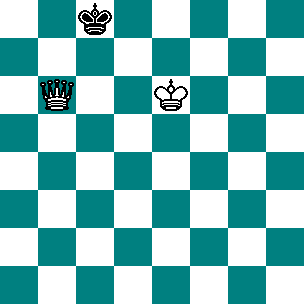
KING AND QUEEN AGAINST KING.
Diagram 1.
| WHITE. | BLACK. |
| 1. Q. to Q. R's 7th. | 1. K. to Q's sq. |
| 2. Q. to Q. Kt's 8th. Mate. |
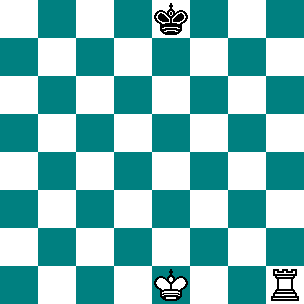
KING AND ROOK AGAINST KING.
Diagram 2.
| WHITE. | BLACK. |
| 1. R. to K. R's 7th. | 1. K. to K. B's sq. |
| 2. K. to K's 2d. | 2. K. to K. Kt's sq. |
| 3. R. to Q. R's 7th. | 3. K. to K. B's sq. |
| 4. K. to K's 3d. | 4. K. to K's sq. |
| 5. K. to K's 4th. | 5. K. to Q's sq. |
| 6. K. to Q's 5th. | 6. K. to Q. B's sq. |
| 7. K. to Q's 6th. | 7. K. to Q. Kt's sq. |
| 8. R. to Q. B's 7th. | 8. K. to Q. R's sq. |
| 9. K. to Q. B's 6th. | 9. K. to Q. Kt's sq. |
| 10. K. to Q. Kt's 6th. | 10. K. to Q. R's sq. |
| 11. R. to Q. B's 8th. Mate. |
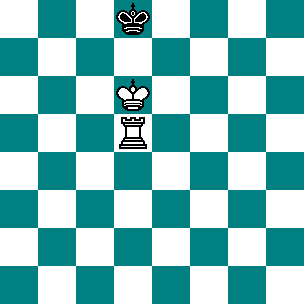
Diagram 3.
| WHITE. | BLACK. |
| 1. R. to Q. R's 5th, or K. Kt's 5th. |
If 1. K. to B's sq. |
| 2. R. to Q. Kt's 5th. | |
| If 1. K. to K's sq. | |
| 2. R. to K. B's 5th. | 2. K. to Q's sq. |
| 3. R. mates at Kt's 8th or K. B's 8th. |
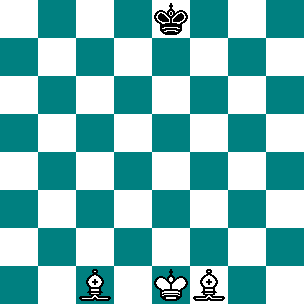
KING AND TWO BISHOPS AGAINST KING.
Diagram 4.
| WHITE. | BLACK. |
| 1. K. B. to K. R's 3d. | 1. K. to Q's sq. |
| 2. Q. B. to K. B's 4th. | 2. K. to K's 2d. |
| 3. K. to his 2d. | 3. K. to K. B's 3d. |
| 4. K. to K. B's 3d. | 4. K. to K's 2d. |
| 5. K. B. to K. B's 5th. | 5. K. to K. B's 3d. |
| 6. K. to his Kt's 4th. | 6. K. to his 2d. |
| 7. K. to his Kt's 5th. | 7. K. to Q's sq. |
| 8. K. to his B's 6th. | 8. K. to K's sq. |
| 9. Q. B. to Q. B's 7th. | 9. K. to B's sq. |
| 10. K. B. to Q's 7th. | 10. K. to Kt's sq. |
| 11. K. to his Kt's 6th. | 11. K. to B's sq. |
| 12. Q. B. to Q's 6th. (ch.) | 12. K. to Kt's sq. |
| 13. K. B. to K's 6th. (ch.) | 13. K. to R's sq. |
| 14. Q. B. checkmates. |
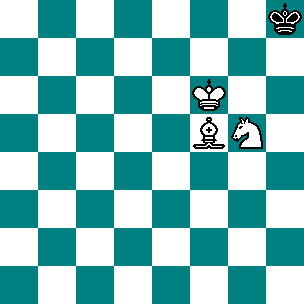
KING, BISHOP, AND KNIGHT, AGAINST KING.
Diagram 5.
| WHITE. | BLACK. |
| 1. Kt. to K. B's 7th. (ch.) | 1. K. to Kt's sq. |
| 2. B. to K's 4th. | 2. K. to B's sq. |
| 3. B. to K. R's 7th. | 3. K. to his sq. |
| 4. Kt. to K's 5th. | 4. K. to his B's sq. |
| 5. Kt. to Q's 7th. (ch.) | 5. K. to his sq. |
| 6. K. to his 6th. | 6. K. to Q's sq. |
| 7. K. to Q's 6th. | 7. K. to his sq. (best) |
| 8. B. to K. Kt's 6th. (ch.) | 8. K. to Q's sq. |
| 9. Kt. to Q. B's 5th. | 9. K. to Q. B's sq. |
| 10. K. B. to his 7th. | 10. K. to Q's sq. |
| 11. Kt. to Q. Kt's 7th. (ch.) | 11. K. to Q. B's sq. |
| 12. K. to Q. B's 6th. | 12. K. to Q. Kt's sq. |
| 13. K. to Q. Kt's 6th. | 13. K. to Q. B's sq. |
| 14. B. to K's 6th. (ch.) | 14. K. to Q. Kt's sq. |
| 15. Kt. to Q. B's 5th. | 15. K. to Q. R's sq. |
| 16. B. to Q's 7th. | 16. K. to Q. Kt's sq. |
| 17. Kt. to Q. R's 6th. (ch.) | 17. K. to Q. R's sq. |
| 18. B. to Q. B's 6th. (checkmate.) |
No. 1.
BLACK.
WHITE.
No. 2.
BLACK.
WHITE.
No. 3.
BLACK.
WHITE.
No. 4.
BLACK.
WHITE.
KING AND TWO KNIGHTS AGAINST KING.
The two Knights, with the assistance of the King, cannot force checkmate, except in some very rare cases.
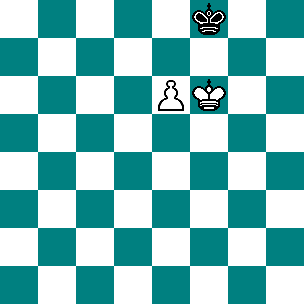
KING AND PAWN,—KING, BISHOP, AND PAWN,—AND
KING, KNIGHT, AND PAWN,—AGAINST KING.
When one Pawn only is left on the board, supported by its King, and the adverse King is either in front of the Pawn, or within such distance as to be able to intercept it, it becomes a point of great nicety in some cases, to calculate whether or not you have the power of Queening the Pawn, and therefore of winning the game. This frequently depends upon your gaining the opposition, which you cannot always do.
In the next position (see Diagram 6) you have the opposition, and if Black have to play you will win. Thus:—
| 1. K. to his sq. | |
| 2. P. to K's 7th. | 2. K. to his 2d. |
| 3. K. to B's 7th, and | |
| 4. P. Queens. |
But if you move first, the game is drawn; for if you play P. to K's 7th (ch.), Black moves King to his square, and you must either abandon the Pawn or give stalemate. You will find, on trial, that any other mode of play on your part will produce the same result,—from which is deduced this important general rule: That if you can advance the Pawn to its 7th sq., not giving check, you will win; but that if the Pawn checks at this point, you will only draw.
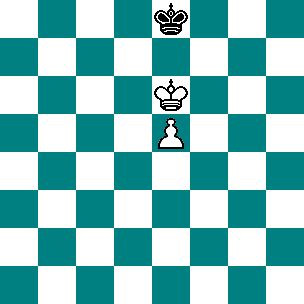
In this position (see Diagram 7), you will win either with or without the move; for if Black have to play, he is forced to allow your King to be moved either to B's 7th or Q's 7th sq.; and if you move you gain the opposition, by playing K. to B's 6th or Q's 6th, and then P. to K's 6th. It is evident that this would equally hold good if your Pawn were any number of squares less advanced; so that you invariably win, if you can succeed in placing your King on the sixth square of the file occupied by your Pawn, and in front of it; provided, of course, that the single King cannot attack the Pawn, so as to compel you to retreat in order to support it. It is perhaps scarcely necessary to observe, that if the Pawn be upon either of the Rooks' files, these remarks will not apply—this contingency will be considered hereafter.
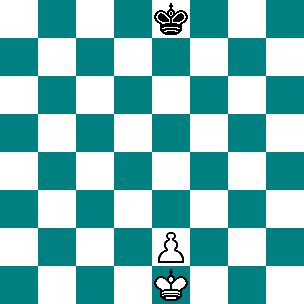
Diagram 8.
| WHITE. | BLACK. |
| 1. K. to Q's 2d. | 1. K. to his 2d. |
| 2. K. to his 3d. | 2. K. to his 3d. |
| 3. K. to his 4th. | 3. K. to B's 3d. |
| 4. K. to Q's 5th. | 4. K. to K's 2d. |
| 5. K. to his 5th. | 5. K. to B's 2d. |
| 6. K. to Q's 6th. |
If he play K. to B's 3d, you advance P. to K's 4th, then to K's 5th, and on his afterwards moving K. to his sq., you gain the opposition, as shown before.
| 6. K. to his sq., or to B's sq. |
|
| 7. K. to K's 6th. | |
| And then advances Pawn, winning. | |
Next, suppose Black has the move, and he will draw:—
| WHITE. | BLACK. |
| 1. K. to K's 2d. | |
| 2. K. to Q's 2d. | 2. K. to his 3d. |
| 3. K. to his 3d. | 3. K. to his 4th. |
| 4. K. to Q's 3d. | 4. K. to Q's 4th. |
| 5. P. to K's 3d, or to K's 4th. (ch.) |
5. K. to K's 4th. |
And it is clear that, play as you may, you can only draw the game.
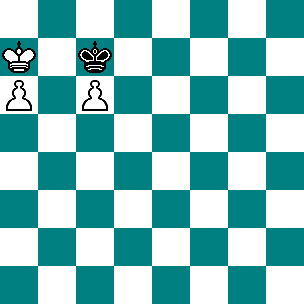
The only exception in all the foregoing cases is to be found, as has already been remarked, when the Pawn is upon either of the Rooks' files. In these instances, Black will invariably draw the game when his King can be placed on any part of the file in front of the Pawn, it being quite immaterial at what distance the adverse King and Pawn may be. Even, as in the next example, the player of the single King will draw the game, if he have not the move, against two Pawns in a somewhat similar position. For White being to move, he can only play K. to R's 8th, to which Black must reply by K. to B's sq.; and if White then advance B's Pawn, it will be taken: or if he play R's Pawn, Black returns K. to B's 2d, and his adversary is stalemated. (See Diagram 9.)
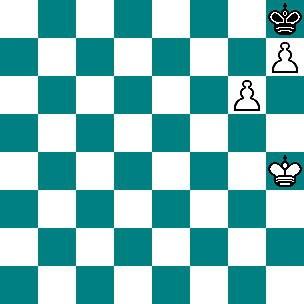
Two united Pawns, with their King, always win against King alone. Another advantage in having two Pawns thus situated is, that they can always maintain themselves until the arrival of the King to their support; for should one be taken, the other will advance to Queen. In the next position (see Diagram 10), White wins by advancing K. to Kt's 5th, then Queening Rook's Pawn, and upon that being taken, playing K. to R's 6th, or B's 6th, having the opposition.
QUEEN AGAINST A KNIGHT OR BISHOP.
(In all cases, each party is of course understood
to have a King in addition to the Pieces named.)
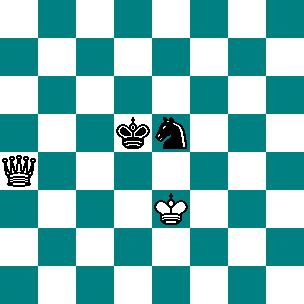
Diagram 11.
| WHITE. | BLACK. |
| 1. Q. to her 4th. (ch.) | 1. K. to his 3d. |
| 2. K. to his 4th. | 2. Kt. to K. Kt's 3d. |
| 3. Q. to her Kt's 6th. (ch.) | 3. K. to B's 2d. |
| 4. K. to B's 5th. | 4. Kt. to K's 2d. (ch.) |
| 5. K. to Kt's 5th. | 5. Kt. to Q's 4th. |
| 6. Q. to her 6th. | 6. Kt. to K's 2d. |
| 7. Q. to K. B's 6th.[A](ch.) | 7. K. to his sq. |
| 8. Q. to K's 6th. | 8. K to Q's sq. |
| 9. K. to B's 6th. | 9. Kt. to Q. B's sq. |
| 10. Q. to Q. B's 6th. | |
| And you must win the Kt. | |
The Queen also easily wins against a Bishop.
No. 5.
BLACK.
WHITE.
No. 6.
BLACK.
WHITE.
No. 7.
BLACK.
WHITE.
No. 8.
BLACK.
WHITE.
No. 9.
BLACK.
WHITE.
No. 10.
BLACK.
WHITE.
No. 11.
BLACK.
WHITE.
No. 12.
BLACK.
WHITE.
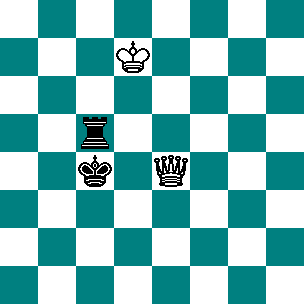
QUEEN AGAINST ROOK.
Diagram 12.
| WHITE. | BLACK. |
| 1. K. to Kt's 6th. | |
| 2. K. to K's 6th. | 2. R. to Q. B's 7th. |
| 3. K. to Q's 5th. | 3. K. to Kt's 7th. |
| 4. K. to Q's 4th. | 4. K. to R's 8th. |
| 5. K. to Q's 3d. | 5. R. to Kt's 7th. |
| 6. Q. to K. R's 4th. (ch.) | 6. K. to Kt's 8th. |
| 7. K. to B's 3d. | 7. R. to K. R's 7th. |
| 8. Q. to Kt's 5th. (ch.) | 8. K. to R's 8th. |
| 9. Q. to R's 6th. (ch.) | 9. K. to Kt's 8th. |
| 10. Q. to Kt's 6th. (ch.) | 10. K. to R's 7th. |
| 11. Q. to R's 7th. (ch.) | 11. K. to Kt's 8th. |
| 12. Q. to Kt's 8th. (ch.) | |
| Then takes Rook, and wins. | |
QUEEN AGAINST ROOK AND PAWN.
With few exceptions, arising from peculiar situations, the Queen wins also against a Rook and Pawn. Diagram 13, illustrating a won game, is from Philidor.
Diagram 13.
White moves and wins.
| WHITE. | BLACK. |
| 1. Q. to R's 7th. (ch.) | 1. K. to K's 3d. (best.) |
| 2. Q. to Q. B's 7th. | 2. R. to Q. B's 4th. |
| 3. Q. to Q's 8th.[A] | 3. R. to K's 4th. |
| 4. Q. to K's 8th. (ch.) | 4. K. to Q's 4th. |
| 5. Q. to Q. B's 8th. | 5. R. to K's 5th. (ch.) |
| 6. K. to K. B's 5th. | 6. R. to K's 4th. (ch.) |
| 7. K. to K. B's 6th. | 7. R. to K's 5th. |
| 8. Q. to K. B's 5th. (ch.) | 8. R. to K's 4th. |
| 9. Q. to Q's 3d. (ch.) | 9. K. to Q. B's 4th. |
| 10. Q. to Q's 2d. | 10. K. to Q. B's 3d. |
| 11. Q. to Q's 4th. | 11. K. to Q's 2d. |
| 12. Q. to Q. B's 4th. | 12. R. to Q. B's 4th. |
| 13. Q. to K. B's 7th. (ch.) | 13. K. to Q. B's 3d. |
| 14. K. to his 7th. | 14. R. to K's 4th. (ch.) |
| 15. K. to Q's 8th. | 15. R. to Q. B's 4th. |
| 16. Q. to Q's 7th. (ch.) | 16. K. to Q's 4th. |
| 17. K. to K's 7th. | 17. R. to Q. B's 3d. |
| 18. Q. to K. B's 5th. (ch.) | 18. K. to Q. B's 5th. |
| 19. K. to Q's 7th. | 19. R. to Q. B's 4th. |
| 20. Q. to K's 4th. (ch.) | 20. K. to Kt's 6th. |
| 21. K. takes P. | |
| And wins. | |
[A] This is the position which White must endeavor to gain, in order that he may force the King to his Queen's 4th, in front of the Pawn.
QUEEN AGAINST TWO BISHOPS.
The Queen usually wins against two of the minor Pieces, at least if they are on different parts of the board, or at a distance from their King. There are, however, many instances in which, by skilful play, the weaker force may draw the game.
The two Bishops will be able to draw when they can assume a position similar to that in Diagram 14, or in other words, such a position in front of their King, that the adverse King cannot approach.
Diagram 14.
White moves first.
| WHITE. | BLACK. |
| 1. Q. to Q's 7th. (ch.) | 1. K. to B. or Kt's sq. (best.) |
| 2. Q. to K's 6th. | 2. K. to Kt's 2d. |
| 3. K. to K. B's 4th. | 3. B. to K. R's 2d. |
| 4. Q. to Q's 7th. (ch.) | 4. K. to Kt's 3d. |
| 5. Q. to K's 8th. (ch.) | 5. K. to Kt's 2d. |
| 6. K. to Kt's 4th. | 6. B. to Kt's 3d. |
| 7. Q. to K's 6th. | 7. B. to R's 2d. |
| 8. Q. checks at Q's 7th. | 8. K. to Kt's 3d. |
| 9. Q. to K's 8th. (ch.) | 9. K. to Kt's 2d. |
| 10. K. to R's 5th. | 10. Q. B. to K. B's 4th. |
| The game is drawn. | |
QUEEN AGAINST TWO KNIGHTS.
Two Knights can often draw the game against a Queen.
QUEEN AGAINST KNIGHT AND BISHOP.
A King with Bishop and Knight can in many cases draw the game against a King and Queen.
No. 13.
BLACK.
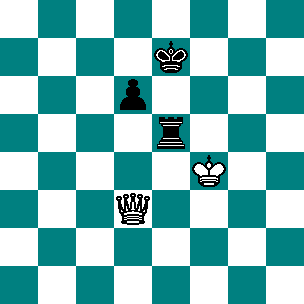
WHITE.
No. 14.
BLACK.
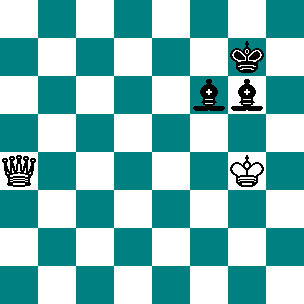
WHITE.
No. 15.
BLACK.
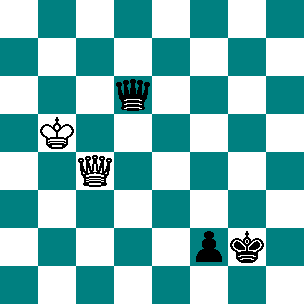
WHITE.
No. 16.
BLACK.
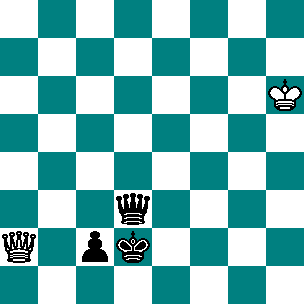
WHITE.
No. 17.
BLACK.
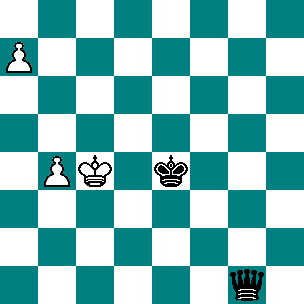
WHITE.
No. 18.
BLACK.
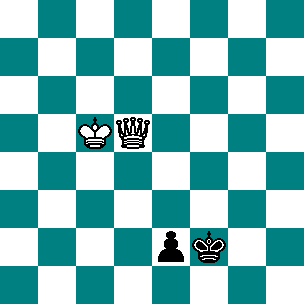
WHITE.
No. 19.
BLACK.
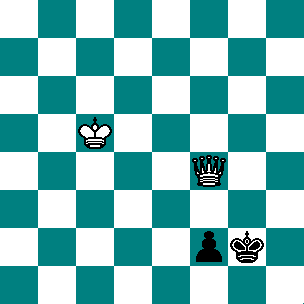
WHITE.
No. 20.
BLACK.
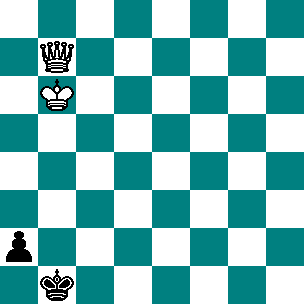
WHITE.
QUEEN AGAINST QUEEN AND PAWN.
In cases of this kind the game is usually drawn without difficulty, and most generally so by means of a perpetual check, though the same object may sometimes be attained by an exchange of Queens, when your King is able to stop the Pawn. When, however, the Pawn is advanced to its 7th square, and more particularly if defended by its King, the task is one of more difficulty, and many instructive situations occur where the Pawn may be Queened and the game therefore won. We subjoin an example or two of each kind, by way of illustration.
Diagram 15.
| WHITE. | BLACK. |
| 1. Q. to K. Kt's 4th. (ch.) | 1. Q. to K. Kt's 6th. |
| 2. Q. to K's 4th. (ch.) | 2. K. to Kt's 8th. |
| 3. Q. to Q's 4th. | 3. K. to R's 7th. |
| 4. Q. to K. R's 8th. (ch.) | 4. Q. to R's 6th. |
| 5. Q. to K's 5th. (ch.) | 5. K. to Kt's 8th. |
| 6. Q. to Kt's 5th. (ch.) | 6. Q. to Kt's 7th. |
| 7. Q. to K's 3d. | |
| White will always be able to make a drawn game. | |
Diagram 16.
| WHITE. | BLACK. |
| 1. Q. to her Kt's 4th. | |
| 2. K. moves. | 2. K. to Q's 8th. |
| 3. Q. to Q. R's sq. (ch.) | 3. P. Queens. |
| And wins. | |
Diagram 17.
| WHITE. | BLACK. |
| 1. P. Queens (ch.) | 1. K. to K. B's 5th. |
| 2. Q. to K. B's 8th. (ch.) | 2. K. to his 5th. |
| 3. Q. to K's 7th. (ch.) | 3. K. to K. B's 6th. |
| 4. Q. to K. B's 6th. (ch.) | 4. K. to his 5th. |
| 5. Q. to K's 6th. (ch.) | 5. K. to K. B's 6th. |
| 6. Q. to K. B's 5th. (ch.) | 6. K. to his 7th. |
| 7. Q. to her 3d. (ch.) | |
| Then forces an exchange of Queens, and wins with his remaining Pawn. |
|
QUEEN AGAINST PAWN.
In all ordinary situations, the Queen of course easily stops a single Pawn and wins against it; if, however, the latter has reached its 7th square, and has the support of its King, there are instances in which the game must be drawn. Our first position (see Diagram 18), will show the method of winning, and we shall afterwards point out the exceptions.
Diagram 18.
| WHITE. | BLACK. |
| 1. Q. to K. B's 5th. (ch.) | 1. K. to K. Kt's 7th. |
| 2. Q. to K's 4th. (ch.) | 2. K. to B's 7th. |
| 3. Q. to K. B's 4th. (ch.) | 3. K. to Kt's 7th. |
| 4. Q. to K's 3d. | 4. K. to B's 8th. |
| 5. Q. to K. B's 3d. (ch.) | 5. K. to his 8th. |
| 6. K. to Q's 4th. | 6. K. to Q's 8th. |
| 7. Q. to her 3d. (ch.) | 7. K. to his 8th. |
| 8. K. to his 3d. | 8. K. to B's 8th. |
| 9. Q. takes P. (ch.) and wins. | |
The same mode of procedure can always be adopted, unless the single Pawn should be either on the Bishop's or Rook's file, in which case Black may usually make a drawn game, owing to the power which he then has of making a stalemate. His having this alternative, however, altogether depends upon the distance which the adverse King may chance to be from the scene of action. In the next position (Diagram 19) the game is drawn.
| WHITE. | BLACK. |
| 1. Q. to K. Kt's 4th. (ch.) | 1. K. to R's 8th. |
| 2. Q. to K. B's 3d. (ch.) | 2. K. to Kt's 8th. |
| 3. Q. to K. Kt's 3d. (ch.) | 3. K. to R's 8th. |
And it is evident, that if White take the Pawn, his adversary is stalemated.
The result is the same when the Pawn is on the Rook's file, as you will at once see by making the experiment.
The next position (see Diagram 20), is a very ingenious exception to this rule, and will well repay your attention.
| WHITE. | BLACK. |
| 1. K. to Q. B's 5th. (ch.) | 1. K. to Q. B's 7th. (best) |
| 2. Q. to K. Kt's 2d. (ch.) | 2. K. to Q. B's 6th. |
| 3. Q. to K. B's sq. | 3. K. to Q. Kt's 7th. |
| 4. Q. to K's 2d. (ch.) | 4. K. to Q. Kt's 6th. |
| 5. Q. to her sq. (ch.) | 5. K. to Q. Kt's 7th. |
| 6. Q. to her 2d. sq. (ch.) | 6. K. to Q. Kt's 8th. |
| 7. K. to Q. Kt's 4th. | 7. P. Queens. |
| 8. K. to Q. Kt's 3d. | |
| And wins. | |
ROOK AGAINST BISHOP.
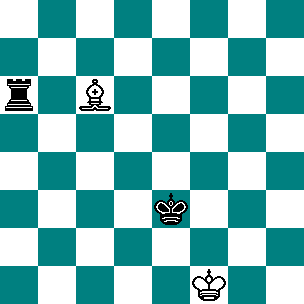
Diagram 21.
| WHITE. | BLACK. |
| 1. B. to Q. Kt's 7th. | 1. R. to Q. Kt's 3d. |
| 2. B. to Q's 5th. | 2. R. to Q. Kt's 7th. |
| 3. B. to Q. B's 6th. | 3. R. to K. B's 7th. (ch.) |
| 4. K. to Kt's sq. | 4. K. to his 7th. |
| 5. B. to Q's 5th. | 5. K. to his 8th. |
| 6. B. to Q. B's 6th. | 6. R. to K. B's 3d. |
| 7. B. to Q. Kt's 7th. | 7. R. to K. Kt's 3d. (ch.) |
| 8. K. to K. R's 2d. | 8. K. to K. B's 7th. |
| 9. K. to K. R's 3d, &c. | |
| And the game is drawn. | |
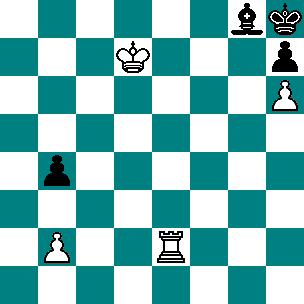
Diagram 22.
| WHITE. | BLACK. |
| 1. R. to Q. B's 2d. | 1. B. to Q. Kt's 6th. |
| 2. R. to B's 8th. (ch.) | 2. B. to K. Kt's sq. |
| 3. K. to Q's 6th. | 3. P. to Q. Kt's 6th. |
| 4. R. to Q. B's 7th. | 4. B. to Q's 4th. (best) |
| 5. K. takes B. | 5. K. to Kt's sq. |
| 6. K. to his 6th. | 6. K. moves. |
| 7. R. mates. |
No. 21.
BLACK.
WHITE.
No. 22.
BLACK.
WHITE.
No. 23.
BLACK.
WHITE.
No. 24.
BLACK.
WHITE.
ROOK AGAINST KNIGHT.
In ordinary positions, and where the Knight is near to, or cannot be prevented approaching, his King, the weaker party will be able to draw the game. The method of doing so, however, is not very easy, and there are many positions (of which we shall give an example) where the Rook can win.
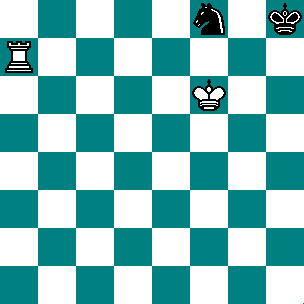
In the following position (see Diagram 23) White will win either with the move or without it.
| WHITE. | BLACK. |
| 1. Kt. to R's 2d. (ch.) | |
| 2. K. to K. B's 7th. | 2. Kt. to Kt's 4th. (ch.) |
| 3. K. to K. Kt's 6th. | |
| And wins. | |
ROOK AND PAWN AGAINST BISHOP.
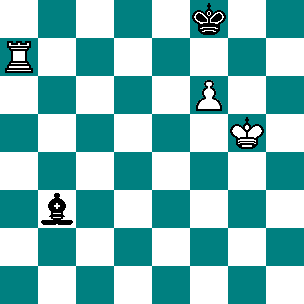
Diagram 24.
| WHITE. | BLACK. |
| 1. R. to Q. Kt's 7th. | 1. B. to Q. B's 5th. |
| 2. R. to Q. B's 7th. | 2. B. to Q. Kt's 4th. |
| 3. K. to B's 5th. | 3. B. to K's 7th. (best) |
| 4. P. to B's 7th. | 4. K. to Kt's 2d. (best) |
| 5. K. to his 6th. | 5. B. to K. R's 4th. (best) |
| 6. R. to Kt's 7th. | 6. B. to K. Kt's 3d. |
| 7. P. to B's 8th, becoming a Q. (ch.) |
7. K. takes Q. |
| 8. K. to B's 6th. | |
| And wins. | |
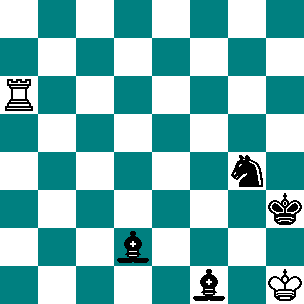
ROOK AGAINST THREE MINOR PIECES.
Diagram 25.
| WHITE. | BLACK. |
| 1. R. to Q. R's 3d. (ch.) | 1. B. to K's 6th. |
| 2. R. to Q. R's 2d. | 2. K. to Kt's 6th. |
| 3. R. to K. R's 2d. | 3. B. to K. B's 5th. |
| 4. R. to Q. R's 2d. | 4. B. to K. R's 6th. |
| 5. R. to Q. R's 3d. (ch.) | 5. B. to K's 6th. |
| 6. R. to Q. R's 2d. | 6. Kt. to K. B's 7th. (ch.) |
| 7. K. to Kt's sq. | 7. B. to K. Kt's 7th. |
| 8. R. to K's 2d. | 8. Kt. to K. R's 6th. (checkmate.) |
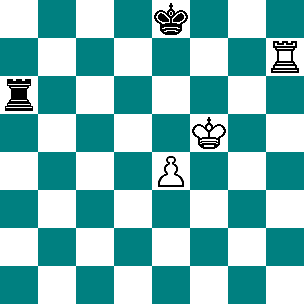
ROOK AND PAWN AGAINST ROOK.
Diagram 26.
| WHITE. | BLACK. |
| 1. P. to K's 5th. | 1. R. to Q. Kt's 3d. |
| 2. R. to Q. R's 7th. | 2. R. to Q. B's 3d. |
| 3. P. to K's 6th. | 3. R. to Q. B's 8th. |
| 4. K. to K. B's 6th. | 4. R. to K. B's 8th. (ch.) |
| And will draw. | |
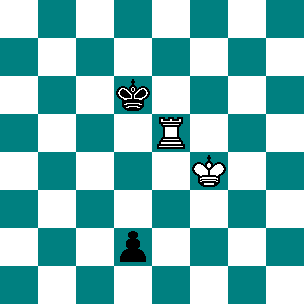
ROOK AGAINST ONE OR MORE PAWNS.
Diagram 27.
White must lose, even with the move.
| Suppose:— | |
| WHITE. | BLACK. |
| 1. R. to K's 8th. | 1. K. to Q's 2d. |
| 2. K. to his 3d. | 2. P. "Queens." |
| &c., &c. | |
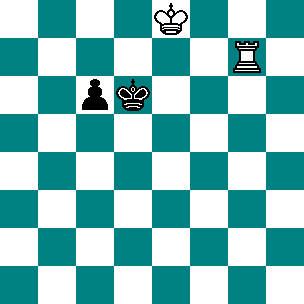
Diagram 28.
Here White will win the Pawn, and therefore the game.
| WHITE. | BLACK. |
| 1. R. to K. Kt's 6th. (ch.) | 1. K. to Q's 4th. |
| 2. K. to Q's 2d. | 2. P. to Q. B's 4th. |
| 3. R. to Q's 6th. (ch.) | 3. K. to Q. B's 5th. |
| 4. K. to Q. B's 6th. | 4. K. to Q. Kt's 5th. |
| 5. K. to Q's 5th. | 5. P. to Q. B's 5th. |
| 6. R. to Q. Kt's 6th. (ch.) | 6. K. to Q. B's 6th. |
| 7. R. to Q. B's 6th. | |
| And White wins. | |
Diagram 29.
| WHITE. | BLACK. |
| 1. P. to K. B's 6th. (ch.) | |
| 2. R. takes P. | 2. R. P. "Queens" (ch.) |
| 3. K. takes Q. | 3. K. takes R. |
| 4. K. to K. Kt's sq. | 4. P. to K. Kt's 7th. |
| 5. K. to K. R's 2d. | 5. K. to B's 7th, and wins. |
| Or, | |
| 1. P. to K. B's 6th. (ch.) | |
| 2. K. to R's sq. | 2. P. to K. Kt's 7th. (ch.) |
| 3. K. takes R. P. | 3. P. takes R., and becomes a Kt. (ch.), and wins. |
ROOK AGAINST TWO ROOKS.
Diagram 30.
| WHITE. | BLACK. |
| 1. R. to K. R's 5th. | 1. R. takes R. |
| 2. R. to Q. R's 6th. (ch.) | 2. K. moves. |
| 3. R. to Q. R's 5th. (ch.) | 3. K. moves. |
| 4. R. takes R. | |
| And wins. | |
No. 25.
BLACK.
WHITE.
No. 26.
BLACK.
WHITE.
No. 27.
BLACK.
WHITE.
No. 28.
BLACK.
WHITE.
No. 29.
BLACK.
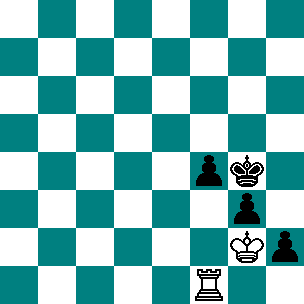
WHITE.
No. 30.
BLACK.
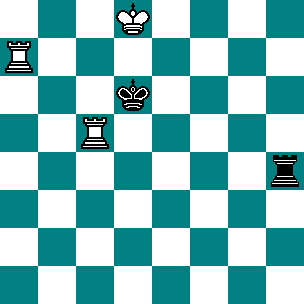
WHITE.
No. 31.
BLACK.
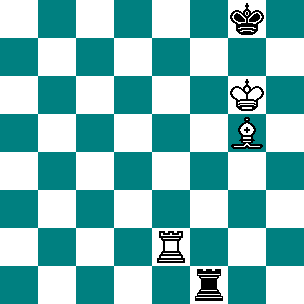
WHITE.
No. 32.
BLACK.
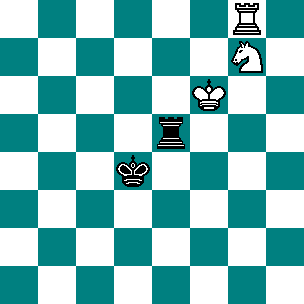
WHITE.
ROOK AND BISHOP AGAINST ROOK.
Diagram 31.
| WHITE. | BLACK. |
| 1. R. to K's 8th. (ch.) | 1. R. to K. B's sq. |
| 2. R. to K's 7th. | 2. R. to K. B's 8th. |
| 3. R. to Q's 7th. | 3. R. to K. B's 7th. |
| 4. R. to Q. B's 7th. | 4. R. to K. B's 8th. |
| 5. B. to K. B's 6th. | 5. R. to K. Kt's 8th. (ch.) |
| 6. K. to B's 5th. | 6. R. to K. Kt's 7th. |
| 7. B. to K's 5th. | 7. R. to Q. R's 7th. |
| 8. R. to K. Kt's 7th. (ch.) | 8. K. to B's sq. |
| 9. R. to Q's 7th. | 9. K. to Kt's sq. |
| 10. K. to B's 6th. | 10. R. to Q. R's 3d. (ch.) |
| 11. B. to Q's 6th. | 11. R. to Q. R's 8th. |
| 12. R. to K. Kt's 7th. (ch.) | 12. K. to R's sq. |
| 13. R. to K. Kt's 2d. | 13. R. to K. B's 8th. (ch.) |
| 14. K. to K. Kt's 6th. | 14. K. to Kt's sq. |
| 15. B. to Q. B's 5th. | 15. R. to K. B's 5th. |
| 16. R. to K. Kt's 5th. | 16. R. to Q. R's 5th. |
| 17. K. to B's 6th. (dis. ch.) | 17. K. to R's 2d. |
| 18. B. to K's 3d. | 18. R. to Q. B's 5th. |
| 19. R. to K. Kt's 7th. (ch.) | 19. K. to R's sq. |
| 20. R. to Q. Kt's 7th. | 20. K. to Kt's sq. |
| 21. R. to Q. Kt's 8th. (ch.) | 21. K. to R's 2d. |
| 22. R. to Q. Kt's 6th. | 22. R. to Q. B's 2d. |
| 23. B. to Q's 4th. | 23. R. to K. B's 2d. (ch.) |
This is his only move to draw the game; and now, whether you
take the Rook or not, he will succeed in preventing your winning.
ROOK AGAINST ROOK AND KNIGHT.
Diagram 32.
White, with the move, will win the Rook in four moves.
| WHITE. | BLACK. |
| 1. Kt. to K's 6th. (ch.) | 1. K. to Q's 4th. |
| (If instead he play K. to his 5th, White will check with R. at Kt's 4th.) |
|
| 2. R. to Q's 8th. (ch.) | 2. K. to his 5th. |
| 3. R. to Q's 4th. (ch.) | 3. K. moves. |
| 4. K. takes R. | |
KING AND PAWN AGAINST KING AND PAWN.
Diagram 33.
| WHITE. | BLACK. |
| 1. R. takes P. (ch.) | |
| 2. R. takes R. | 2. P. to Q's 7th. |
| 3. R. to Q's 5th. | 3. K. takes R. |
| 4. P. to Q's 7th. | 4. P. Queens. |
| 5. P. Queens. (ch.) | |
| And wins. | |
KING AND TWO PAWNS AGAINST KING AND PAWN.
Diagram 34.
First, suppose White moves:—
| WHITE. | BLACK. |
| 1. K. to Q's 4th. | 1. K. to Q's 3d. |
| 2. K. to Q's 3d. | 2. K. to Q's 2d. |
| 3. K. to K's 3d. | 3. K. to K's 2d. |
| 4. K. to Q's 4th. | 4. K. to Q's 3d. |
| 5. K. to K's 4th. | 5. K. to K's 3d. |
| And the game must be drawn. | |
But suppose Black have to play:—
| WHITE. | BLACK. |
| 1. K. to Q's 3d. | |
| 2. P. to K. B's 5th. | 2. K. to K's 2d. |
| 3. P. to K. B's 6th. (ch.) | 3. K. to his 3d. |
| 4. K. to Q's 4th. | 4. K. to Q's 3d. |
| 5. P. to K. B's 7th. | 5. K. to his 2d. |
| 6. K. to his 5th. | 6. K. takes P. |
| 7. K. to Q's 6th. | 7. K. to B's sq. |
| 8. K. to his 6th. | 8. K. to Kt's 2d. |
| 9. K. to his 7th. | 9. K. to Kt's sq. |
| 10. K. to B's 6th. | 10. K. to R's 2d. |
| 11. K. to B's 7th. | 11. K. to R's sq. |
| 12. K. takes P. | 12. K. to Kt's sq. |
| 13. K. to B's 6th. | 13. K. to R's 2d. |
| 14. K. to B's 7th. | 14. K. to R's sq. |
| 15. K. to Kt's 6th. | 15. K. to Kt's sq. |
| 16. K. to R's 6th. | 16. K. to R's sq. |
| 17. P. to Kt's 6th. | |
| And wins. | |
KING AND TWO PAWNS AGAINST KING AND TWO PAWNS.
Diagram 35.
| WHITE. | BLACK. |
| 1. K. to his 3d. | 1. K. to his 4th. |
| 2. K. to B's 3d. | 2. K. to B's 4th. |
| 3. K. to Kt's 3d. | 3. K. to K's 4th. |
| 4. K. to Kt's 4th. | 4. K. to B's 3d. |
| 5. K. to Kt's 3d. | 5. K. to K's 4th. |
| And the game is drawn. | |
| If Black move, he plays:— | |
| 1. K. to his 4th. | |
| 2. K. to his 3d. | 2. K. to Q's 4th. |
| (Were he to move K. to B's 4th, you would win by 3. K. to Q's 4th.) |
|
| 3. K. to B's 3d. | 3. K. to his 4th. |
| 4. K. to Kt's 3d. | 4. K. to his 3d. |
| 5. K. to Kt's 4th. | 5. K. to B's 3d. |
And by continuing to play thus, Black may always draw the game.
KING AND TWO PAWNS AGAINST KING AND THREE PAWNS.
Diagram 36.
With or without the move Black wins.
First, with the move,—
| WHITE. | BLACK. |
| 1. P. to K. Kt's 6th. | |
| 2. P. to R's 3d, or (A.) | 2. K. to Q's 5th. |
| 3. K. to B's 3d. | 3. K. to his 4th. |
| 4. K. to his 2d. | 4. K. to his 5th. |
| 5. K. to B's sq. | 5. K. to Q's 6th. |
| 6. K. to his sq. | 6. K. to K's 6th. |
| 7. K. to B's sq. | 7. K. to Q's 7th. |
| 8. K. to Kt's sq. | 8. K. to his 7th. |
| 9. K. to R's sq. | 9. P. to B's 6th. |
| 10. P. takes P. | 10. K. to B's 7th. |
| Winning. | |
(A.)
| 2. P. takes P. | 2. R. P. takes P. |
| 3. K. to B's sq. | 3. K. to his 6th. |
| 4. K. to his sq. | 4. K. to Q's 6th. |
| 5. K. to B's sq. | 5. K. to Q's 7th. |
| 6. K. to Kt's sq. | 6. K. to his 7th. |
| 7. K. to R's sq. | 7. P. to B's 6th. |
| And wins. | |
Next, if White move first he must equally lose.
| WHITE. | BLACK. |
| 1. K. to B's 2d. | 1. P. to Kt's 6th. (ch.) |
| 2. K. to Kt's sq. | 2. K. to his 6th. |
| 3. K. to R's sq. | 3. P. to B's 6th. |
| 4. P. takes B. P. | 4. K. to B's 7th, &c. |
| Winning. | |
No. 33.
BLACK.
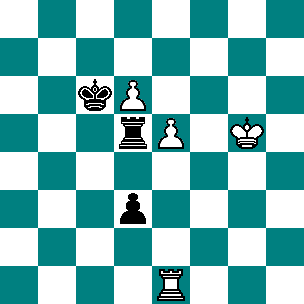
WHITE.
No. 34.
BLACK.
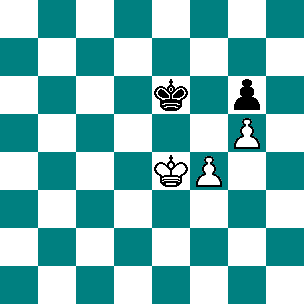
WHITE.
No. 35.
BLACK.
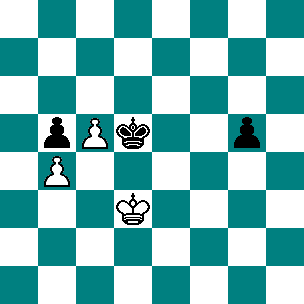
WHITE.
No. 36.
BLACK.
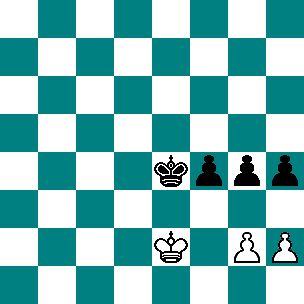
WHITE.
No. 37.
BLACK.
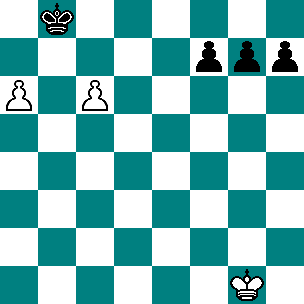
WHITE.
No. 38.
BLACK.
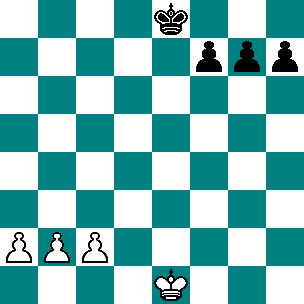
WHITE.
KING AGAINST THREE PASSED PAWNS.
Diagram 37.
| WHITE. | BLACK. |
| 1. P. to B's 4th. | |
| 2. K. to Kt's 2d. | 2. P. to R's 4th. |
| 3. K. to Kt's 3d. | 3. P. to Kt's 4th. |
| 4. K. to Kt's 2d. | 4. P. to B's 5th. |
| 5. K. to B's 3d. | 5. P. to R's 5th. |
| 6. K. to Kt's 4th. |
And wins; because whatever Pawn is moved, the King takes it.
KING AND THREE PASSED PAWNS AGAINST
KING AND THREE PASSED PAWNS.
Diagram 38.
| WHITE. | BLACK. |
| 1. K. to Q's 2d. | |
| 2. P. to R's 4th. | 2. K. to Q. B's 3d. |
| 3. P. to R's 5th. | 3. K. to Kt's 4th. |
| 4. P. to Kt's 4th. | 4. P. to R's 4th. |
| 5. P. to B's 4th. (ch.) | 5. K. to R's 3d. |
| 6. P. to B's 5th. | 6. K. to Kt's 4th. |
| 7. K. to B's 2d. | 7. P. to R's 5th. |
| 8. K. to Kt's 2d. | 8. P. to Kt's 4th. |
| 9. K. to R's 3d. | 9. P. to B's 4th. |
| 10. K. to R's 2d. | 10. P. to B's 5th. |
| 11. K. to Kt's 2d. | 11. P. to Kt's 5th. |
| 12. K. to Kt's sq. | 12. P. to B's 6th. |
| 13. K. to B's 2d. | 13. P. to R's 6th. |
| 14. K. to Kt's 3d. | 14. Is obliged to move his King, and one of the White Pawns will Queen. |
Problem 1.
White to play and mate in two moves.
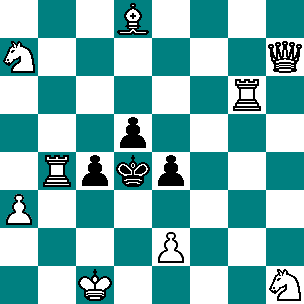
WHITE.
Problem 2.
White to play and mate in two moves.
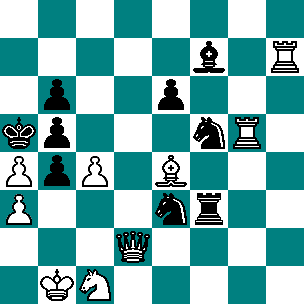
WHITE.
Problem 3.
White to play and mate in three moves.
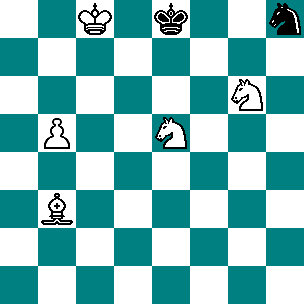
WHITE.
Problem 4.
White to play and mate in three moves.
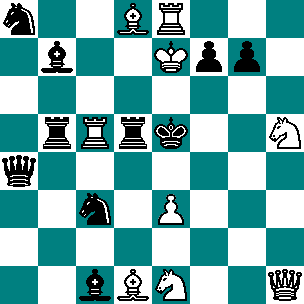
WHITE.
Problem 5.
White to play and mate in four moves.
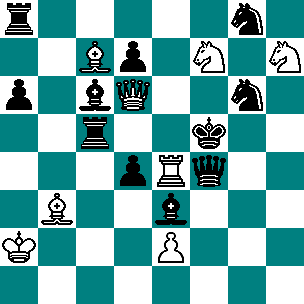
WHITE.
Problem 6.
White to play and mate in three moves.
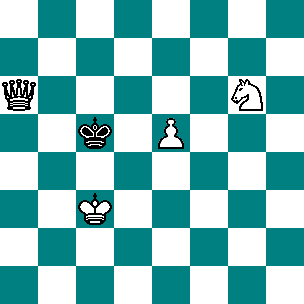
WHITE.
Problem 7.
White to play and mate in three moves.
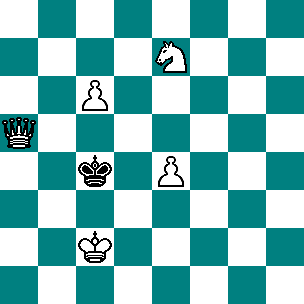
WHITE.
Problem 8.
White to play and checkmate without moving his King.
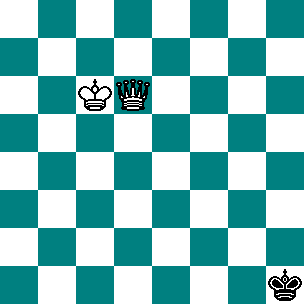
WHITE.
Problem 9.
White to play and mate in four moves.
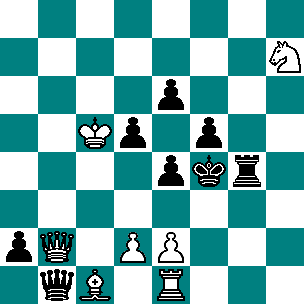
WHITE.
Problem 10.
White to play and mate in three moves.
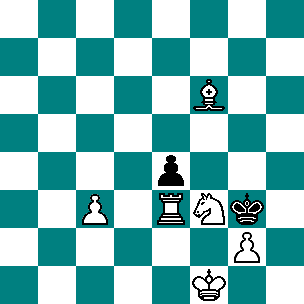
WHITE.
Problem 11.
White to play and mate in four moves.
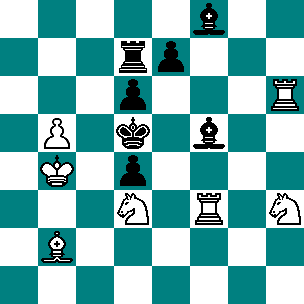
WHITE.
Problem 12.
White to move his King alone and mate in five moves.
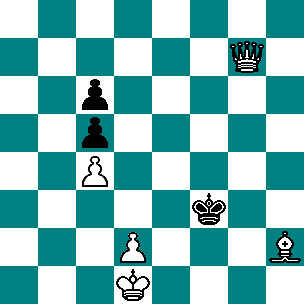
WHITE.
SOLUTIONS TO PROBLEMS.
No. 1.
| WHITE. | BLACK. |
| 1. Q. to K. R's 4th. | If 1. K. to K's 4th. |
| 2. Q. to K. B's 6th. (checkmate.) | |
| If 1. K. to Q. B's 4th | |
| 2. B. to Q. Kt's 6th. (checkmate.) | |
| If 1. K. to K's 6th. | |
| 2. Q. to K. B's 2d. (checkmate.) | |
No. 2.
| WHITE. | BLACK. |
| 1. B. to K. Kt's 8th. | If 1. B. takes R. |
| 2. R. to Q. R's 7th. (checkmate.) | |
| If 1. Anything else. | |
| 2. R. to Q. R's 8th. (checkmate.) | |
No. 3.
| WHITE. | BLACK. |
| 1. B. to K. B's 7th. (ch.) | 1. Kt. takes B. |
| 2. Kt. to Q. B's 4th. | 2. Kt. moves. |
| 3. Kt. to Q's 6th. (checkmate.) | |
No. 4.
| WHITE. | BLACK. |
| 1. Kt. to K. Kt's 3d. | 1. K. B. takes P. |
| 2. Kt. to K. B's 3d. (ch.) | 2. K. to K. B's 5th. |
| 3. Q. to K. R's 4th. (checkmate.) | |
No. 5.
| WHITE. | BLACK. |
| 1. Q. to K's 6th. (ch.) | 1. P. takes Q. |
| 2. B. takes P. (ch.) | 2. K. takes R. |
| 3. Kt. (at R's 7th.) to K. Kt's 5th. (ch.) |
3. Q. takes Kt. |
| 4. Kt. to K. Kt's 5th. (checkmate.) | |
No. 6.
| WHITE. | BLACK. |
| 1. Kt. to K. R's 4th. | 1. K. to Q's 4th. |
| 2. Q. to Q's 6th. (ch.) | 2. K. to K's 5th. |
| 3. Q. to Q's 4th. (checkmate.) | |
No. 7.
| WHITE. | BLACK. |
| 1. Kt. to K. Kt's 6th. | 1. K. to Q's 5th. |
| 2. Q. to Q. B's 3d. (ch.) | 2. K. takes P. |
| 3. Q. to Q's 3d. (checkmate.) | |
No. 8.
| WHITE. | BLACK. |
| 1. Q. to Q's sq. (ch.) | 1. K. to Kt's 7th. |
| 2. Q. to K's sq. | 2. K. to B's 6th. |
| 3. Q. to Q's 2d. | 3. K. to K's 5th. |
| 4. Q. to Q. B's 3d. | 4. K. to B's 5th. |
| 5. Q. to Q's 3d. | 5. K. to Kt's 5th. |
| 6. Q. to K's 3d. | 6. K. to R's 5th. |
| 7. Q. to K. B's 3d. | 7. K. to Kt's 4th. |
| 8. Q. to K's 4th. | 8. K. to R's 4th. |
| 9. Q. to K. B's 4th. | 9. K. to Kt's 3d. |
| 10. Q. to K's 5th. | 10. K. to R's 3d. |
| 11. Q. to K. B's 5th. | 11. K. to Kt's 2d. |
| 12. Q. to K's 6th. | 12. K. to R's sq. |
| 13. Q. to Q's 7th. | 13. K. to Kt's sq. |
| 14. Q. to K's 7th. | 14. K. to R's sq. |
| 15. Q. to K. B's 8th. (ch.) | 15. K. to R's 2d. |
| 16. Q. to K. B's 6th. | 16. K. to Kt's sq. |
| 17. Q. to K. R's 6th. | 17. K. to B's 2d. |
| 18. Q. to Kt's 5th. | 18. K. to K's 3d. |
| 19. Q. to B's 4th. | 19. K. to K's 2d. |
| 20. Q. to B's 5th. | 20. K. to K's sq. |
| 21. Q. to Q's 7th. (ch.) | 21. K. to B's sq. |
| 22. Q. to K. R's 7th. | 22. K. to K's sq. |
| 23. Q. to K. Kt's 7th. | 23. K. to Q's sq. |
| 24. Q. to Q's 7th. (checkmate.) | |
No. 9.
| WHITE. | BLACK. |
| 1. Q. to K's 5th. (ch.) | 1. K. takes Q. |
| 2. P. to Q's 4th. (ch.) | 2. P. takes P. in passing |
| 3. P. takes P. (dis. ch.) | 3. R. to K's 5th. |
| 4. P. to Q's 4th. (checkmate.) | |
No. 10.
| WHITE. | BLACK. |
| 1. Kt. to K's 5th. (dis. ch.) | 1. K. to B's 5th. (best.) |
| 2. K. Kt's P. two. | 2. K. takes R. |
| 3. B. to Kt's 5th. (checkmate.) | |
No. 11.
| WHITE. | BLACK. |
| 1. R. to K. R's 4th. | 1. B. takes Kt. (at Bl. Q's 6th.) |
| 2. Kt. to K. Kt's 5th. | 2. P. to K's 3d. |
| 3. R. takes P. (ch.) | 3. K. to K's 4th. |
| 4. R. takes B. (disc. checkmate.) | |
No. 12.
| WHITE. | BLACK. |
| 1. K. to K's sq. | 1. K. to K's 5th. |
| 2. K. to K's 2d. | 2. K. to B's 4th. |
| 3. K. to B's 3d. | 3. K. to K's 3d. |
| 4. K. to B's 4th. | 4. K. to Q's 3d. |
| 5. K. to B's 5th. (disc. ch.) | |
THE END.
 |
THE BLUE BOOKS OF
|
|
The volumes of "THE BLUE BOOK SERIES" give the latest and best information on every subject covered. Each book has been prepared by an authority on the subject and will be found both readable and dependable.
Every volume in "THE BLUE BOOK SERIES" is printed on high grade book paper, bound in uniform style in rich blue ribbed cloth, with gold back and side stamping. All the books in the series are uniform in size measuring 5x7-3/8 inches.
THE BLUE BOOK OF BIOGRAPHY, By Charles Morris. Contains the lives of over three thousand great men and women from the earliest days to the present time. Splendid for students and the home library. 607 PAGES
THE BLUE BOOK SERIES MODERN DICTIONARY. Based upon the Solid Foundation laid by Noah Webster, and other Lexicographers, thoroughly Modernized by Charles Morris. Its convenience of contents and logical arrangement especially adapt it for use in home, school, and office. Clear bold face type. 960 PAGES
THE BLUE BOOK OF CHESS. A Practical Guide for the Beginner and Reference Book for the More Advanced Player. Based on the Work of Staunton and Recent Authorities, WITH NEW GAMES by the world's Greatest Experts. 256 PAGES
THE BLUE BOOK OF BRIDGE AND AUCTION, By Lennard Leigh. A sound treatise of the game. Simpler and more easily understood than other manuals of the kind.
THE BLUE BOOK OF ETIQUETTE FOR MEN, By Charles Harcourt. A Guide to Conduct and Dress on All Occasions. Conceived and written in a wholesome, manly spirit. 223 PAGES
THE BLUE BOOK OF ETIQUETTE FOR WOMEN, By Mrs. Charles Harcourt. A Guide to Conduct and Dress on All Occasions. Written by a sensible woman for sensible readers, and is a reliable and helpful guide. 224 PAGES
THE BLUE BOOK OF PRACTICAL INFORMATION, By Logan Marshall. Covers the widest range of contents. Logically and conveniently arranged for ready reference. 368 PAGES
THE BLUE BOOK OF PARLIAMENTARY LAW, By Luther S. Cushing. With additional notes by PROFESSOR ALBERT S. BOLLES, of the University of Pennsylvania. Covers the whole field of Parliamentary procedure and debate. 239 PAGES
THE BLUE BOOK FOR GIRL, WIFE AND MOTHER, By M. Solis-Cohen, A.B., M.D. Explaining all the important periods of a woman's life, including childbirth and the months immediately preceding and following it. Recommended by the leading medical journals as the best book for home use.
THE BLUE BOOK OF NURSING. By J.Q. Griffith, M.D., Ph.D. A practical and sensible book which may be commended for use in families, and by all who have to do with illness, as a guide in times of sickness, for caring for infants and children and for preserving the health. 480 PAGES
PRICE PER VOLUME, $0.75 POSTAGE PAID
THE JOHN C. WINSTON COMPANY, Publishers
1006-1016 ARCH STREETPHILADELPHIA, PA.
Here ends the original text of "The Blue Book of Chess". For the benefit of the reader, included below are the eighty-five "Illustrative Games" translated into Portable Game Notation.
[Event "Blindfold Exhibition"]
[Site "Paris, FRA"]
[Date "????.??.??"]
[Round "?"]
[White "Morphy"]
[Black "Boucher"]
[Result "1-0"]
[ECO "C62"]
[Annotator "The Blue Book of Chess, Game I., p. 57."]
[PlyCount "53"]
1. {Mr. Morphy plays without seeing the Chess board or men, against M. Boucher, at Paris.} e4 e5 2. Nf3 d6 3. d4 exd4 4. Qxd4 Nc6 5. Bb5 Bd7 6. Bxc6 Bxc6 7. Bg5 f6 8. Bh4 Nh6 9. Nc3 Be7 10. O-O O-O 11. Qc4+ Kh8 12. Nd4 Qd7 13. Rad1 Rf7 14. f4 a5 15. f5 Rff8 16. Ne6 Rg8 17. a4 Ng4 18. Qe2 Ne5 19. Bg3 Qc8 {To enable him to capture the Bishop, which is about to take the Kt., with the Q's Pawn.} 20. Bxe5 dxe5 21. Rf3 {The attack looks already irresistible, but the actual finish is charmingly accomplished.} Bd7 {By this move Black may be said to lose a Piece. His best course--but that a bad one--was possibly to retreat his Bishop to K's square.} 22. Rh3 {Threatening mate in two moves.} h6 23. Qd2 Kh7 {To avert the promised mate, by Rxh6+, etc.} 24. Qxd7 Bd6 25. Rxh6+ {The termination is very pretty--quite an elegant little problem.} Kxh6 26. Rd3 {And Black has no possible means of escape; for, if he play Qe8, White simply captures the Queen for nothing; if Bc5+, then follows Kf1, etc.} Kh5 27. Qf7+ {And wins; the battle having lasted about seven hours.} 1-0
[Event "?"]
[Site "?"]
[Date "????.??.??"]
[Round "?"]
[White "Morphy"]
[Black "Harrwitz"]
[Result "0-1"]
[ECO "C62"]
[Annotator "The Blue Book of Chess, Game II., p. 58."]
[PlyCount "69"]
1. e4 e5 2. Nf3 d6 3. d4 exd4 4. Qxd4 Nc6 5. Bb5 Bd7 6. Bxc6 Bxc6 7. Bg5 f6 8. Bh4 Nh6 9. Nc3 Be7 10. O-O Qd7 11. Rad1 O-O 12. Qc4+ Rf7 13. Nd4 Ng4 14. h3 Ne5 15. Qe2 g5 {Very imprudent in such a position and against such an opponent. It must be admitted, however, that Black has no good move at this crisis.} 16. Bg3 Rg7 17. Nf5 Rg6 18. f4 gxf4 19. Rxf4 Kh8 20. Rh4 Bf8 21. Bxe5 fxe5 22. Rf1 Qe6 23. Nb5 Qg8 24. Rf2 a6 25. Nxc7 {Perfectly sound, as the sequel shows.} Rc8 26. Nd5 Bxd5 27. exd5 Rc7 ({Taking the Pawn would have been injudicious; for example,} 27... Qxd5 28. Rxh7+ Kxh7 {best} 29. Qh5+ Bh6 30. Nxh6 Rxh6 31. Qf5+ Kg7 {Anything.} 32. Qxc8) 28. c4 Be7 29. Rh5 Qe8 30. c5 {The first step in a combination of admirable daring and ingenuity.} Rxc5 31. Rxh7+ Kxh7 32. Qh5+ Kg8 33. Nxe7+ Kg7 {Had he taken the Knight it would have cost him his Queen.} 34. Nf5+ Kg8 35. Nxd6 {And Black cannot possibly save the game.} 0-1
[Event "?"]
[Site "?"]
[Date "????.??.??"]
[Round "?"]
[White "Morphy"]
[Black "Harrwitz"]
[Result "0-1"]
[ECO "C62"]
[Annotator "The Blue Book of Chess, Game III., p. 59."]
[PlyCount "80"]
1. e4 e5 2. Nf3 d6 3. d4 exd4 4. Qxd4 Nc6 5. Bb5 Bd7 6. Bxc6 Bxc6 7. Bg5 Nf6 8. Nc3 Be7 9. O-O-O O-O 10. Rhe1 h6 11. Bh4 Ne8 12. Bxe7 Qxe7 13. e5 Bxf3 14. gxf3 Qg5+ 15. Kb1 dxe5 16. Rxe5 Qg2 17. Nd5 Qxh2 18. Ree1 Qd6 19. Rg1 Kh7 20. Qe3 f5 21. Nf4 Qb6 22. Qe2 Rf7 23. Qc4 Qf6 24. Nh5 {This looks promising, but does not turn out well. He had better, perhaps, have played Rg6.} Qe7 25. Rde1 Qd7 26. a3 Nd6 27. Qd4 Rg8 28. Rg2 b6 29. Reg1 Ne8 30. Qc3 f4 {Well played. White must now beware, for his Kt. is in sore peril.} 31. Rh1 {This will not save the Kt. The best move was Rg4.} g6 32. Rhg1 Qd5 33. Qe1 gxh5 34. Rg5 {Merely desperate.} Qxf3 35. Qe5 Rf6 36. Qe7+ Rg7 37. Qxe8 hxg5 38. Qe1 Qc6 39. f3 Re6 40. Qf2 Rge7 0-1
[Event "?"]
[Site "?"]
[Date "????.??.??"]
[Round "?"]
[White "Bird"]
[Black "Morphy"]
[Result "0-1"]
[ECO "C41"]
[Annotator "The Blue Book of Chess, Game IV., p. 60."]
[PlyCount "58"]
1. e4 e5 2. Nf3 d6 3. d4 f5 4. Nc3 fxe4 5. Nxe4 d5 6. Ng3 e4 7. Ne5 Nf6 8. Bg5 Bd6 9. Nh5 O-O 10. Qd2 Qe8 11. g4 Nxg4 12. Nxg4 Qxh5 13. Ne5 Nc6 14. Be2 Qh3 15. Nxc6 bxc6 16. Be3 Rb8 17. O-O-O Rxf2 18. Bxf2 Qa3 19. c3 Qxa2 20. b4 Qa1+ 21. Kc2 Qa4+ 22. Kb2 Bxb4 23. cxb4 Rxb4+ 24. Qxb4 Qxb4+ 25. Kc2 e3 26. Bxe3 Bf5+ 27. Rd3 Qc4+ 28. Kd2 Qa2+ 29. Kd1 Qb1+ 0-1
[Event "?"]
[Site "?"]
[Date "????.??.??"]
[Round "?"]
[White "?"]
[Black "?"]
[Result "0-1"]
[ECO "C41"]
[Annotator "The Blue Book of Chess, Game V., p. 60."]
[PlyCount "56"]
1. e4 e5 2. Nf3 d6 3. d4 f5 4. dxe5 fxe4 5. Ng5 d5 6. f4 {This is not the proper move; he should play e6.} Bc5 7. c4 c6 8. Nc3 Ne7 9. h4 h6 10. Nh3 O-O 11. Na4 Bb4+ 12. Bd2 Bxd2+ 13. Qxd2 d4 14. c5 b5 15. cxb6 axb6 16. b3 Be6 17. Be2 Nf5 18. Ng1 Ng3 19. Rh2 e3 20. Qb2 d3 21. Bf3 Rxf4 22. O-O-O Rfxa4 23. bxa4 Rxa4 24. a3 Rc4+ 25. Kb1 Rc2 26. Qb4 Na6 27. Qf4 Nc5 28. Qxg3 {And Black mates in two moves.} -- 0-1
[Event "Blindfold Exhibition"]
[Site "Paris, FRA"]
[Date "????.??.??"]
[Round "?"]
[White "Morphy"]
[Black "Potier"]
[Result "1-0"]
[ECO "C42"]
[Annotator "The Blue Book of Chess, Game I., p. 65."]
[PlyCount "49"]
1. {Mr. Morphy plays without seeing the Chess-board or men, against M. Potier, at Paris.} e4 e5 2. Nf3 Nf6 3. Bc4 Nxe4 4. Nc3 Nf6 {It is to be regretted that Mr. Potier did not take the Kt. rather than retreat, as many amateurs would have been pleased to see Mr. Morphy carrying out the attack of this interesting and comparatively novel debut.} 5. Nxe5 d5 6. Bb3 Be7 7. d4 c6 8. O-O Nbd7 9. f4 Nb6 10. Qf3 h5 11. f5 Qc7 12. Bf4 Bd6 13. Rae1 Kf8 14. Qg3 h4 15. Ng6+ {Finely played.} Kg8 16. Bxd6 hxg3 17. Bxc7 fxg6 18. fxg6 gxh2+ 19. Kh1 Bg4 20. Re7 Nbd7 21. Be5 Kf8 22. Rf7+ { The termination of this partie is remarkably elegant and finished.} Kg8 23. Nxd5 cxd5 24. Bxd5 Nb6 25. Bb3 1-0
[Event "?"]
[Site "?"]
[Date "1837.??.??"]
[Round "?"]
[White "Petroff"]
[Black "3 Russian Amateurs"]
[Result "0-1"]
[ECO "C43"]
[Annotator "The Blue Book of Chess, Game II., p. 66."]
[PlyCount "53"]
1. e4 e5 2. Nf3 Nf6 3. d4 Nxe4 4. Bd3 d5 5. Nxe5 Bd6 6. O-O O-O 7. c4 f5 8. f4 c6 9. Be3 Be6 10. cxd5 cxd5 11. Nc3 Nc6 12. Rc1 Rf6 {This unfortunate counter attack is admirably taken advantage of by M. Petroff.} 13. Bxe4 fxe4 14. Nb5 Ne7 15. Nxd6 Qxd6 16. g4 g6 {They do not appear to have had a better move.} 17. f5 {Well played.} gxf5 18. Bg5 Rff8 19. Bh6 Rfc8 {It would have been better to leave the Rook en prise, and advance f4.} 20. Qd2 Qd8 21. Rxc8 Rxc8 22. gxf5 Nxf5 23. Qg2+ Kh8 24. Rxf5 Qg8 25. Rf6 Bh3 26. Qg3 Qxg3+ 27. hxg3 0-1
[Event "?"]
[Site "?"]
[Date "????.??.??"]
[Round "?"]
[White "Tchigorin"]
[Black "Pillsbury, H. N."]
[Result "0-1"]
[ECO "C49"]
[Annotator "The Blue Book of Chess, Game III., p. 67."]
[PlyCount "52"]
1. {Notes by Jas. Mason.} e4 e5 2. Nf3 Nf6 3. Nc3 Nc6 4. Bb5 Bb4 5. O-O O-O 6. d3 d6 7. Bg5 {In this familiar 'double Lopez' predicament, Bxc6 is highly recommended, if a dull but durable kind of game is desired.} Bxc3 8. bxc3 Ne7 {... Something like a leap in the dark. If the doubled Pawn can be 'dissolved' betimes, or the open file well used in attack, a safe landing may be confidently expected.} 9. Bxf6 gxf6 10. Qd2 Ng6 11. Kh1 {More or less necessary, sooner or later. Black does not attempt to dissolve, just here; for then Qh6, threatening Ng5, might be uncomfortable.} Kh8 12. d4 Rg8 13. Bd3 Qe7 14. Rab1 { Routine--indirectly including the questionable 16. d5?. At once Ng1, to be speedily followed by g3 and f4, would have given the matter another and perhaps very different complexion.} b6 15. Ng1 Be6 $1 16. d5 $2 Bd7 17. g3 Rg7 18. Rbe1 Rag8 {... The difference is in favor of the young American representative, who presses it fully.} 19. f3 {Manifestly weakening. The Russian champion feels himself on the defensive, and at a loss how to continue. Thus the text move may be as good as any other.} h5 $1 20. Re2 Nf8 21. f4 exf4 22. Qxf4 Nh7 23. Nf3 Bg4 24. Nd4 {Nh4 would be much stronger, the importance of halting the advancing Rook Pawn duly considered. Going from bad to worse, the downright blunder two moves later caps the climax--and more need not be said.} h4 $1 25. Re3 Qe5 26. gxh4 $2 Bf3+ 0-1
[Event "?"]
[Site "?"]
[Date "????.??.??"]
[Round "?"]
[White "Cochrane"]
[Black "Staunton"]
[Result "1-0"]
[ECO "C40"]
[Annotator "The Blue Book of Chess, Game I., p. 72."]
[PlyCount "39"]
1. e4 e5 2. Nf3 d5 3. Nxe5 Qe7 4. d4 f6 5. Nc3 fxe5 6. Nxd5 Qf7 7. Bc4 Be6 8. O-O c6 9. f4 cxd5 10. fxe5 Qd7 11. exd5 Bxd5 12. e6 Qc6 13. Qh5+ g6 14. Qxd5 Ne7 15. Qe5 Qxc4 16. Qxh8 Nf5 17. Bh6 Qb4 18. Qxf8+ Qxf8 19. Bxf8 Kxf8 20. g4 1-0
[Event "?"]
[Site "?"]
[Date "????.??.??"]
[Round "?"]
[White "Jaenisch"]
[Black "Petroff"]
[Result "1-0"]
[ECO "C40"]
[Annotator "The Blue Book of Chess, Game II., p. 73."]
[PlyCount "73"]
1. e4 e5 2. Nf3 d5 3. Nxe5 Qe7 4. d4 f6 5. Nf3 dxe4 6. Nfd2 f5 7. Be2 Nc6 8. Nb3 Nf6 9. O-O Qf7 10. c4 Bd7 11. Bf4 O-O-O 12. Nc3 h6 13. a3 g5 14. Bd2 f4 15. d5 Ne5 16. Nd4 Bc5 17. Be1 Rhg8 18. b4 Be7 19. f3 e3 20. Qb3 g4 21. c5 gxf3 22. Nxf3 Nxf3+ 23. Bxf3 Ng4 24. Qc4 Kb8 25. Qe4 Rde8 26. d6 Bc6 27. Qd4 Bxf3 28. Rxf3 Bg5 29. Nb5 c6 30. d7 Re6 31. Bg3 cxb5 {If Black had taken fxg3 at this point, the following moves show that he would have equally lost:--} (31... fxg3 32. Qxg4 gxh2+ 33. Kh1 Qxd7 34. Qg3+ {and wins.}) 32. Bxf4+ Ne5 33. Bxe5+ Rxe5 34. Qxe5+ Ka8 35. Rxf7 e2 36. Qe8+ Rxe8 37. dxe8=Q+ {and wins.} 1-0
[Event "?"]
[Site "?"]
[Date "????.??.??"]
[Round "?"]
[White "Capdebo"]
[Black "Harrwitz, D."]
[Result "0-1"]
[ECO "C54"]
[Annotator "The Blue Book of Chess, Game I., p. 79."]
[PlyCount "42"]
1. e4 e5 2. Nf3 Nc6 3. Bc4 Bc5 4. c3 Nf6 5. d4 exd4 6. cxd4 Bb4+ 7. Bd2 Bxd2+ 8. Nbxd2 d5 9. exd5 Nxd5 10. Qe2+ Be6 11. Bb5 O-O 12. Bxc6 bxc6 13. O-O Rb8 14. b3 Nf4 15. Qa6 Re8 16. Rfe1 Qd7 17. Ne5 Qxd4 18. Ndf3 Qb6 19. Qxb6 Rxb6 20. Rac1 f6 21. Nc4 Ra6 {And Black ultimately won.} 0-1
[Event "?"]
[Site "Philadelphia Athenaeum, PA, USA"]
[Date "????.??.??"]
[Round "?"]
[White "McCabe"]
[Black "Montgomery, H. P."]
[Result "0-1"]
[ECO "C53"]
[Annotator "The Blue Book of Chess, Game II. p. 80"]
[PlyCount "46"]
1. e4 e5 2. Nf3 Nc6 3. Bc4 Bc5 4. c3 f5 5. d3 Nf6 6. exf5 d5 7. Bb5 Qd6 8. O-O O-O 9. b4 Bb6 10. h3 Bxf5 11. Bxc6 bxc6 12. d4 e4 13. Ne5 a5 14. Ba3 axb4 15. Bxb4 c5 16. dxc5 Bxc5 17. Bxc5 Qxc5 18. Qd4 Qd6 19. Ng4 Bxg4 20. hxg4 Nxg4 21. g3 Qh6 22. Rd1 Qh2+ 23. Kf1 Rxf2+ {and wins.} 0-1
[Event "?"]
[Site "?"]
[Date "????.??.??"]
[Round "?"]
[White "Staunton, Howard"]
[Black "Horwitz"]
[Result "1-0"]
[ECO "C53"]
[Annotator "The Blue Book of Chess, Game III., p. 80"]
[PlyCount "143"]
1. e4 e5 2. Nf3 Nc6 3. Bc4 Bc5 4. c3 d6 5. d4 exd4 6. cxd4 Bb6 7. Nc3 Bg4 8. Be3 Nf6 9. a3 O-O 10. Be2 Re8 11. d5 Ne5 12. Nxe5 Bxe2 13. Qxe2 Rxe5 14. Bxb6 axb6 15. O-O Nxe4 16. Nxe4 f5 17. f3 fxe4 18. fxe4 Qe7 19. Rae1 Re8 20. Rf4 h6 {Black would have gained no advantage by Rxd5 at this juncture, or by advancing g5 to attack the Rook. The move in the text was not made without due deliberation, and we believe it the best on the board.} 21. Qf3 {White designedly gives up the Queen's Pawn, to get a counter attack with his combined forces.} Rxd5 22. Rf1 {Qb3 would have been worse than useless.} Re5 23. Rf7 Qe6 ({Had he gone Qd8, to protect his threatened Pawn, White would have won the g7 Pawn. e.g.} 23... Qd8 24. Rxg7+ Kxg7 25. Qf7+ Kh8 26. Rf6 Rh5 27. Qxh5 Qxf6 28. Qxe8+) 24. Rxc7 Rxe4 25. Rxb7 d5 26. h3 {A most important move. Black dare not now advance d4 on account of Qf7+, which would enable White to double his Rooks on the adversary's g7, and thus win easily.} Re1 27. Rxe1 Qxe1+ 28. Qf1 ( 28. Kh2 {would have been very bad play, because} Qe5+ 29. Qg3 Qxg3+ 30. Kxg3 Re3+ 31. Kh2 Rb3) 28... Qe3+ 29. Qf2 Qc1+ 30. Kh2 Rf8 31. Qd4 Rf6 {He could not save all the Pawns attacked.} 32. Qxd5+ Kh7 33. Qe5 Rg6 {Threatening Rxg2, and then Qc6+.} 34. Re7 Qd2 35. Qe4 Qd6+ 36. Re5 Kg8 37. Qd5+ Qxd5 38. Rxd5 Kf7 39. Rb5 Ke7 40. g4 Kd7 41. Kg3 Kc6 42. Re5 Rd6 43. Re3 Kc5 44. h4 g6 45. Kf4 Kd4 46. Re4+ Kd5 47. Re8 Rf6+ 48. Ke3 Kc4 49. Re4+ Kd5 50. Rf4 Rc6 51. Rb4 Re6+ 52. Kd3 Rf6 53. Rb5+ {Ke3 would have been better.} Kc6 54. Re5 Kd6 55. Rb5 Kc6 56. Rb4 Rf3+ 57. Ke2 Rh3 58. Rf4 Rxh4 59. Rf6+ Kb5 60. Rxg6 Rh2+ 61. Kf3 Rxb2 62. Rxh6 Rb3+ 63. Kf4 Rxa3 64. g5 Ra1 65. Rh4 Kc5 66. g6 Ra7 67. Kf5 b5 68. Rg4 b4 {This was ill-judged. He should have played Rg7, or Ra8.} 69. g7 Rxg7 70. Rxg7 b3 71. Ke4 Kb4 72. Kd3 1-0
[Event "?"]
[Site "?"]
[Date "????.??.??"]
[Round "?"]
[White "Horwitz"]
[Black "Staunton, Howard"]
[Result "0-1"]
[ECO "C54"]
[Annotator "The Blue Book of Chess, Game IV., p. 83."]
[PlyCount "64"]
1. e4 e5 2. Nf3 Nc6 3. Bc4 Bc5 4. c3 Nf6 5. d3 d6 6. Ng5 O-O 7. f4 d5 8. exd5 Nxd5 9. Bxd5 Qxd5 10. Qf3 Rd8 {From this point we look upon the game as virtually lost for White.} 11. Qxd5 Rxd5 12. Ke2 ({Probably his best move. Had he played} 12. b4 Nxb4 13. cxb4 Bd4 {winning the exchange.}) 12... Bg4+ 13. Nf3 Rad8 14. d4 {As good a move, perhaps, as he had on the board. By playing Rd1, he would evidently have lost a Piece.} exd4 15. c4 Re8+ 16. Kf2 {Well conceived. Tempting Black to open the discovered check, which would cost him 'the exchange.'} Rd7 17. Nbd2 d3+ 18. Kg3 Bxf3 19. Nxf3 Re2 20. Bd2 Rd6 21. Rad1 Rg6+ 22. Kh3 {Interposing Ng5, and then pushing f5 on the Rook afterwards, would have been unwise, on account of Bd6+, etc.} Rh6+ 23. Nh4 Be7 24. g3 Nd4 25. Bc3 Ne6 {Threatening, if White took at d3, to win a Piece.} 26. Kg4 Bxh4 27. gxh4 Re4 28. Rhf1 Rg6+ 29. Kf5 Re3 30. h5 Rg2 31. h4 Nc5 32. Rfe1 g6+ {And then Black mates in two moves.} 0-1
[Event "?"]
[Site "?"]
[Date "????.??.??"]
[Round "?"]
[White "Staunton, Howard"]
[Black "St. Amant"]
[Result "1-0"]
[ECO "C53"]
[Annotator "The Blue Book of Chess, Game V. p. 84."]
[PlyCount "59"]
1. e4 e5 2. Nf3 Nc6 3. Bc4 Bc5 4. c3 Qe7 5. d4 exd4 {The proper move is Bb6. Taking the Pawn gives an immediate advantage to White.} 6. O-O Ne5 7. Nxe5 Qxe5 8. f4 dxc3+ 9. Kh1 Qd4 10. Qb3 Nh6 11. Nxc3 O-O 12. h3 {If White play f5 at this point, his opponent may move Ng4, threatening to play afterwards Qg1+, and then mate with Nf2+.} c6 13. f5 Qf6 14. e5 { From this move the attack is very lively and interesting.} Qh4 15. Bxh6 Qxh6 16. Ne4 Bd4 17. Nd6 Qh5 18. Bxf7+ Rxf7 19. g4 Bxe5 {There appears to be nothing better, bad as this is.} 20. Rae1 Qxh3+ 21. Qxh3 Bxd6 22. Re8+ Bf8 23. Rfe1 d5 24. Rd8 Rd7 25. Ree8 Rxd8 26. Rxd8 b6 27. Qe3 Bb7 28. Rxa8 Bxa8 29. Qe6+ Kh8 30. Qf7 1-0
[Event "?"]
[Site "?"]
[Date "????.??.??"]
[Round "?"]
[White "2 Amateurs of Utica, NY"]
[Black "Cheney, of Syracuse, NY"]
[Result "0-1"]
[ECO "C54"]
[Annotator "The Blue Book of Chess, Game VI., p. 85."]
[Mode "PM"]
[PlyCount "58"]
1. e4 e5 2. Nf3 Nc6 3. Bc4 Bc5 4. c3 Nf6 5. d4 exd4 6. e5 d5 7. Bb5 Ne4 8. Bxc6+ bxc6 9. cxd4 Bb6 10. O-O Bg4 11. Be3 O-O 12. h3 Bh5 13. g4 Bg6 14. Nh2 f5 15. f3 Ng3 16. Re1 f4 17. Bf2 Qe7 18. Nc3 h5 19. Qa4 Be8 20. b4 Qe6 21. Qb3 Bd7 22. Ne2 h4 23. Nf1 a5 24. Nfxg3 hxg3 25. Bxg3 fxg3 26. a3 Qh6 27. Kg2 Bxg4 28. fxg4 Bxd4 29. Rad1 -- {Black announced mate in four moves.} 0-1
[Event "?"]
[Site "?"]
[Date "????.??.??"]
[Round "?"]
[White "Popert"]
[Black "A Fine Player of London"]
[Result "1-0"]
[ECO "C54"]
[Annotator "The Blue Book of Chess, Game VII., p. 85"]
[PlyCount "57"]
1. e4 e5 2. Nf3 Nc6 3. Bc4 Bc5 4. c3 Nf6 5. O-O {O-O before c3, and before the adverse Nf6, appears safer play} Nxe4 6. d4 d5 7. Bb5 exd4 8. cxd4 Bd6 9. Ne5 Bxe5 10. dxe5 O-O 11. f4 f5 12. Nc3 Be6 13. Be3 a6 14. Bxc6 bxc6 15. Rc1 {Threatening Nxe4, and then Rxc6.} Qe8 16. Qc2 { Intending again Nxe4, and thus win a Pawn.} Rb8 17. Nxe4 fxe4 18. Qxc6 Rxb2 19. Qxe8 Rxe8 20. f5 {Well played, the advance of this Pawn secures to him an irresistible attack.} Bc8 21. Rxc7 Re2 22. Bd4 Rd2 { Note: This move was given as the impossible 'Rd3'.} 23. Bc3 Rd1 24. f6 gxf6 25. exf6 Be6 26. Rg7+ Kh8 27. Be5 Bg8 28. Re7 Bf7 29. -- {White now checkmates in two more moves.} 1-0
[Event "?"]
[Site "?"]
[Date "????.??.??"]
[Round "?"]
[White "Buckle"]
[Black "Harrwitz"]
[Result "1-0"]
[ECO "C50"]
[Annotator "The Blue Book of Chess, Game VIII., p. 86."]
[PlyCount "95"]
1. e4 e5 2. Nf3 Nc6 3. Bc4 Bc5 4. O-O Nf6 5. Nc3 d6 6. h3 O-O 7. d3 Be6 8. Bb3 Ne7 9. Ne2 Ng6 10. Ng3 c6 11. c3 d5 12. d4 dxe4 13. dxc5 exf3 14. Qxf3 Bxb3 15. axb3 Nd5 16. Nf5 {This is a very attacking position for the Kt., and generally occasions great embarrassment to an adversary.} b6 17. cxb6 Qxb6 18. c4 Ndf4 19. Bxf4 Nxf4 20. Rfd1 {Prudently taking possession of an 'open file.'} Qc7 21. Qxc6 Rfc8 22. Qxc7 Rxc7 23. Nd6 Ne2+ 24. Kf1 Nd4 25. b4 f5 26. c5 Rb8 27. Ra4 g6 28. Rda1 Nc2 29. Rxa7 Rxa7 30. Rxa7 Nxb4 31. Rb7 {White plays with remarkable care and judgment here.} Rxb7 32. Nxb7 Kf7 33. Ke2 Ke7 34. Kd2 Kd7 35. Na5 Na6 36. Nb3 Kc6 37. Kc3 Nxc5 38. Nxc5 Kxc5 39. h4 h6 40. f3 g5 41. h5 e4 42. fxe4 fxe4 43. g4 Kd5 44. b4 Ke5 45. b5 Kf4 46. b6 e3 47. b7 Kf3 48. b8=Q {And wins. The termination of this game is an improving lesson in Pawn play.} 1-0
[Event "?"]
[Site "?"]
[Date "????.??.??"]
[Round "?"]
[White "Morphy"]
[Black "Anderssen"]
[Result "0-1"]
[ECO "C52"]
[Annotator "The Blue Book of Chess, Game I., p. 91."]
[PlyCount "144"]
1. e4 e5 2. Nf3 Nc6 3. Bc4 Bc5 4. b4 Bxb4 5. c3 Ba5 6. d4 exd4 7. O-O Nf6 8. e5 d5 9. Bb5 Ne4 10. cxd4 O-O 11. Bxc6 bxc6 12. Qa4 Bb6 13. Qxc6 Bg4 14. Bb2 Bxf3 15. gxf3 Ng5 16. Nd2 Re8 17. Kh1 Nh3 18. f4 Qh4 19. Qxd5 Nxf2+ 20. Kg1 Nd3 21. Bc3 Nxf4 22. Qf3 Nh3+ 23. Kh1 Ng5 24. Qg2 Rad8 25. Rg1 h6 26. Raf1 Qh3 27. Qc6 Qd7 28. Qg2 Bxd4 29. Bxd4 Qxd4 30. Nf3 Qd5 31. h4 Ne6 32. Qg4 Qc6 33. Rg2 Rd3 34. Qf5 Red8 35. Qf6 Qd5 36. Qf5 Rd1 37. Rxd1 Qxd1+ 38. Kh2 Rd3 39. Rf2 Re3 40. Nd2 Re2 41. Qxf7+ Kh8 42. Ne4 Rxf2+ 43. Nxf2 Qd5 44. Ng4 Qxa2+ 45. Kg3 Qb3+ 46. Kh2 Qc2+ 47. Kg3 Qc3+ 48. Kh2 Qc6 49. h5 a5 50. Nf6 gxf6 51. Qxf6+ Kg8 52. Qg6+ Kf8 53. Qxh6+ Ke8 54. Qg6+ Kd7 55. h6 Qd5 56. h7 Qxe5+ 57. Kg1 Ng5 58. h8=Q Qxh8 59. Qxg5 Qd4+ 60. Kf1 a4 61. Qf5+ Kc6 62. Qc8 Kb5 63. Ke1 c5 64. Qb7+ Kc4 65. Qf7+ Kc3 66. Qf3+ Qd3 67. Qf6+ Kb3 68. Qb6+ Kc2 69. Qa7 Qc3+ 70. Ke2 a3 71. Qa4+ Kb2 72. Qb5+ Qb3 0-1
[Event "?"]
[Site "?"]
[Date "????.??.??"]
[Round "?"]
[White "?"]
[Black "Mead of NY, USA"]
[Result "0-1"]
[ECO "C52"]
[Annotator "The Blue Book of Chess, Game II., p. 92."]
[PlyCount "74"]
1. e4 e5 2. Nf3 Nc6 3. Bc4 Bc5 4. b4 Bxb4 5. c3 Ba5 6. O-O Nge7 7. d4 exd4 8. Ng5 Ne5 9. Bb3 d5 10. exd5 h6 11. f4 Bg4 12. Qe1 hxg5 13. fxe5 Nxd5 14. Qg3 Be2 15. Ba4+ c6 16. Bxg5 Qb6 17. c4 d3+ 18. Rf2 Qb2 19. cxd5 Qxa1 20. a3 Bb6 21. dxc6 Bxf2+ 22. Kxf2 Qd4+ 23. Be3 Qxa4 24. cxb7 Rb8 25. Qxg7 Qh4+ 26. Kg1 Rxb7 27. Nd2 Qh7 28. Qf6 O-O 29. Qc6 Re7 30. Ne4 Qg6 31. Nf6+ Kh8 32. Qd6 Rg8 33. Nxg8 Qxd6 34. exd6 Rxe3 35. d7 d2 36. d8=Q d1=Q+ 37. Qxd1 Bxd1 0-1
[Event "?"]
[Site "?"]
[Date "????.??.??"]
[Round "?"]
[White "Anderssen"]
[Black "Hillel"]
[Result "1-0"]
[ECO "C51"]
[Annotator "The Blue Book of Chess, Game III., p. 93."]
[PlyCount "73"]
1. e4 e5 2. Nf3 Nc6 3. Bc4 Bc5 4. b4 Bxb4 5. c3 Ba5 6. d4 exd4 7. O-O Bb6 8. cxd4 d6 9. h3 Qf6 10. Bb2 Nh6 11. Nbd2 O-O 12. e5 dxe5 13. dxe5 Qe7 14. Ne4 Be6 15. Bd3 Bf5 16. Nf6+ gxf6 17. exf6 Qe8 18. Qd2 Be3 19. fxe3 Bxd3 20. Qxd3 Rd8 21. Qa3 Nf5 22. Rae1 Qe4 23. Ng5 Qh4 24. e4 Nfd4 25. Nf3 Nxf3+ 26. Qxf3 Rd2 27. Bc3 Rxa2 28. e5 Nd4 29. Bxd4 Qxd4+ 30. Kh1 Kh8 31. Re4 Qb2 32. Rh4 Qxe5 33. Qd3 h5 34. Qf5 Qxf5 35. Rxf5 Kh7 36. Rg5 Kh6 37. Rhxh5# 1-0
[Event "?"]
[Site "?"]
[Date "????.??.??"]
[Round "?"]
[White "Marache"]
[Black "Morphy"]
[Result "0-1"]
[ECO "C52"]
[Annotator "The Blue Book of Chess, Game IV., p. 94."]
[PlyCount "40"]
1. e4 e5 2. Nf3 Nc6 3. Bc4 Bc5 4. b4 Bxb4 5. c3 Ba5 6. d4 exd4 7. e5 d5 8. exd6 Qxd6 9. O-O Nge7 10. Ng5 O-O 11. Bd3 Bf5 12. Bxf5 Nxf5 13. Ba3 Qg6 14. Bxf8 Qxg5 15. Ba3 dxc3 16. Bc1 Qg6 17. Bf4 Rd8 18. Qc2 Ncd4 19. Qe4 Ng3 20. Qxg6 Nde2# 0-1
[Event "?"]
[Site "?"]
[Date "????.??.??"]
[Round "?"]
[White "der Laza, Von H."]
[Black "M"]
[Result "1-0"]
[ECO "C57"]
[Annotator "The Blue Book of Chess, Game I., p. 96."]
[PlyCount "47"]
1. e4 e5 2. Nf3 Nc6 3. Bc4 Nf6 4. Ng5 d5 5. exd5 Nxd5 6. Nxf7 Kxf7 7. Qf3+ Ke6 8. Nc3 Nce7 9. d4 b5 10. Nxb5 c6 11. Nc3 Qb6 12. dxe5 Bb7 13. Ne4 Qb4+ 14. Bd2 Qxc4 15. Qg4+ Kxe5 16. f4+ Kd4 17. c3+ Nxc3 18. Bxc3+ Kxe4 19. f5+ Kd5 20. O-O-O+ Kc5 21. b4+ Kb5 22. a4+ Kxa4 23. Qxc4 Nd5 24. Kb2 1-0
[Event "?"]
[Site "?"]
[Date "????.??.??"]
[Round "?"]
[White "M, Berlin Chess Club"]
[Black "H, Berlin Chess Club"]
[Result "1-0"]
[ECO "C57"]
[Annotator "The Blue Book of Chess, Game II., p. 96."]
[PlyCount "49"]
1. e4 e5 2. Nf3 Nc6 3. Bc4 Nf6 4. Ng5 d5 5. exd5 Nxd5 6. Nxf7 Kxf7 7. Qf3+ Ke6 8. Nc3 Nce7 9. d4 c6 10. dxe5 Ng6 11. O-O Bb4 12. Nxd5 cxd5 13. Rd1 Ne7 {Better dxc4, and give up the Queen.} 14. Bg5 Rf8 15. Bxe7 Kxe7 16. Qg3 Bc5 17. Rxd5 Bxf2+ 18. Kh1 Qb6 19. Qa3+ Ke8 20. Qa4+ Ke7 21. Rad1 Rf5 22. Rd7+ Kf8 23. Rd8+ Ke7 24. R1d7+ {He might have mated the King on the move Qe8#.} Bxd7 25. Qxd7# 1-0
[Event "?"]
[Site "?"]
[Date "????.??.??"]
[Round "?"]
[White "Anderssen"]
[Black "Morphy"]
[Result "1/2-1/2"]
[ECO "C77"]
[Annotator "The Blue Book of Chess, Game I., p. 98."]
[PlyCount "88"]
1. e4 e5 2. Nf3 Nc6 3. Bb5 a6 4. Ba4 Nf6 5. d3 Bc5 6. c3 b5 7. Bc2 d5 8. exd5 Nxd5 9. h3 O-O 10. O-O h6 11. d4 exd4 12. cxd4 Bb6 13. Nc3 Ndb4 14. Bb1 Be6 15. a3 Nd5 16. Ne2 Nf6 17. Be3 Re8 18. Ng3 Bc4 19. Nf5 Bxf1 20. Qxf1 Ne7 21. N3h4 Nxf5 22. Nxf5 Qd7 23. Bxh6 gxh6 24. Qc1 Bxd4 25. Qxh6 Re1+ 26. Kh2 Ne4 27. Bxe4 Rxe4 28. Qg5+ Kf8 29. Qh6+ Ke8 30. Nxd4 Qd6+ 31. Qxd6 cxd6 32. Rd1 Kf8 33. Rd2 Rae8 34. g4 R8e5 35. f3 Re1 36. h4 Rd5 37. Kg3 a5 38. h5 Kg8 39. Kf2 Re8 40. Kg3 Kh7 41. Kf4 Re7 42. Kg3 f6 43. Kf4 Re8 44. Kg3 Re7 1/2-1/2
[Event "?"]
[Site "?"]
[Date "????.??.??"]
[Round "?"]
[White "Lasker, E."]
[Black "Steinitz, Wm."]
[Result "1-0"]
[ECO "C62"]
[Annotator "The Blue Book of Chess, Game II., p. 99."]
[PlyCount "91"]
1. e4 e5 2. Nf3 Nc6 3. Bb5 d6 4. d4 Bd7 5. Nc3 Nge7 6. Be3 {White in this instance had probably made up his mind to adopt the plan frequently employed by Gunsberg in the Giuoco Piano, namely, playing Qd2 and O-O-O rapidly. --Gunsberg.} Ng6 {Black's difficulty is how to dispose of the Kt. Now g6 in this instance, although perhaps preferable, is not a good place either, subject as it must be to an early attack from the h pawn--Hoffer.} 7. Qd2 Be7 8. O-O-O a6 9. Be2 exd4 10. Nxd4 Nxd4 11. Qxd4 {If Bxd4, Nf4; and the Kt. cannot be captured on account of Bg5 winning the Queen.--Leeds Mercury.} Bf6 12. Qd2 Bc6 {There seems little use in this move. Either he can O-O now; if not, then it is proof positive that his defence is bad.--Gunsberg.} 13. Nd5 O-O 14. g4 {This premature advance is admirably taken advantage of by Steinitz. --Leeds Mercury.} Re8 {Although this looks like a defensive move, to make room for the Kt., it is a subtle design which was entirely overlooked by Lasker. --Hoffer.} 15. g5 $2 Bxd5 16. Qxd5 {But here is a great mistake, which ought to lose the game. exd5 would have averted the loss of a Pawn, but at the expense of position and attack; he was outplayed by Steinitz up to this point.} Re5 $1 17. Qd2 Bxg5 18. f4 Rxe4 19. fxg5 Qe7 20. Rdf1 {From this move to the end Lasker exhibits most marvellous power of resource. With Rdf1 he commenced one of the most ingenious attacks.} Rxe3 21. Bc4 Nh8 22. h4 c6 23. g6 $1 {One of the moves which will make this game memorable. The object is, if hxg6 to open up the Rook's file by h5. Allowance must of course be made for the fact that, being two Pawns behind, White has nothing to lose and everything to gain by desperate tactics.--Gunsberg.} d5 24. gxh7+ Kxh7 25. Bd3+ Kg8 26. h5 Re8 27. h6 g6 28. h7+ Kg7 29. Kb1 Qe5 30. a3 {Exhibiting consummate coolness in a 'do or die' predicament.--Pollock.} c5 31. Qf2 c4 $1 32. Qh4 f6 33. Bf5 $1 {Bf5 is evidence with what perfect lucidity Lasker detects the weak spots, and how immediately he takes advantage of his opponent's slightest omission or commission.--Hoffer.} Kf7 34. Rhg1 gxf5 35. Qh5+ Ke7 36. Rg8 Kd6 $2 37. Rxf5 Qe6 38. Rxe8 Qxe8 39. Rxf6+ Kc5 { Imprudent. The King should make for safety in the corner, via c7.--Mason.} 40. Qh6 {Threatening Rf8.--Gunsberg.} Re7 41. Qh2 $1 Qd7 {Qd7 is a final blunder. Rd7 should have been played, or Re6. The game is now over. It will be readily admitted that it is a well-earned victory which none will grudge the plucky young player.--Hoffer We really cannot see a satisfactory move, for if Re6, then follows Qf2+, and Rf8. Or if Qd8 then likewise Qf2+ should gain some advantage, as, on Kb5, White could continue with a4+ and Qc5, etc.--Gunsberg.} 42. Qg1+ d4 43. Qg5+ Qd5 44. Rf5 Qxf5 45. Qxf5+ Kd6 46. Qf6+ 1-0
[Event "?"]
[Site "?"]
[Date "1858.??.??"]
[Round "?"]
[White "Philadelphia"]
[Black "New York"]
[Result "1-0"]
[ECO "C54"]
[Annotator "The Blue Book of Chess, Game I., p. 108."]
[Mode "TC"]
[PlyCount "77"]
1. e4 e5 2. Nf3 Nc6 3. d4 exd4 4. Bc4 Bc5 5. c3 Nf6 {The best move.} 6. e5 d5 7. Bb5 Ne4 8. cxd4 Bb6 9. Nbd2 {Preparatory to the move of Qc2.} O-O 10. Bxc6 bxc6 11. Qc2 {Threatening to win pawn at c6 or Nxe4, winning the d5 pawn.} Nxd2 12. Bxd2 Bg4 {If Black had played Ba6, to prevent White O-O, White would have won a piece by a4.} 13. Ng5 {A premature move.} g6 14. Qc3 f6 {The best move.} 15. h3 Bf5 {Better than fxg5, as White would then have opened the Rook's file.} 16. Nf3 Be4 {Better than fxe5.} 17. Bf4 {The best move.} fxe5 18. Bxe5 Qe7 { Intending to advance c6 Pawn. A strong move.} 19. O-O-O {An impudent move, in the face of such an attack.} c5 20. Rhe1 {A strong move.} cxd4 {c4 perhaps stronger.} 21. Bxd4 c5 22. Be5 Rae8 {Weak. We cannot see its object. Why not Rad8?} 23. Bg3 Qb7 {The best move.} 24. Ne5 {Preparatory to Ng4, and then Be5.} d4 25. Qc4+ Bd5 26. Qa4 {Preventing Black's contemplated move with the Q.} Re6 {With a view of withdrawing the B. and playing the Ra6.} 27. Ng4 h5 28. Rxe6 Bxe6 29. Qc2 Kh7 30. Re1 {The first move of a combination, which gave the victory to Philadelphia.} Bf5 {Insures the winning of the Kt.} 31. Qd2 {A powerful move, as it compels Black to take the Kt., and thereby opens White's R's file.} hxg4 32. hxg4 Qd5 {If Bxg4, White would have played Qg5, threatening to check K. and Q. with R., or win the R.} 33. Rh1+ ({An all important check before gxf5, as it prevented} 33. gxf5 Rxf5 34. Rh1+ Rh5) 33... Kg8 34. gxf5 Qxf5 35. Qh6 g5 36. Bd6 {A very attacking move. Much better than Be5.} Rf6 37. Qh5 {A better move than checking, as it prevented Black's K. escaping to f7, and then to e6. White also threatened g4.} Qg6 ({Black would have lost the Rook, if} 37... Rxd6 38. Qe8+ Kg7 39. Qe7+) 38. Qh8+ Kf7 39. Re1 {The coup de grace.} 1-0